An RMIT University-led report has found upgrading the Barkly Street public housing estate in Brunswick, rather than demolishing it, could deliver significant social, economic and environmental benefits.
The tower was purpose-built in the early 1970s for elderly singles and couples.
The Victorian Government plans to demolish and redevelop all 44 public housing towers by 2051, but these findings suggest alternatives should be considered case-by-case.
Researchers found demolishing and rebuilding the 12-storey tower at 351 Barkly Street not only carried high environmental costs but risked disrupting established communities.
However, upgrading the tower's 123 units and adding new homes on the site would deliver improvements sooner for current residents, help keep communities together and cut emissions by up to 44.5% compared with demolition-and-rebuild. Costs for both approaches were comparable.
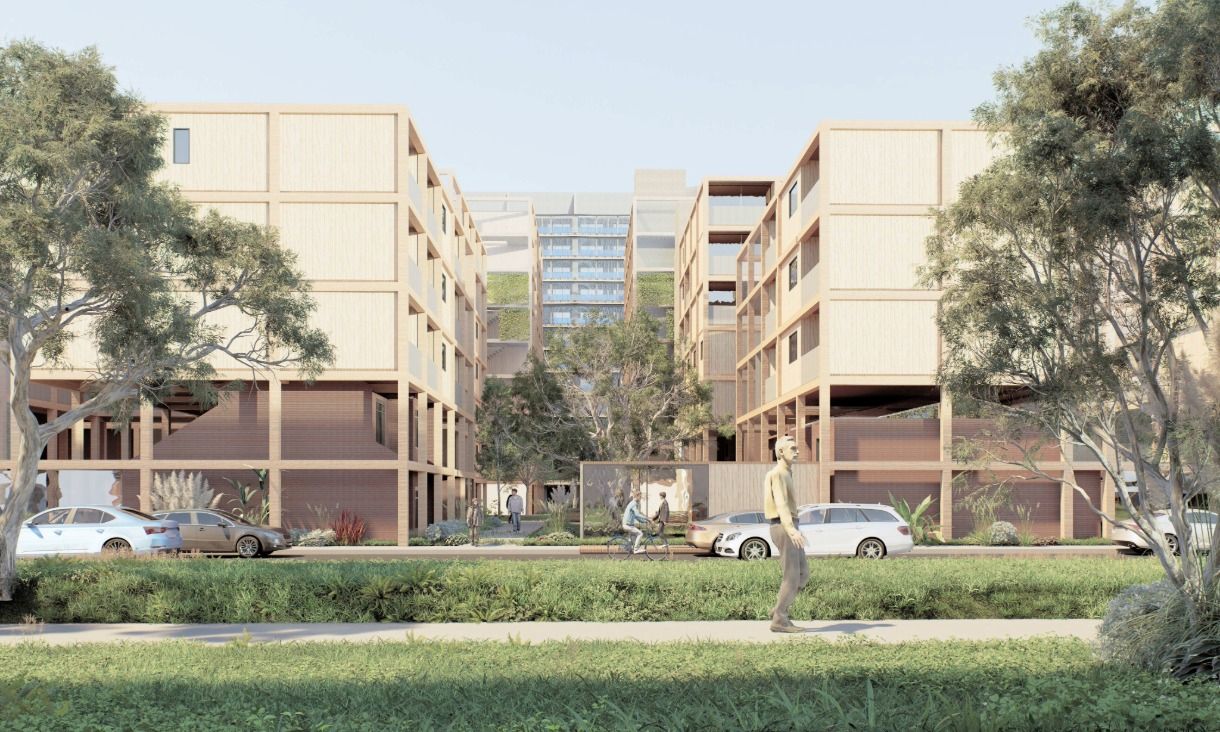
Render showing what an alternative redevelopment option would look like. Credit: RMIT University & OFFICE.
Report co-author Professor Karien Dekker from RMIT's School of Property, Construction and Project Management said the findings challenged the assumption that demolition was the only viable option.
"Demolition shouldn't be the default when it comes to renewing public housing," she said.
"Our findings show refurbishment, with carefully planned new homes added on site, should be properly assessed before decisions are made that force residents to move."
With 97% of residents in the Barkly Street tower being over 55, the report warns relocation could cause significant hardship for older people, disrupting support networks and their ability to age in place, potentially leading to heightened stress and health impacts.
Researchers interviewed about 12 residents and 10 experts from Homes Victoria, Housing Choices Australia, Merri-bek City Council and other relevant organisations.
Building on earlier work with OFFICE architects, alternative estate redevelopment options that retain and refurbish the existing tower were prepared and tested using environmental modelling, construction costings and spatial analysis.
They found upgrading the tower, while adding carefully placed new homes on the site, could deliver better outcomes for residents by avoiding the need to move people out of their homes.
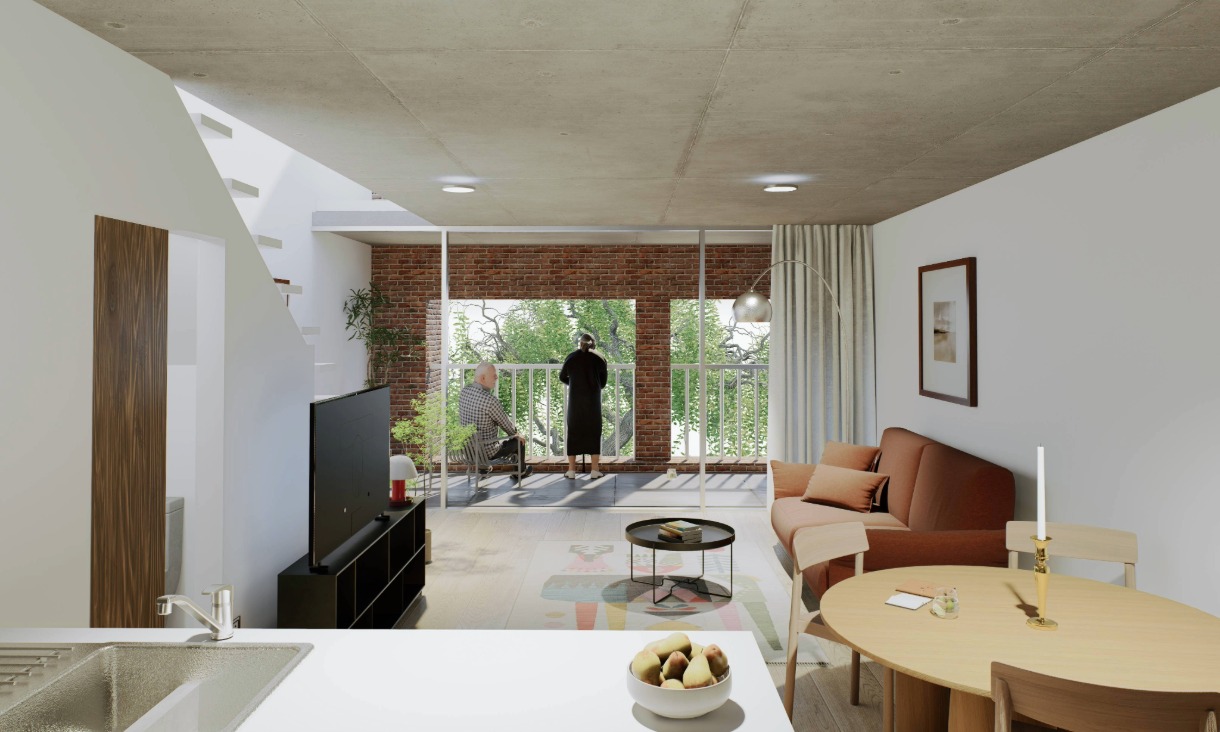
Render showing what an alternative redevelopment option would look like. Credit: RMIT University & OFFICE.
Report co-author Dr Ben Milbourne from RMIT's School of Architecture and Urban Design said he was not aware of similarly detailed, publicly available, site-specific assessments for Victoria's other public housing estates.
"Our aim was to put practical options on the table, with the numbers and the design work alongside what residents told us they need," he said.
"This kind of assessment should be the starting point for all public housing sites, before any decisions are locked in."
Other recommendations included involving residents early and throughout planning and design, measuring the risk of rehousing by aiming for staged works, and building climate and circular economy goals into decisions.
Dekker said targeted investment in retrofit and decarbonisation training for trades and contractors can help grow local capacity while the renewal program scales up.
"Retrofit-led renewal can support the workforce by creating local jobs in upgrades and maintenance, building skills in low-carbon refurbishment," she said.
The researchers called for the Victorian Government to independently test and publish site-by-site evidence on renewal options before committing to demolish the towers.
'Barkly Street Public Housing Estate - Future Visions' is published by RMIT University's Post Carbon Research Centre (DOI 10.6084/m9.figshare.31120021).