
International collaboration to develop AI technologies to protect drone systems used in defence, disaster response and critical infrastructure
University of Wollongong (UOW) researchers have secured a prestigious North Atlantic Treaty Organization (NATO) research grant to strengthen the security of intelligent multi-drone systems operating in high-risk environments.
The $1.8 million international collaboration addresses growing concerns about the vulnerability of automated, coordinated drones, which are increasingly used across defence operations, emergency and disaster response, environmental monitoring and critical infrastructure protection.
Distinguished Professor Willy Susilo, Director of UOW's Institute of Cybersecurity and Cryptology and Australian Laureate Fellow, says the project reflects the growing importance of secure, trustworthy AI at a global level.
"We are proud to join this international effort to develop practical solutions to emerging risks facing intelligent autonomous systems," he said. "By strengthening the resilience and security of intelligent drone systems, we are contributing knowledge that has relevance well beyond defence, including disaster response, environmental monitoring and critical infrastructure protection."
The multi-year project, 'Robustness against Adversarial Attacks for Intelligent Multi Drone Agents (RAID) is funded through NATO's Science for Peace and Security Programme and brings together leading cryptography, cybersecurity, robotics, autonomous systems and artificial intelligence experts.
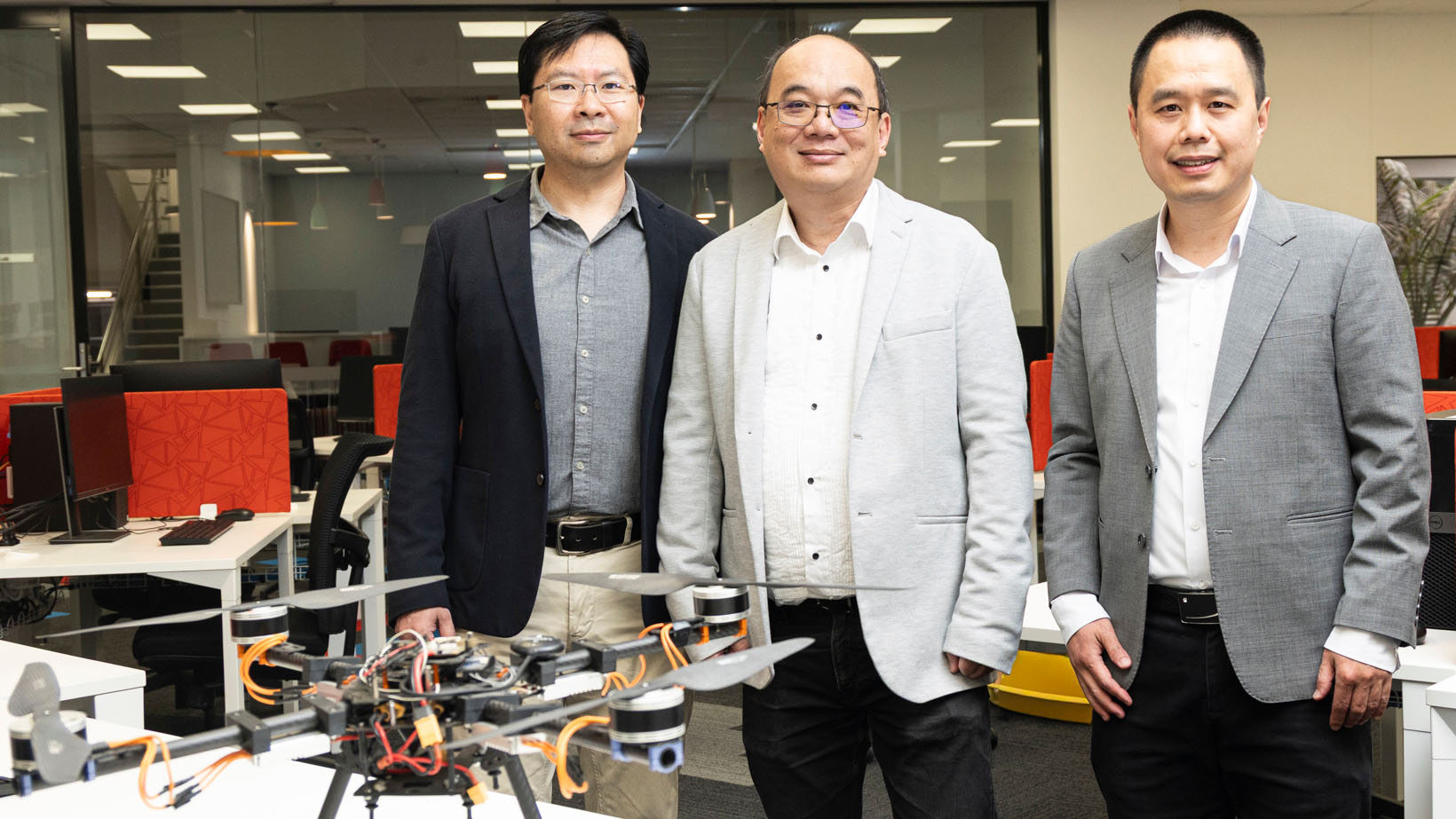
Professor Susilo, Professor Son Lam Phung and Professor Casey Chow from the Faculty of Engineering and Information Sciences will lead UOW's contribution, with $382,500 in funding from the project, working with researchers from the University of Oulu in Finland, the Universidad Politécnica de Madrid in Spain, and project lead City University of London.
The researchers will develop advanced artificial intelligence technologies that can resist adversarial attacks designed to trick or confuse drones, detect unusual or malicious behaviours in real time, and build multi-layer defensive architectures with sensor fusion and cryptographic protection.
It will target a range of threats including spoofing, signal jamming, data poisoning and physical interference, which could compromise mission outcomes or public safety.
Project outcomes will include open-source frameworks, benchmark datasets, secure integration guidelines and field-tested prototypes that will support international governments, industry and research communities in the safe deployment of intelligent drone technologies across both civilian and defence uses.


