Life is tough when you're a coral.
To begin with, corals only reproduce over a few nights each year in a synchronised breeding event known as coral spawning, where many coral species release billions of tiny egg and sperm bundles into the water. In the vastness of the sea, these reproductive cells must find eggs and sperm from the same species to fertilise and become coral larvae.
From there, the challenges are far from over. Coral larvae must survive a range of predators and strong ocean currents before finally settling on a suitable surface on the Reef. The odds are stacked against them - as few as one in a million coral larvae will likely survive to adulthood.
So, what if we could give coral a helping hand at its most vulnerable stage in life?
Enter the larval seedbox: a small, clear, rectangular container with the potential to transform coral restoration efforts on the Great Barrier Reef.
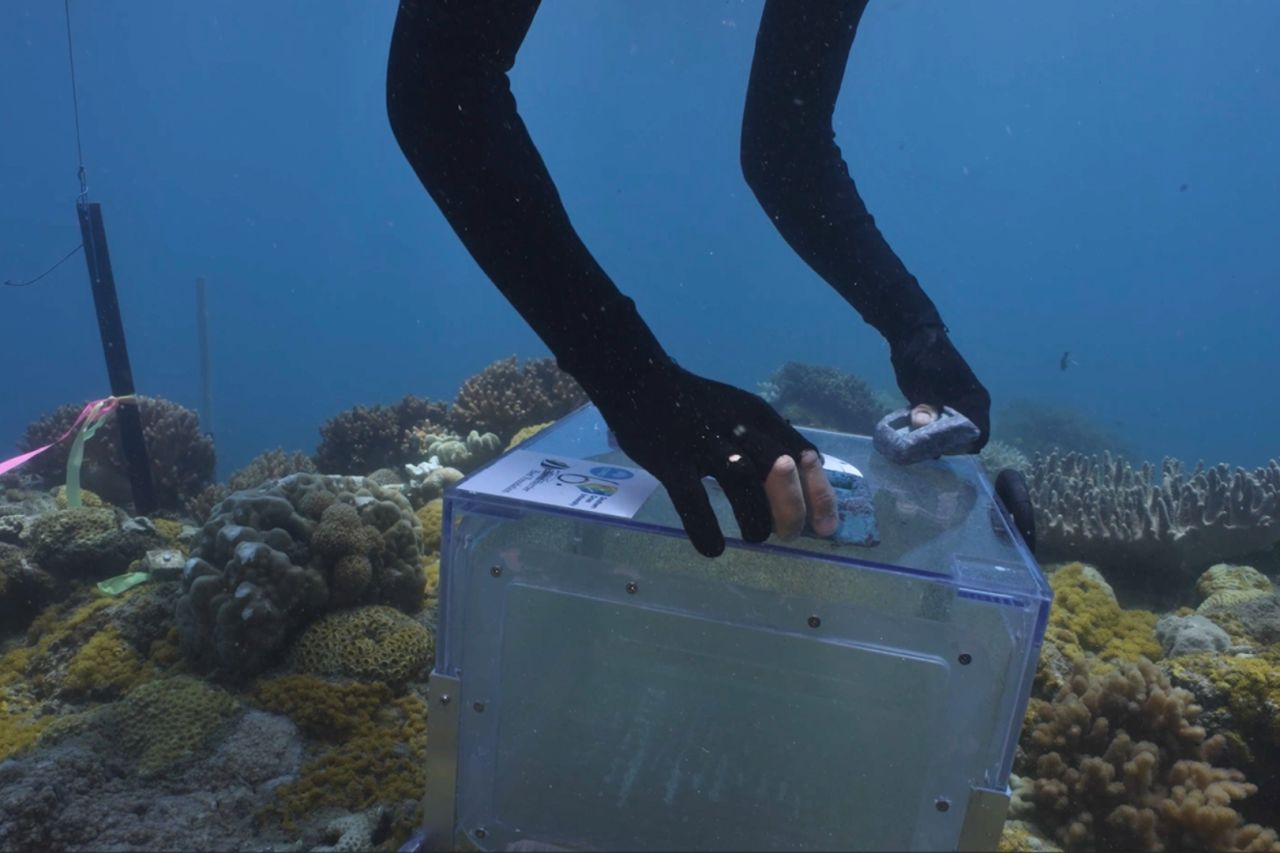
A diver positioning a larval seedbox containing coral larvae in the Whitsundays. Image credit: Johnny Gaskell
#What is a larval seedbox and how does it work?
Researchers from CSIRO and Southern Cross University are trialling the new tool, which releases millions of coral larvae at unprecedented scales across the Great Barrier Reef to aid large scale coral restoration activities such as Coral IVF.
During coral spawning, coral eggs and sperm are collected from healthy reefs and reared in specially designed floating pools on the Reef and in tanks, which enable a higher rate of fertilisation. Once the embryos develop into coral larvae, the challenge becomes delivering them to degraded reefs in a way that increases their chances of settling and surviving to adulthood.
That's where the larval seedbox comes in. The seedbox is a rectangular container fitted with fine mesh windows to allow seawater to flow through and small openings at the base for larvae to exit from. Once the baby corals are ready for deployment, the seedbox is filled with seawater containing coral larvae collected from the larval pools and positioned by divers on the sea floor. Its innovation lies in how and when larvae are released.
Rather than dispersing larvae all at once, larvae exit the container over a 12 to 24 hour period. The seedbox acts as a delayed-release delivery system, protecting vulnerable coral babies from shifting currents and giving them more time to find suitable surfaces on the Reef. The result is a simple, cost-effective tool that can be integrated into Coral IVF operations to directly deliver healthy coral larvae onto sections of the Reef that need it most.
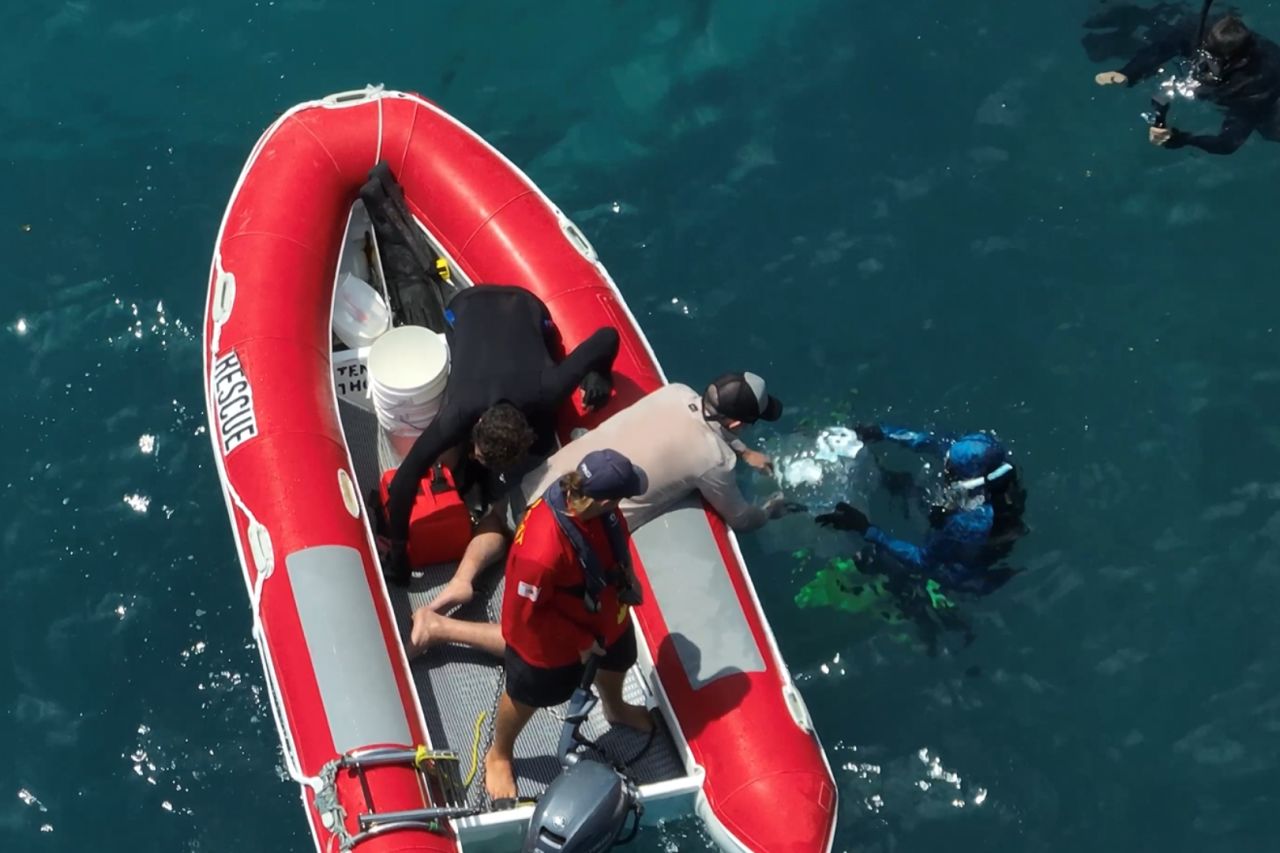
Boats4Corals delivery partners supporting the trial of larval seedboxes in the Whitsundays during spawning in November 2025. Image credit: Johnny Gaskell
#How effective is the larval seedbox for coral restoration efforts?
Early results are promising. The technology was initially developed as part of the Reef Restoration and Adaptation Program (RRAP). The first pilot study carried out at Lizard Island in November 2024 recorded coral settlement rates of up to 56 times higher than natural levels, across thousands of square metres of reef.
With support from the Great Barrier Reef Foundation and our partner Qantas, CSIRO and Southern Cross University researchers returned to the Reef during spawning in November 2025 to conduct further trials in the Whitsundays under the Boats4Corals program. Compared to Lizard Island in the northern section of the Great Barrier Reef, reefs in this region are closer to shore and experience a wider range of environmental pressures including different water flow patterns and habitat types, making them an ideal testing ground for understanding how this tool performs under more challenging conditions.
Working alongside tourism operators and Traditional Owners in the Boats4Corals program, researchers deployed 19 seedboxes at Hook Island in the Whitsundays. Seedboxes were placed along the sea floor at depths of up to five metres, each containing an estimated 550,000 coral larvae collected from larval pools.
Preliminary results show high numbers of coral larvae settled on the areas surrounding the seedboxes, with some areas seeing more than 100 times the usual level of coral settlement. The research team will return to the Reef later this year to see how well the corals have grown over a nine-month period.
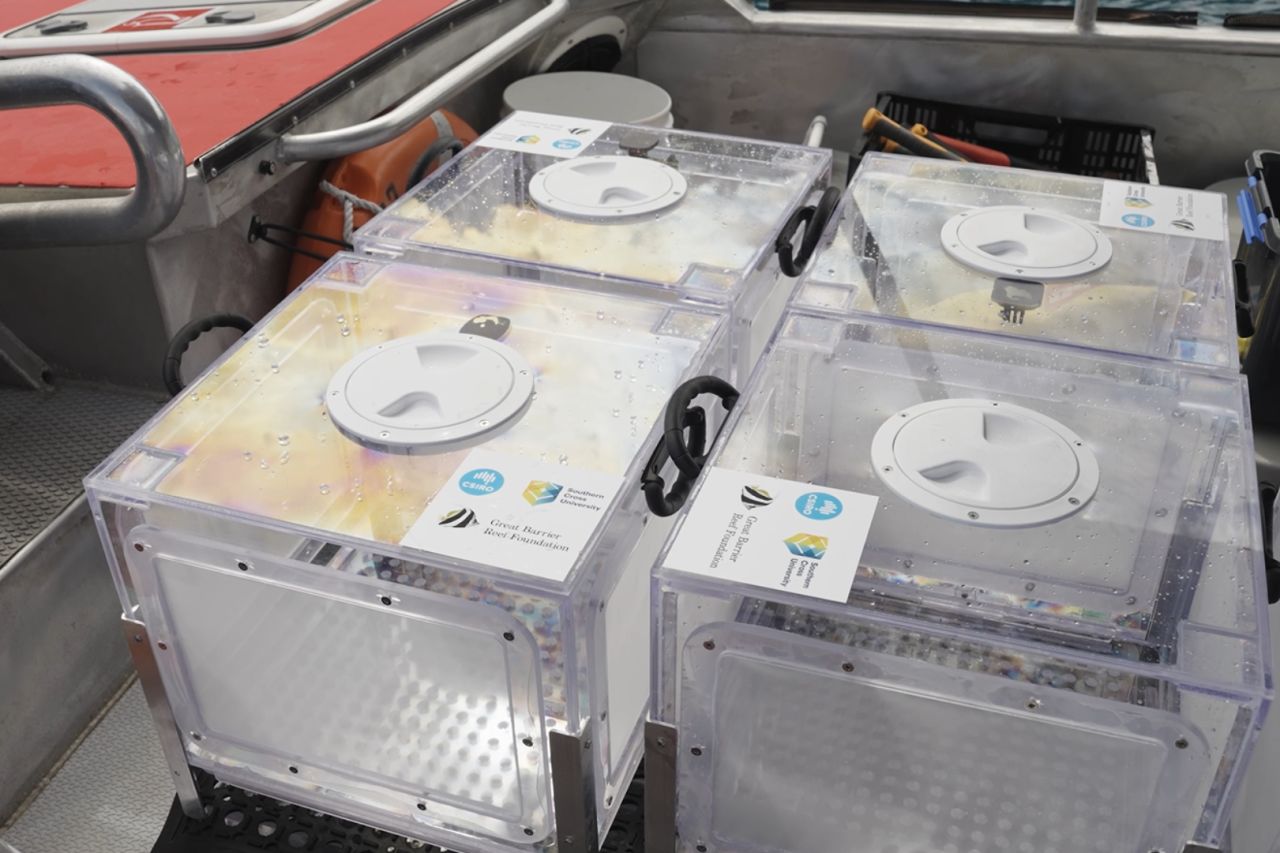
Empty larval seedboxes. Image credit: Johnny Gaskell
#Why test new ways to deploy coral larvae on the Great Barrier Reef?
To meet the scale of restoration required across the Reef, different tools for different conditions are necessary.
The larval seedbox complements existing approaches by adding a new deployment tool to the Coral IVF toolkit. By releasing hundreds of thousands of coral larvae gradually over a longer period, seedboxes help increase the likelihood that larvae will settle successfully; all part of our efforts to help give baby corals a fighting chance.
This trial is led by CSIRO and supported by Southern Cross University in partnership with the Australian Institute of Marine Science and local stakeholders. The trial is supported by Qantas through the Great Barrier Reef Foundation and uses technology developed under the Reef Restoration and Adaptation Program (RRAP).