
Obstetricians at Oregon Health & Science University have been facing a common challenge: Increasingly, patients are seeking medical information from sources outside the traditional healthcare system, including social media and artificial intelligence platforms, which are often not reliable, complete or accurate. Exposure to misinformation perpetuated online can create confusion, resistance and mistrust that may delay critical interventions during labor.

As a result, many patients have arrived at their induction — a process which uses medications or other methods to begin labor — with information that is not aligned with professional guidelines, and choose to decline evidence-based care recommendations from their obstetric clinicians, says Samuel Melville, M.D., resident-physician in obstetrics and gynecology, OHSU School of Medicine.
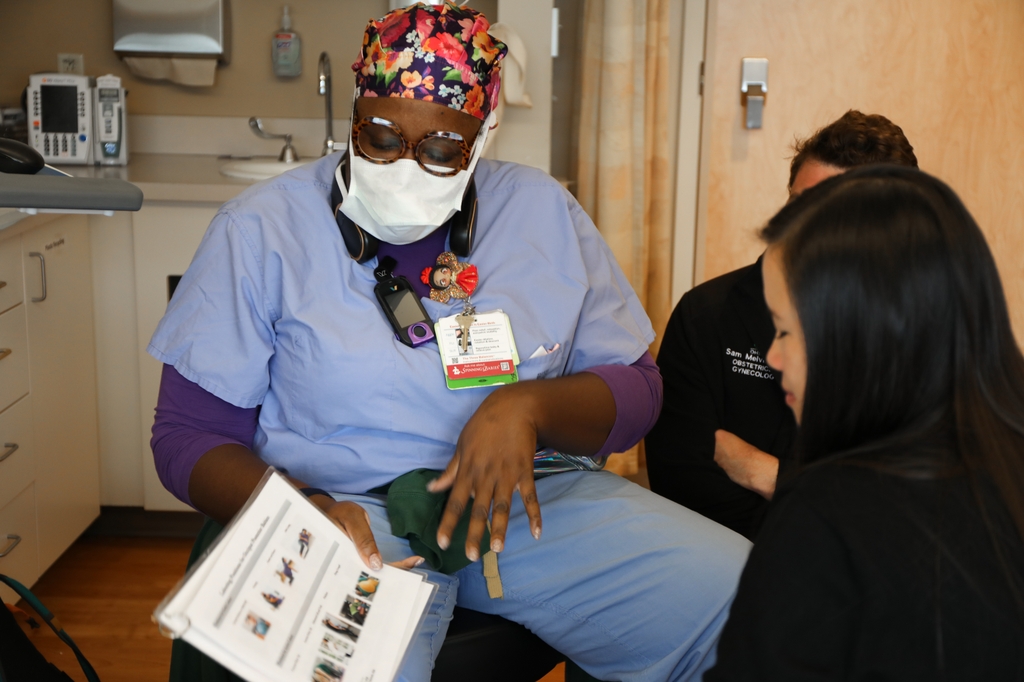
To address this issue, clinician-scientists from the OHSU Center for Women's Health developed a "labor guide," providing patients with a handbook about labor induction and interventions.
A study published today in the journal Pregnancy described the outcomes: Having clear, accessible information significantly increased patients' perceived self-control and satisfaction during the labor and delivery process.
"Many patients turn to social media for information because they're not getting enough of that education from their providers, and we want to bridge the gap," said Melville, the study's lead author. "This study showed that with the guide, patients can feel they're making decisions not just based on the doctor's recommendation, but because they've been able to view the same data and evidence and chose what feels right for them."
Empowering patients
When patients come into an induction wanting minimal or no medical interventions, it can slow down or stall labor completely, increasing the risk for complications like infection, hemorrhage and emergency cesarean section, Melville said.
The goal of the OHSU labor guide is to improve patients' understanding of such interventions, and how their risks and benefits can positively impact their experience and medical outcomes.
The guide includes an introduction explaining the goals of labor management — a vaginal delivery, if possible, and reducing any health risks for the patient and their baby — and an explanation of why induction of labor may be recommended. It uses simple, plain language to break down various interventions; when and why they may be used in each stage of labor; and the potential risks and benefits of each approach.
To measure the impact of the guide, researchers conducted a randomized controlled trial of more than 200 pregnant patients who were undergoing induction. Participants were randomized to receive either the new labor guide or the standard, existing intrapartum counseling, which was typically verbal consultation with clinicians.
Using data collected from a postpartum survey given less than a week after they delivered their babies, analysis showed that patients who received the labor guide reported significantly higher levels of perceived self-control and satisfaction with their birth process.
Researchers say this represents a promising, low-cost strategy for improving labor education and adherence to interventions that can reduce obstetric and neonatal risks.

"A significant benefit to this approach is its accessibility," said Fei Cai, M.D., assistant professor of obstetrics and gynecology (perinatology and maternal-fetal medicine) in the OHSU School of Medicine and senior author of the study. "There's so much information to process when you're preparing for childbirth. When patients verbally communicate with a clinician, they might not be able to recall certain details or may think of questions later.
"With the labor guide, they can really take time to digest the information, discuss it with their support person, and feel prepared to bring any questions or concerns to their care team to make an informed, shared decision."
Looking forward, clinician-researchers plan to implement this approach as OHSU's standard of care, and hope to collect additional data to determine if the intervention has effects on obstetric and neonatal outcomes.
"Now we're instituting these guides across our labor and delivery unit and adapting them into multiple languages," Melville said. "We're excited to see outcomes trending in the right direction and, given more time, are hopeful to show additional impacts on overall population health."
This work was supported by OHSU's Ob/Gyn Mission Support Award, or MSA. Established in 2011, MSA is uniquely designed to allow for protected time for faculty to design and implement a project that contributes to OHSU's academic missions of clinical care, education, research, policy and outreach.


