
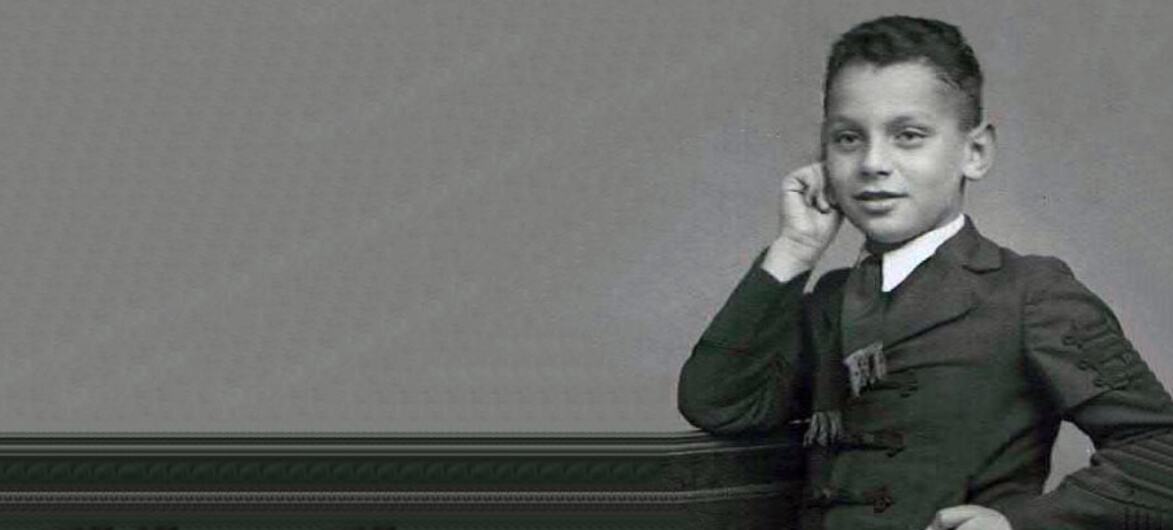
On his way to school in Vienna on the morning of 10 November 1938, eight-year-old Arthur Schneier watched his synagogue burn while firefighters and police officers stood by "rejoicing".
More than 87 years later, Rabbi Schneier told a UN panel in New York that the memory has never left him.
It shaped a lifelong conviction, he said in a video recording: an attack on a community's house of worship strikes at the very heart of its faith. His message was one of mutual respect and acceptance, and a call for everyone to learn from the past.
The panel was held this week ahead of the 88th anniversary of the Kristallnacht pogrom, when years of State-sponsored antisemitism erupted into orchestrated violence against Jewish communities across Germany, Austria and the Sudetenland.
Speakers set out to look past the familiar images of shattered shop windows to the fear, grief and loss lived by Jewish children, parents and neighbours.
State-sanctioned terror
On the night of 9-10 November 1938, synagogues were set alight, Jewish homes and businesses were ransacked and some 30,000 Jewish men were arrested and sent to concentration camps.
It marked a turning point: Nazi persecution of Jews moved from discrimination and exclusion to open violence on the streets. Many tried to flee, only to find that other countries would not take them in.
The Nazis called it Kristallnacht - "crystal night", or the night of broken glass. The name came from the shards that littered the streets, but it was a euphemism that played down the violence done to people.
What the camera leaves out
The photographs remain: Jewish men forced to march through their towns with their heads uncovered; neighbours looking on; synagogues desecrated; homes and businesses ransacked.
But what do these images really tell us about the people who lived through the pogrom? And what do they leave out?
In memoriam
The panel discussion, Understanding Past Realities of the Holocaust: Photography Versus Art, was organized at UN Headquarters by The Holocaust and the United Nations Outreach Programme and the Fritz Ascher Society for Persecuted, Ostracized and Banned Art, with the support of the Permanent Mission of Germany to the United Nations, in memory of the victims.
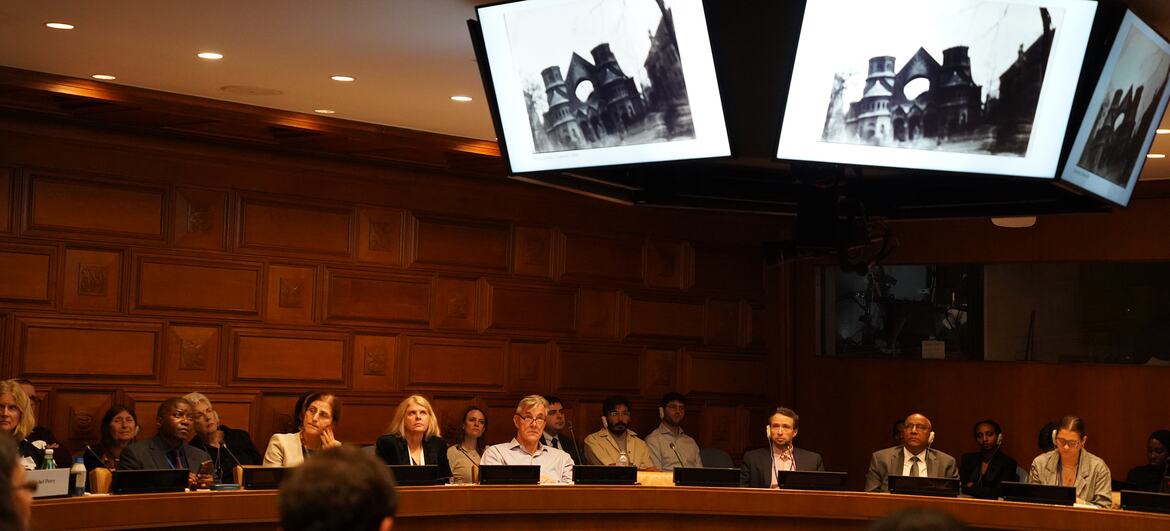
Speakers looked at historical photographs and at artworks by persecuted artists. They considered how visual records can reveal the reality of antisemitic violence, and how they can also hide it.
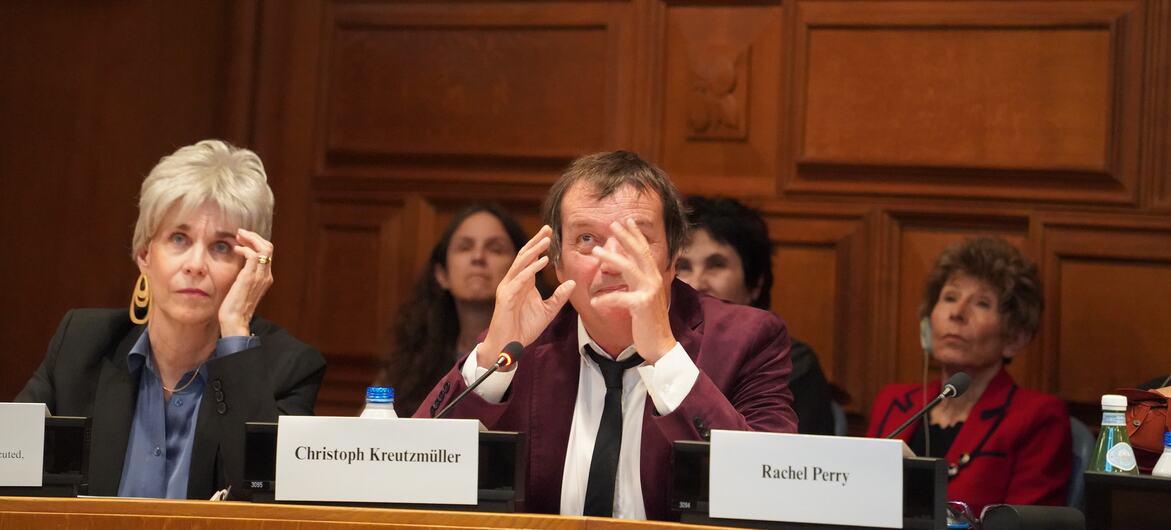
Holocaust historian Christoph Kreutzmüller urged the audience to treat photographs as primary sources to be examined critically, not as simple illustrations of history.
Who took the picture? Who was watching? Who was being photographed, and under what circumstances? And whose perspective has been preserved?
The scale of violence
In Germany within its 1937 borders alone, he noted, there were 2,416 violent incidents recorded against Jews during 1938. Yet statistics cannot convey the full human consequences.
"We don't know the number of murders. We don't know the number of injured. We can't even measure the effects the violence had on all the people," he said.
Photographs, he argued, are a difficult source for another reason: many were taken by the perpetrators, or by those aligned with them, without the consent of the people being photographed.
'Denied the choice to be seen'
Mr. Kreutzmüller illustrated this with the story of a Jewish woman, Emily Freising, who was trying to leave her hometown in 1935.
When someone attempted to photograph her, she raised something in front of her face to avoid being captured on camera. The photographer sent the image to the antisemitic newspaper Der Stürmer published in Nazi Germany from 20 April 1923 to 1 February 1945, complaining that she had refused to be photographed.
The episode exposes a disturbing imbalance: the person behind the camera had the power to record and circulate an image, while the person in front of it could be denied even the choice to be seen.
Photography, in this context, was simply another instrument of persecution and humiliation.
That dynamic is particularly visible in the photographs Mr. Kreutzmüller examined from Baden-Baden in Germany's southwest, a town of around 30,000 people.
Jewish men who had been arrested by the police and Gestapo were brought out of police headquarters and forced to march through the streets. They were made to walk bareheaded, a deliberate humiliation in a society where men traditionally wore hats in public.
The photographs show the men watched by neighbours and passers-by. But, as Mr. Kreutzmüller pointed out, they also reveal other photographers. There was a "Brownshirt" (a member of the Nazi paramilitary wing) with a camera, another man photographing from the street, and a third wearing a Nazi badge.
Mr. Kreutzmüller asked the audience to consider what it all meant for an elderly Jewish man, perhaps 65 or 70, who might not have appeared in public without a hat for decades.
The camera did not simply witness the violence - it helped to extend it.
Even a photograph that records so much cannot tell the whole story. It cannot fully convey what the men felt as they were marched through town, what families feared behind closed doors, or what it meant to watch a home, a place of worship or a familiar life being taken away.
Where art becomes essential
Together, photographs and art offer a fuller account. One reveals the visible traces of persecution; the other helps recover what the camera could not capture. Both ask viewers to look carefully - not only at what is shown, but also at what has been left outside the frame.
Art historian Rachel Perry discussed works by artists including Charlotte Salomon, whose visual narratives help reconstruct the private and emotional experience that photographs often fail to capture.
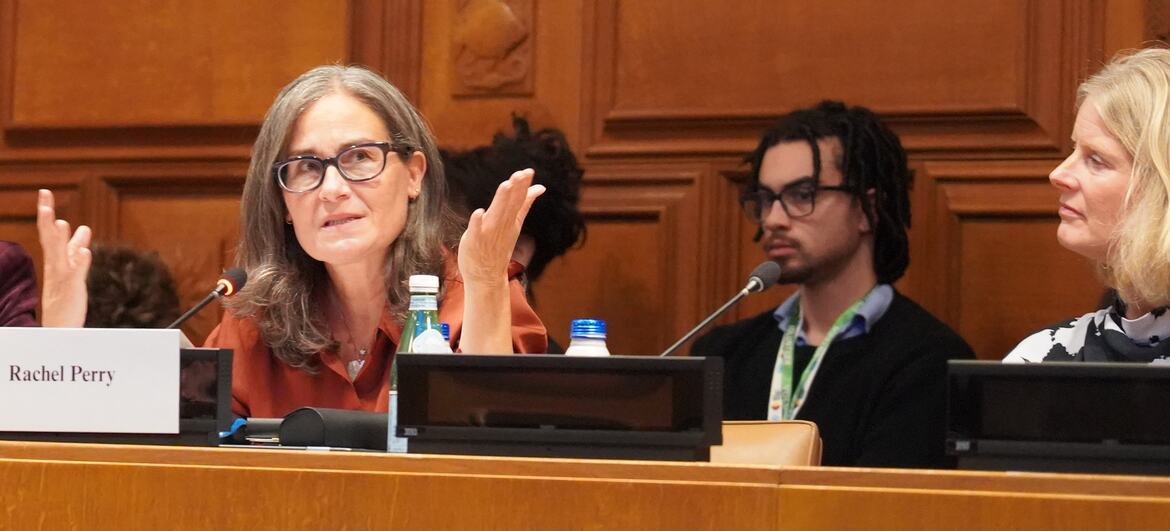
When she started looking for artwork created by Jewish people during the Holocaust, she found absence, mainly because Jewish artists faced extreme conditions during the Nazi regime, including persecution, arrests, imprisonment, and the destruction of their work.
They had little time, materials, or stability to create art.
Charlotte Salomon was a German-Jewish artist best known for creating Life? or Theater? a series of autobiographical paintings documenting her life and experiences during the Holocaust before she was murdered at Auschwitz at age 26.
Intimacy captured
Ms. Perry described how Salomon's work follows the experience of German Jews as they tried to understand what was happening, sought information, considered where they might go and prepared to leave.
Her images capture the intimate moments of departure: a portrait received from a father, a suitcase being packed, family members saying goodbye at a station, and a woman looking out of a train window as it pulls away.
The historian drew a distinction between the visual record created by perpetrators and the work of artists who sought to bear witness. The photographs often show the aftermath, she explained, while art can convey the experience unfolding over time. In her words, "What the photograph cut out, someone drew."


