
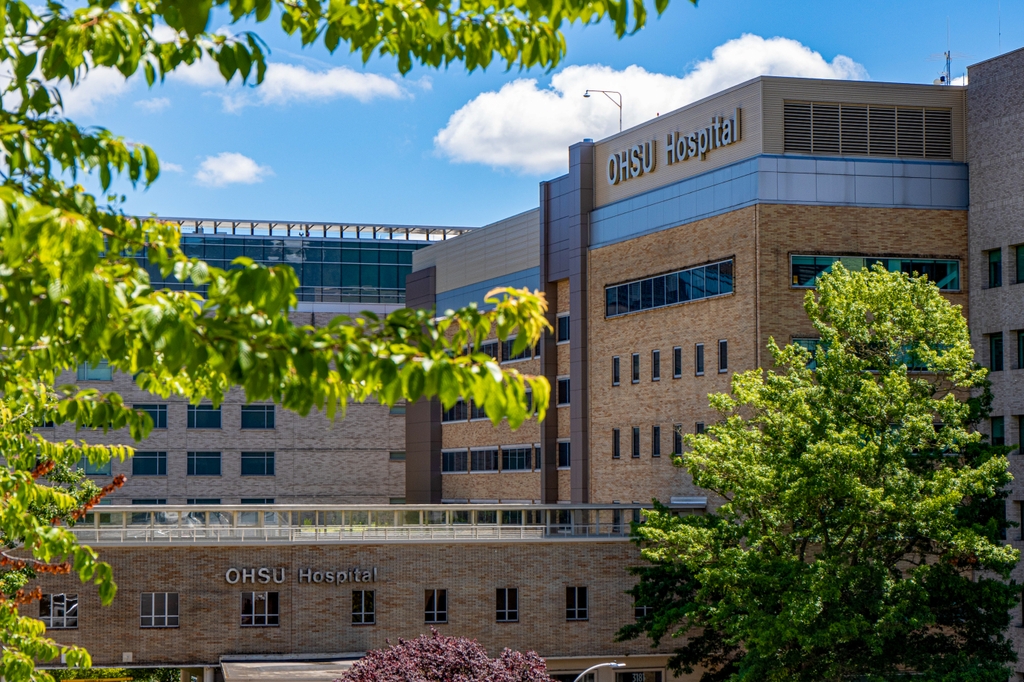
Oregon Health & Science University saw significant financial gains this fiscal year, achieving the first positive budget since fiscal year 2023.
After two years of losses, OHSU budgeted a -1% negative margin for fiscal year 2026, expecting some improvement from the prior year, but still a loss of $45 million. Instead, the university saw a positive margin of 2.2%, or $136 million. This represents a $181 million improvement over what was budgeted — and a $269 million swing from the prior year loss.
Research grant awards also continued to see gains despite uncertainty from the federal government, with OHSU scientists earning $550 million in awarded grants, surpassing the previous record in 2024.
The fiscal year-end financial results and research award amounts are preliminary. Fiscal year-end results will be audited, finalized and presented to the OHSU board of directors in October. Research award amounts will also be final in October.
"We are proud of our teams across all missions at OHSU — clinical care, science and education — for accomplishing extraordinary things as they do every year, all while operating more efficiently. It has paid off," said OHSU President Shereef Elnahal, M.D., M.B.A. "We broke records on patient volumes, treated the most complex conditions in our history, surpassed previous performance on grants and extramural funding, and took a positive step in a long-term journey to financial health.
"What is equally impressive is how we got there — not by cutting, but rather by investing in our represented workforce, our faculty, and in our people. They did the rest."
Leaders cautioned that the preliminary financial and research funding results are one step toward financial health: Costs continue to grow, and OHSU has major expenses looming.
Structural financial deficit
Elnahal prioritized addressing the structural financial deficit when he started at OHSU in August. Revenue was higher than it had ever been, but expenses were growing faster.
Last September, following fiscal year 2025's $133 million loss, Elnahal outlined key steps to addressing the root of the structural deficit: grow strategically in the areas that matter most to patients, families and OHSU, with critical prioritization; align research and education with sustainable funding sources; negotiate better rates from insurance carriers; and work closely with OHSU's philanthropic and legislative partners.
As a result, OHSU saw steady positive margins, in April reporting to the OHSU board of directors a full turnaround of the operating loss for the same period last year. Strong clinical performance — including patient volume and complexity of care — was the key revenue driver; June was the highest gross patient revenue month in OHSU history.
OHSU is Oregon's only academic health center, with some of the most advanced specialists in the region who treat patients with the highest case mix index in the state. A higher case mix index means that the center is serving the role it is supposed to for Oregonians, treating the most complex patients — from the very youngest at OHSU Doernbecher Children's Hospital to specialized cancer care in the new Vista Pavilion — with the treatments they otherwise would have to travel to Seattle or the Bay Area to access.
"Through diligent efforts from the entire healthcare mission, we have increased patient volumes — and they're the patients that OHSU is uniquely able to serve," Elnahal said. "This not only optimizes use of OHSU's specialty clinicians and spaces, but also improves the healthcare system for our entire community, helping ensure patients are getting the right level of care when and where they need it."
Patient volume has also been driven by OHSU's growth in the preventative services that are essential to the greater healthcare system: During the fiscal year, family medicine saw a 9% increase in patient visits and general internal medicine saw a 12% increase.
Record-setting research grants
At the start of the fiscal year, uncertainty around federal funding for science cast a pall over the research mission; the federal government is OHSU's largest grantor, representing more than three-quarters of its external research funding.
But those fears were not realized: Federal awards to OHSU scientists are up by 12% from last fiscal year to $423.8 million, driven by National Institutes of Health grants.

"From the basic science working with molecules to the clinical trials working with patients, our research mission makes important discoveries for human health every day," said Bonnie Nagel, Ph.D., interim chief research officer. "We are relieved that the federal government continued to recognize the high-value, high-impact science that happens here."
OHSU scientists were also successful in recruiting more industry funding, increasing those awards by 12% to $73.3 million.
"The growth in diverse sources of funding for science in an atmosphere of uncertainty is an exceptional achievement," Elnahal said. "Our scientists are leaders in their fields, driving groundbreaking research and discoveries that make OHSU a top academic health center and an asset for Oregon. This record funding is an exciting recognition of the important role we play."
Looking forward
With student enrollment at a 10-year high in the education mission, record grant awards in the research mission, and revenue finally topping expense growth in the healthcare mission, Elnahal says OHSU will continue with its strategic plans to eliminate the structural deficit in the long-term.
"Now is not the time to take our foot off the accelerator," Elnahal said. "We have big financial challenges looming, such as the need to expand our NICU, and will face unique obstacles across all of our missions, such as changes to Medicaid coverage, student financial aid, and grant review processes."
But, he said, the OHSU community has proven its ability to rise and meet these challenges.
"I thank each and every member for the work they've done to get us here," he said. "And I'm excited to continue on this journey with you to sustainable financial health."
The financial data presented in this article reflects interim, unaudited results as of the fiscal year-end and is preliminary in nature. All figures are subject to adjustment, revision, or restatement upon completion of OHSU's audited financial statements.
OHSU's Award Insight Report provides an overview of external research funding to OHSU, organized by fiscal year, sponsor type, department and principal investigator, with data spanning the past 12 fiscal years to enable meaningful comparisons over time. This year, changes were made to the algorithm that provides a more accurate snapshot of external funding totals from industry clinical trials by using actual payments rather than an estimated enrollment of patients in trials. This update improves clarity and transparency around current and future funding allocations.


