
Key points
- Paaru Natural Products collaborated with CSIRO through the Kick-Start program to turn traditional medicinal plant knowledge into a scalable manufacturing process.
- The collaboration delivered a six-fold improvement in process efficiency and a more stable extract, enabling future on-Country manufacturing.
- The partnership safeguarded cultural knowledge while creating new opportunities for Indigenous-led innovation and community growth.
In one of the most remote yet community-rich regions in New South Wales, a 100 per cent Indigenous female-owned start-up is proving that science and culture can grow together.
Founded by three Malyangapa/Barkandji women, Paaru Natural Products (Paaru) draws upon medicinal plant knowledge stewarded by their Matrilineal families. The company was established to strengthen economic self-determination while upholding the cultural responsibilities of caring for Country and protecting stories and other sacred knowledge.
Their journey from traditional wisdom to commercial innovation demonstrates how genuine collaboration can honour both heritage and progress.

The vision: from cultural knowledge to commercial opportunity
For thousands of years, Indigenous knowledge holders have understood the healing power of native plants. Paaru's founders set out to bring that wisdom into a new era, creating evidence-based products that build employment, training, and self-determination for their community.
Paaru has drawn on generations of medicinal plant knowledge to create an innovative new plant extraction process, developed in collaboration with CSIRO through the Kick-Start program , an initiative that connects Australian SMEs with world-class research expertise.
The company recognised the need to move from cultural knowledge to a commercially scalable product. If they wanted their people to have access to their Ancestral botanicals, they would require:
- An optimised extraction method suitable for modern manufacturing
- A collaborator who is ready to protect Indigenous Cultural and Intellectual Property (ICIP)
- A collaborator able to translate Traditional Knowledge into scientific method without compromising cultural integrity
- A process simple enough for on-Country production using low‑tech equipment.
A collaboration built on trust and two-way learning
CSIRO ensured cultural safety was embedded from the outset through ICIP clauses ensuring Paaru retained ownership and authority over all cultural knowledge. Even the identity of the plant remained confidential within the research team.
This supported genuine two-way knowledge exchange where Paaru shared cultural insight and CSIRO contributed advanced analytical and manufacturing expertise.
"Key to us being able to engage was knowing that CSIRO was a cultural knowledge and IP- ready institution," said Aunty Deb Evans, founder of Paaru.
Paaru shared generations of cultural understanding, while CSIRO scientists applied advanced analytical techniques to explore and refine the process. The research explored different solvents, drying techniques, and plant components to optimise the extract's quality and consistency.
"Another key strength from the CSIRO team was their ability to translate their Western science methods and outputs into a form that was very accessible for our team. We class them as translation knowledge experts in this respect," explained Aunty Deb.
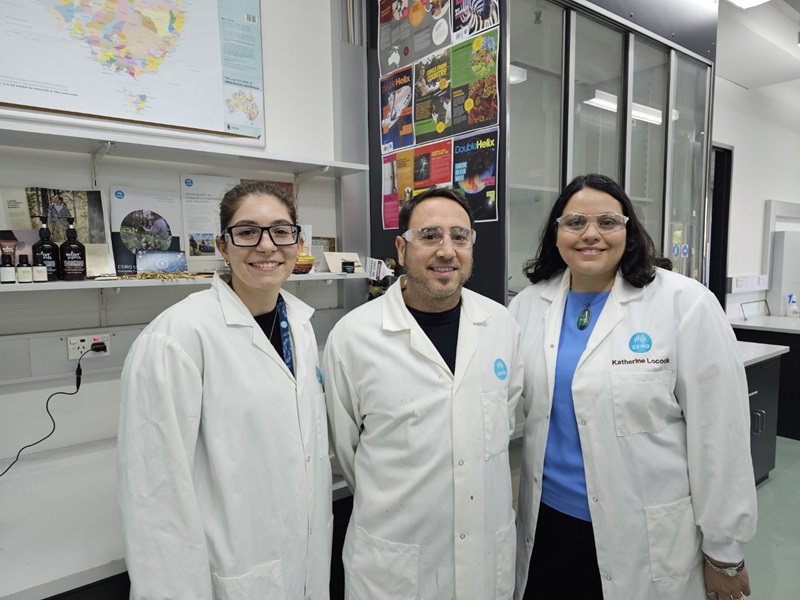
Mr Ivan Martinez-Botella, CSIRO senior experimental scientist reflected on the significance of the collaboration and knowledge shared throughout the project.
"The CSIRO research team was privileged to work with Paaru on this project. It was an honour to be trusted with sacred knowledge, which allowed us to blend Indigenous and Western science to deliver tangible impact. We also learned a great deal about this very special plant."
The collaboration produced a streamlined, reliable extraction process that mirrors traditional preparation methods. while meeting modern commercial requirements.
Crucially, it can be implemented with simple, low-tech equipment in remote settings.
A six-fold leap forward
"This project delivered what we estimate as a six-fold improvement in process efficiency," said Aunty Deb. "It reflects a simplified process that's robust, culturally aligned, and suitable for remote locations."
The process produces a more stable extract and has been adopted as part of Paaru's manufacturing operations, with plans to use it in the company's first product line in 2026.
Beyond the technical outcomes, the collaboration strengthened Paaru's confidence in navigating regulatory pathways and engaging with new partners.
"Overall, all of our expectations were met to a very high standard," Aunty Deb said. "The project team were phenomenal and really understood the importance of establishing deep trust and guaranteeing cultural safety. This project acts as a passport for us, showing our commitment and diligence in regulatory processes and innovation."
Opening new pathways for Indigenous innovation
By using Western science to build on the work of those who have gone before, Paaru is helping to rebuild and strengthen families, communities, and their Nation's cultural, political, and social assets.
With the efficiency gains achieved through the collaboration, Paaru is now exploring opportunities to develop new food and skin health products. A follow-on project with CSIRO is already being planned to scale and optimise the process further.
For CSIRO, the collaboration demonstrates how the Kick-Start program can foster innovation that is ethical, inclusive, and community driven. By combining Indigenous wisdom with western scientific expertise, Paaru and CSIRO have created a model for future Indigenous-led innovation that respects cultural knowledge while delivering tangible outcomes for community and Country.
"The CSIRO team brought amazing technical experience and delivered everything we hoped for," said Aunty Deb. "They made us feel culturally safe, and we always knew our knowledge was respected and protected."


