
UOW researchers test more than 500 compounds from flora, fauna and marine life on motor neurons as part of early drug development
The natural world has long been one of medicine's most valuable resources with countless therapies originating in plants, fungi or algae.
So, when University of Wollongong (UOW) researchers went searching for a new treatment for Motor Neurone Disease (MND), they turned to nature.
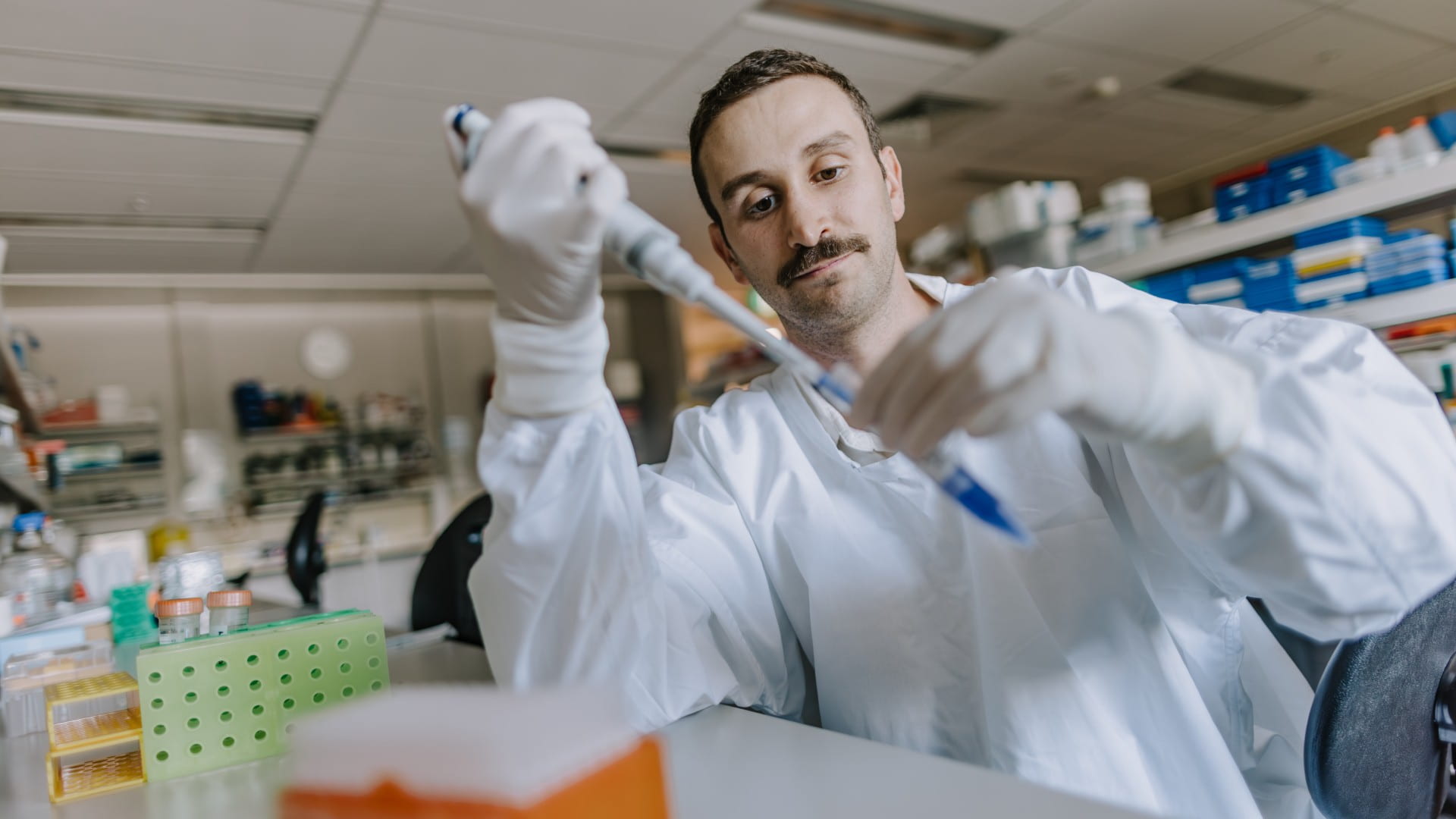
Working in Professor Lezanne Ooi's Neurodevelopment and Neurodegeneration Lab at UOW's Molecular Horizons, the researchers drew from the unique flora, fungi and marine vertebrates of Australia and the Oceania region. They tested more than 500 different compounds on motor neurons, the nerve cells that degenerate in MND. The neurons were grown from stem cells donated by people with sporadic MND, which has no known genetic cause, and familial MND, which is linked to inherited gene mutations.
The findings were published in Cell Death & Disease.
"There are still no effective drugs for the majority of MND cases with an urgent need to identify new treatments for people living with MND," lead author Dr Simon Maksour said.
In testing, two compounds stood out, both from the rainforest canopy tree Anisoptera thurifera, native to Papua New Guinea, the Philippines and Indonesia.
The more effective compound, hopeaphenol, protected motor neurons from degeneration and helped preserve their long, branching fibres, which carry signals throughout the body. It also outperformed resveratrol, a compound found in grapes and widely studied for its protective effects.
Tested on motor neurons from 14 donors, spanning sporadic MND and several genetic forms of the disease, hopeaphenol protected cells from 12. It also reduced the over-excitable electrical activity seen in MND motor neurons, although only in some sporadic MND samples.
Hopeaphenol works, in part, by activating SIRT1, a protein that helps cells cope with stress and damage. Because hopeaphenol is predicted to have difficulty in crossing the blood-brain barrier, and is hard to produce, the researchers also tested SRT2104, a small molecule drug that activates the same protein, to help translate their findings into real-world outcomes.
In the lab, SRT2104 protected motor neurons from degenerating at about a third of the concentration needed for hopeaphenol.
"MND varies enormously from person to person, which is one of the biggest challenges in finding treatments," Professor Ooi said.
"Finding a compound, drawn from nature, that shows promising results in protecting motor neurons across different forms of the disease is very encouraging."
Dr Maksour stressed the work is at an early stage but builds on the innovative research underway at UOW to understand, treat and prevent this devastating neurodegenerative disease.
The compounds of Anisoptera thurifera were derived from a library curated by Associate Professor Rohan Davis and supported by Griffith University's NatureBank, with researchers from the University of Papua New Guinea and Macquarie University among the collaborators on the study.
For Professor Ooi, the outcomes are a reminder of the balance that exists between nature and medicine.
"The natural world has given us many of our most important medicines, and this research suggests it may have more to offer in the fight against MND and in offering a real possibility for drug development."
About the research
'Phenotypic screening in ALS motor neurons identifies SIRT1 activation as a genotype- independent neuroprotective strategy', by Simon Maksour, Dzung Do-Ha, Nithya Fernandopulle, Marnie Maddock, Aneesh Issac, Jeremy S Lum, Flora Cheng, Chiara Yap Macaslam, Albert Lee, Topul Rali, Rohan A Davis, Lezanne Ooi, was published in Cell Death & Disease: https://www.nature.com/articles/s41419-026-09384-8


