
At her son's basketball game, Pip Edwards felt the familiar rush of heat she'd been ignoring for months. But this time it didn't pass. "My whole body was wet. I just started crying and ran out."
Until that moment, the high-flying P.E Nation founder, 45, had blamed her mysterious 12-month "mental breakdown" on modern life: "I was in a terrible relationship. I had work stress. My son wasn't doing great at school."
Anything but the actual cause.

According to Dr Rebecca Mitchell, director of the Health at Work Research centre at Macquarie University, many women suffer from menopausal symptoms for years prior to diagnosis. That's if they receive one at all.
"Many women start experiencing symptoms in their late 30s and they have absolutely no idea they're going into perimenopause," she says. "None at all."
Part of the problem is that symptoms don't always look hormonal. Hot flushes are the stereotype, but Mitchell says the earliest signs are often far more subtle: anxiety, irritability, sleep disruption, joint pain, gum changes, and heavy bleeding. "These are things that often have no clear cause," she says. "Women go to their GP and say, 'I'm feeling anxious,' and they're put on antidepressants. Perimenopause isn't even considered even though anxiety is a very common symptom."
While overall alcohol consumption is declining across many demographic groups in Australia, women aged 40 years and over are increasing their intake and now rank among the nation's heaviest consumers.

Dr Rebecca Mitchell describes anxiety as the biggest 'hidden symptom' of perimenopause.
Mitchell's latest research with the Northern Sydney Local Health District (NSLHD) uncovered a pattern that surprised even seasoned clinicians: Women were unknowingly self-medicating menopausal anxiety with alcohol.
But even small quantities of alcohol significantly worsened their symptoms.
As we age, the liver becomes less efficient at metabolising alcohol. It's also responsible for breaking down hormones like estrogen, which naturally begin to fluctuate during perimenopause. Alcohol can impede this process, leading to an increase in hormonal symptoms. "Women drink to cope, but the next day they feel even more anxious, so they drink again. It's a vicious cycle and one that's very common in our patients," Mitchell says.
"This isn't about alcoholism," she stresses. "These are healthy, normal women doing something that's totally socially acceptable; having a glass of wine after a stressful day."
In a randomised control trial of 347 menopausal women, Mitchell gave half of those women a simple, educational message explaining how alcohol intake would affect their symptoms.
"The group who received the message said they were substantially less likely to consume as much alcohol, compared to the group that didn't," Mitchell says. "You can't make an active choice when you don't know something."

Pip Edwards attends an event hosted by Don Julio tequila at Crown Melbourne. Photo: Instagram.
As a public figure, Pip says she was attending at least three social events involving alcohol per week before her diagnosis.
"It absolutely could've made my symptoms worse," she says. "But it's hard to say because my lifestyle is very fast paced. Turbo. I'm always high stress. I travel a lot, I'm very fit, and I'm also very lean. These are all precursors to early menopause."
Both women describe a healthcare system that leaves patients to piece together their own diagnosis. Mitchell has interviewed dozens of women who spent years treating various symptoms in isolation.
"I went to acupuncturists, nutritionists, physios, chiros, I changed my training regime..." Pip recounts. "I remember thinking, 'How many f***ing people do I have to see?"
Some changes helped, but not enough. "I thought I was depressed. I thought it was my relationship. I thought it was burnout," Pip says. "Perimenopause didn't cross my mind, and I actually didn't want to know because I was too busy trying to keep my life together."

Pip Edwards unveiled a major strategic pivot for her brand, P.E Nation, at Australian Fashion Week in May 2024. The fashion designer says her perimenopause symptoms were 'breaking me in the background'. Photo: Getty.
"Menopausal Hormone Therapy (HRT) is frowned upon in the wellness space," she admits. "But ultimately, it changed my life."
Both Pip and Mitchell want to see more Aussie women talking about perimenopause and menopause much earlier.
If hot flushes are the poster child of menopause, anxiety is its undercover agent. Mitchell calls it "one of the biggest hidden symptoms," and one that can quietly dismantle career trajectories. "It undermines confidence," she says. "Women stop going for promotions. They feel like they're constantly making mistakes. They're stressed, overwhelmed, and they don't know why."
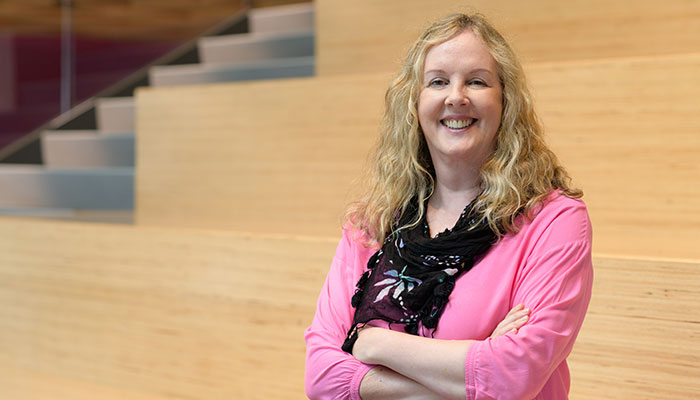
In a recent Senate Inquiry, Rebecca Mitchell (pictured) argued strongly for a less medical approach to diagnosing perimenopause in Australia.
The consequences are measurable.
A Superannuation Trust study found one in 10 Australian women leave work in their 50s due to ill health, which is often menopause. A Korn Ferry report across Australia, the US and UK found 11 per cent leave work because of menopause symptoms. "These are women at the peak of their careers, often in senior roles," Mitchell says.
Pip lived this in real time. "When the 8-10 hot flushes were only happening at night, I suffered in silence and then denial," she says. "I'd turn up to work and no one knew because I'm good at compartmentalising. But it was breaking me in the background."
"There's zero empathy for women's health issues in male-dominated work environments," she adds. "I was only able to speak about it because I owned the business."
In a recent Senate Inquiry, Mitchell argued strongly for a less medical approach to diagnosing perimenopause that includes better GP training, earlier conversations with women over 35, workplace support, and accessible information.
Her research shows that even a small, free intervention can change behaviour. Because the real problem isn't menopause or its symptoms. It's that no one told women what to expect.


