
This summer, Project MESA at The University of New Mexico hosted a free bilingual summer clinic that gave children with autism an opportunity to strengthen their communication skills through play while providing hands-on training for future speech-language pathologists.
Project MESA, which stands for Multilingual, culturally responsive, Early childhood Social communication Approaches, prepares graduate students to work with children from birth to age 6 who have autism spectrum disorder (ASD) or other developmental disabilities or delays. The program places a special emphasis on serving multilingual and culturally diverse families.
Cindy Gevarter, associate professor in the Department of Speech and Hearing Sciences and director of Project MESA, partnered with Mary Hartley, speech-language pathologist, senior lecturer and clinic instructor, to offer the summer clinic.
"The purpose of it is to train student clinicians in speech-language pathology to be prepared to work with young autistic children, particularly with a focus on children who are multicultural and bilingual," Gevarter said.
The clinic provides families with free support while creating valuable clinical experiences for graduate students. This year's program served six children during the morning session and four children in the afternoon, including both bilingual and monolingual children. Eight speech-language pathology graduate students (including four MESA-funded students, and 7 bilingual students) participated in the clinic. Additionally, during the last week of the clinic, three students from UNM's Department of Occupational Therapy observed the clinic and participated in interprofessional discussions.
According to Gevarter, the need for bilingual speech-language pathologists continues to grow.
"Nationally, there is data that shows that less than 9% of speech-language pathologists are bilingual," Gevarter said. "In New Mexico, we have high needs for bilingual clinicians, not just with Spanish-speaking populations, but also our Indigenous populations, Asian populations and others. It's a particular need in our area."
Because many future clinicians will work directly with families in homes and community settings, Project MESA also helps students develop the skills needed to communicate effectively across languages and cultures.
"There is an extra cognitive load often for bilingual clinicians," Gevarter said. "They learn something in class in English, but then they have to explain it to a parent in Spanish."
The clinic focuses on building social communication skills through everyday play experiences that children naturally encounter with their families. Rather than relying on structured therapy activities, children participate in familiar routines designed to encourage interaction and communication.
"Our play is very natural, and the first thing we do is find out what the children love," Hartley said. "Our day can look very much like a preschool."
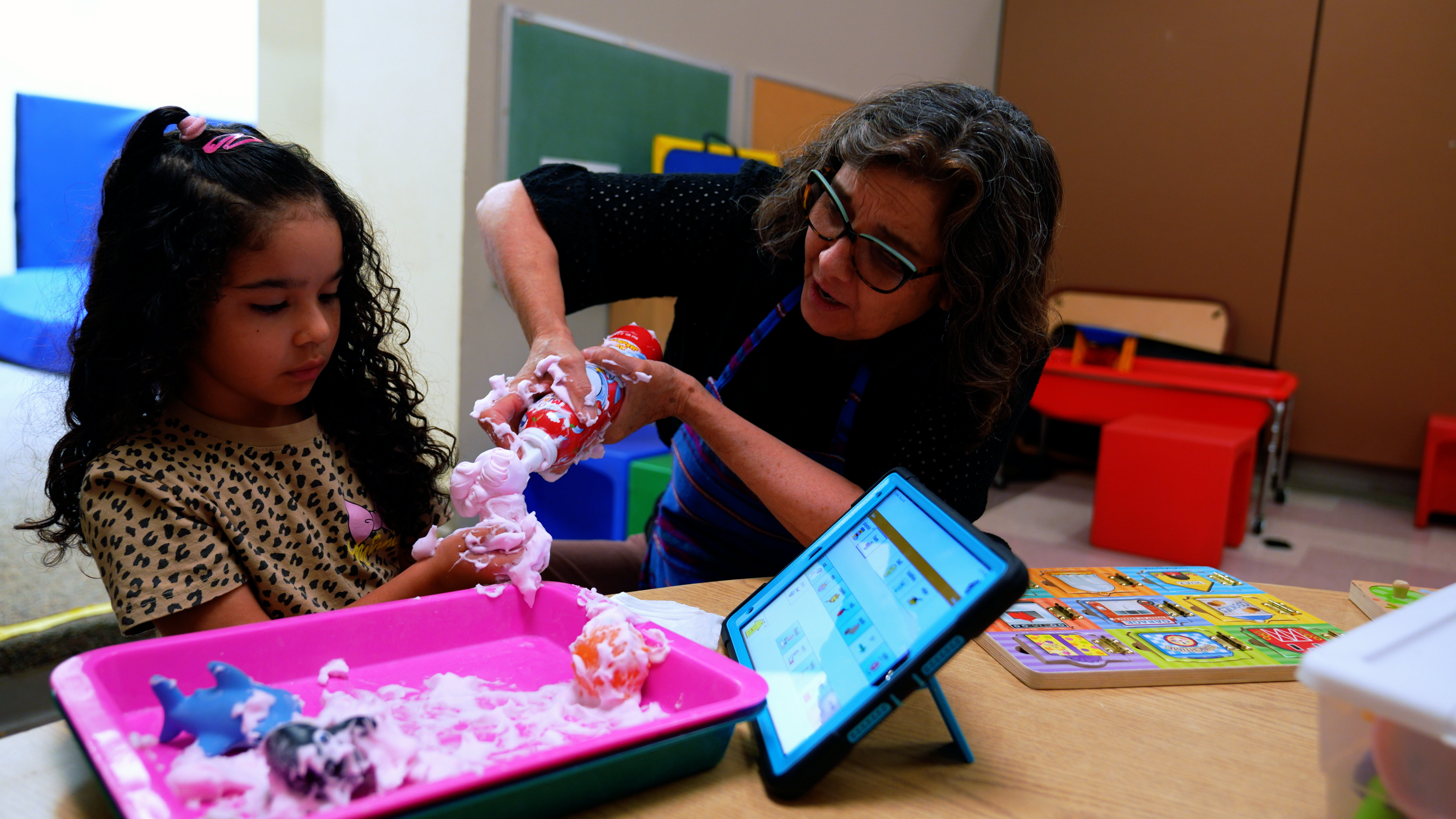
Activities include playground time, water play, parachute games, arts and crafts, trampoline and movement-based activities, imaginative play, all designed to create meaningful opportunities for communication.
Hartley said the clinic also gives families practical strategies they can continue using at home.
"The summer clinic provides an opportunity for families to receive parent coaching and learn how to communicate with their children and play with them in ways that really promote their communication development," she said.
Parents had the option to participate in a research study focused on parent coaching, allowing student clinicians to work directly with families in ways that mirror early intervention services. These studies are led by PhD students Jessica Nico and Jaime Branaman who are both speech-language pathologists studying under Dr. Gevarter.
For graduate students, the clinic provides far more than clinical practice.
"A big part of the Project MESA experience is giving our students hands-on experience working with children with autism, including bilingual and monolingual children from a variety of language backgrounds," Gevarter said.
Hartley said students learn to build therapy around each family's priorities rather than relying on a one-size-fits-all approach.
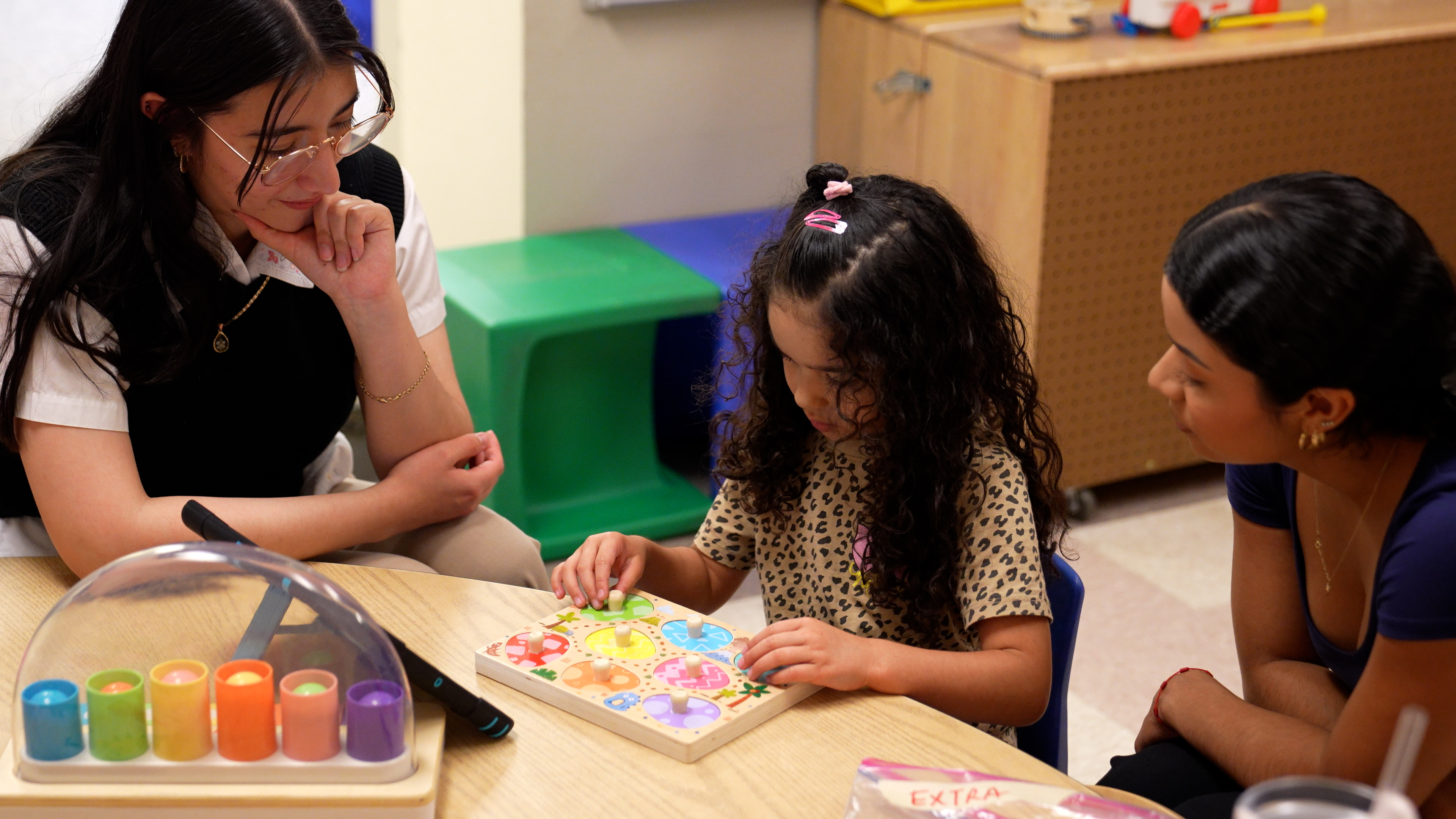
"The students get a chance to really learn what's important to children and to parents and to wrap their services around what's important to that family," Hartley said. "They develop individualized resources and strategies that help children communicate while learning to collaborate with one another."
That collaborative approach extends beyond the student clinicians.
"Overall, it's empowering for parents, it's empowering for children," Hartley said. "It's also an opportunity for our speech-language pathology students to learn that they are not the only experts in the room. Parents are the experts, too, and together they build goals around children's communication, play and interactions."
Hartley said the impact extends well beyond the summer.
"I feel like this camp enriches our community, and the families enrich our program," she said.
As the first cohort of MESA students closed out their first year of graduate school in the summer clinic, a second cohort is prepared to start in August, and a third will be recruited for 2027. The five-year, grant-funded project will offer two more summer clinics in 2027 and 2028, advancing its mission to empower families, strengthen the future speech-language pathology workforce and ensure children receive care that reflects the linguistic and cultural diversity of the communities they call home.


