
How can countries in Asia and the Caribbean protect themselves from rising sea levels? What should be done with colonial collections? During a visit on 26 May, Queen Máxima spoke with researchers about projects exploring climate change, collections and culinary heritage.
On a tropical morning, researchers from the institute welcomed the queen to the Herta Mohr building at the Faculty of Humanities. Máxima is patron of the Royal Netherlands Institute of Southeast Asian and Caribbean Studies (KITLV), which is based here. The institute is 175 years old, and since 2014, Leiden University has managed its collections.
'We want to conduct our research in co-creation with local communities', KITLV director Diana Suhardiman explained. Communities around the world are facing the effects of climate change, and that is certainly true for the people of the Caribbean and Asia. 'We bring local communities together so they can learn from one another's strategies', said Suhardiman.
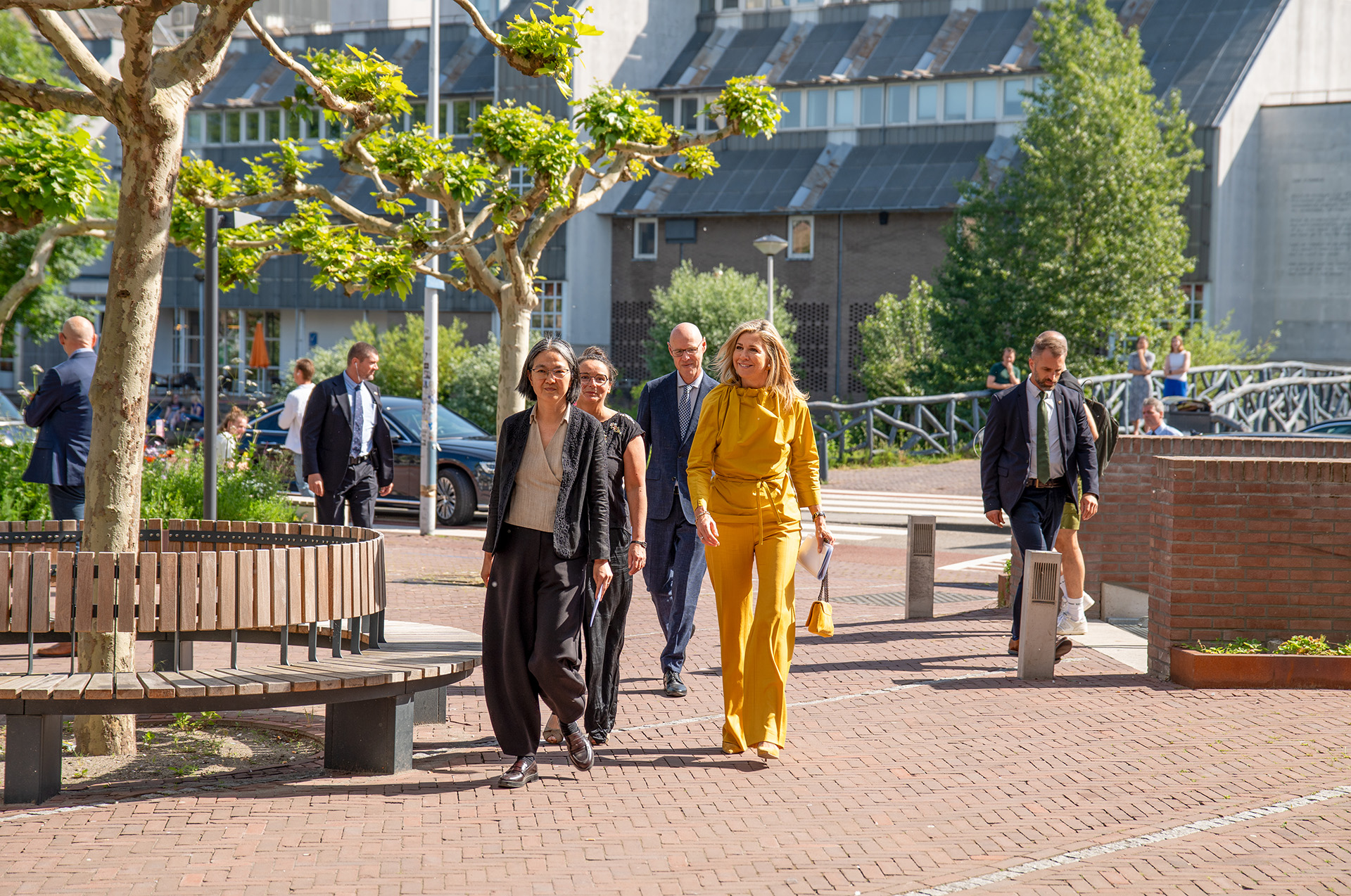
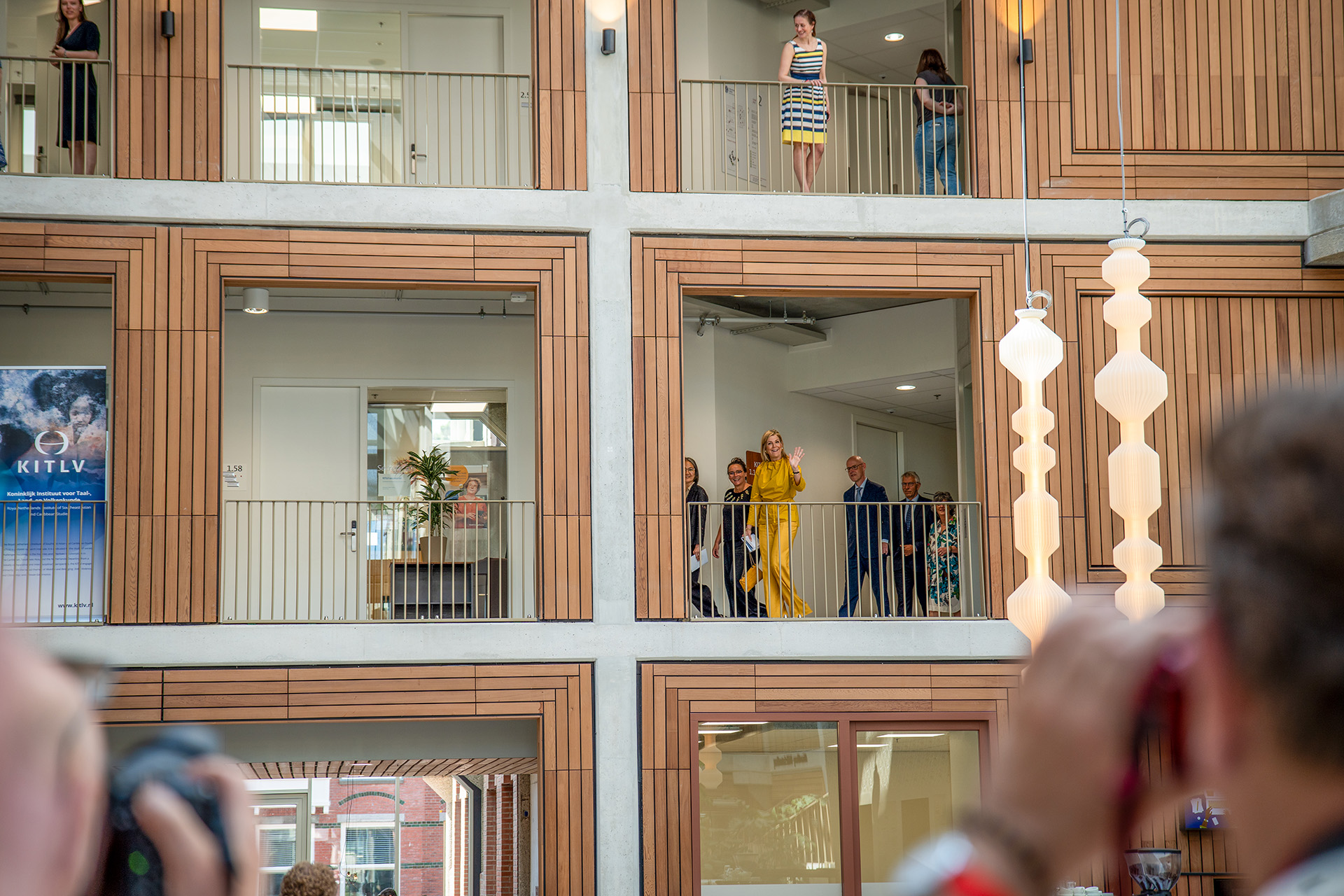
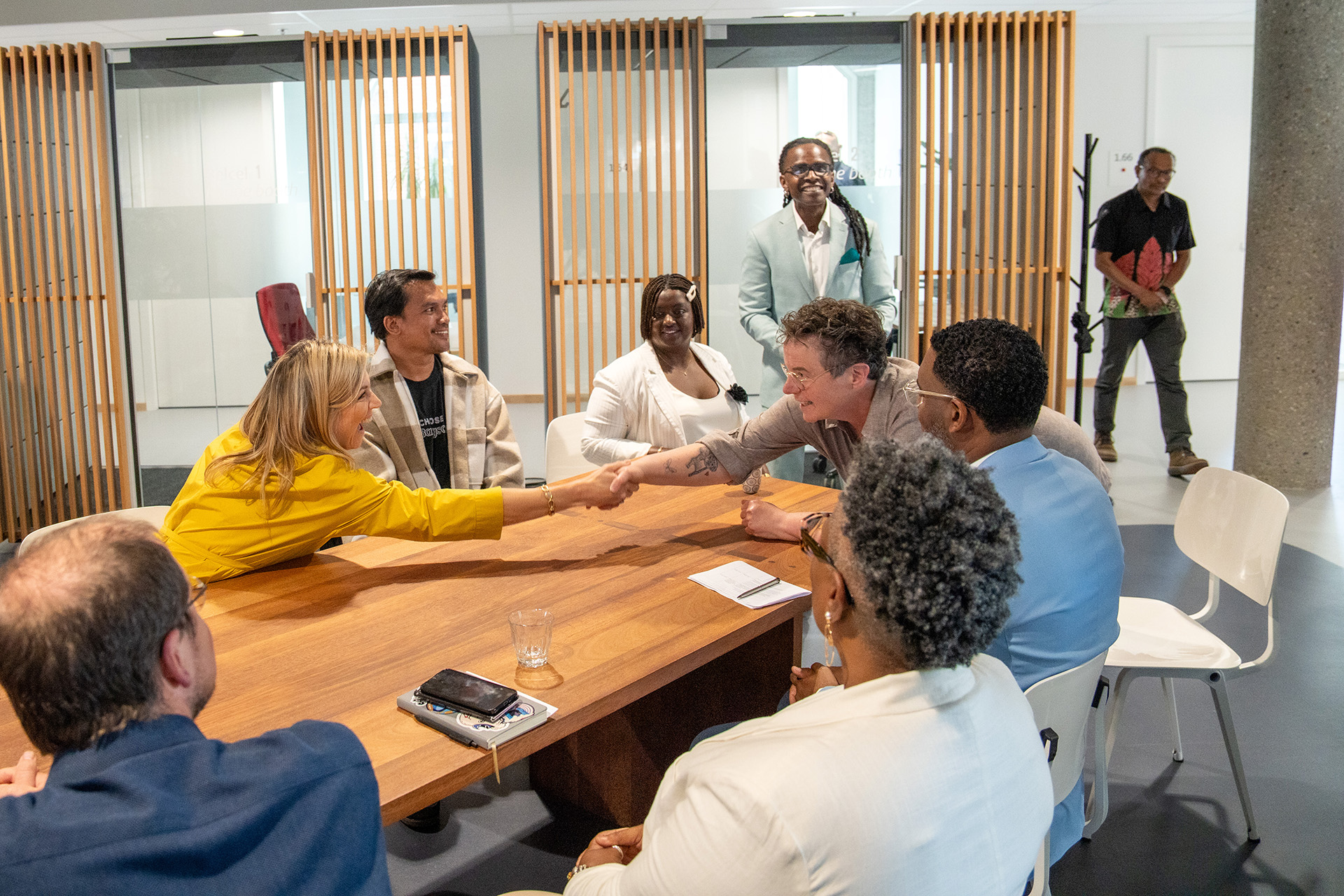
The queen was welcomed by KITLV director Diana Suhardiman and historian Alicia Schrikker, chair of the KITLV members association. 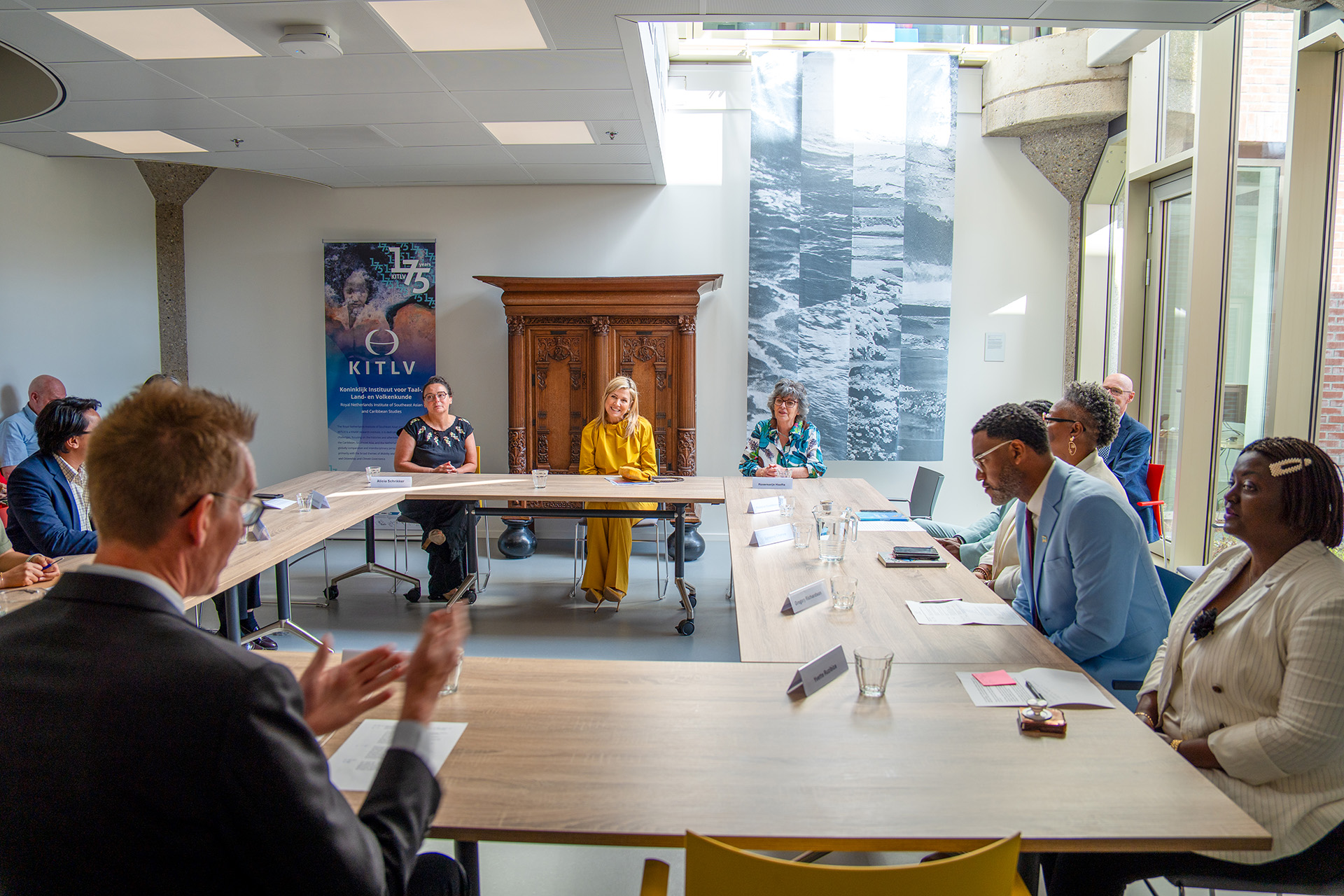
Tsunamis
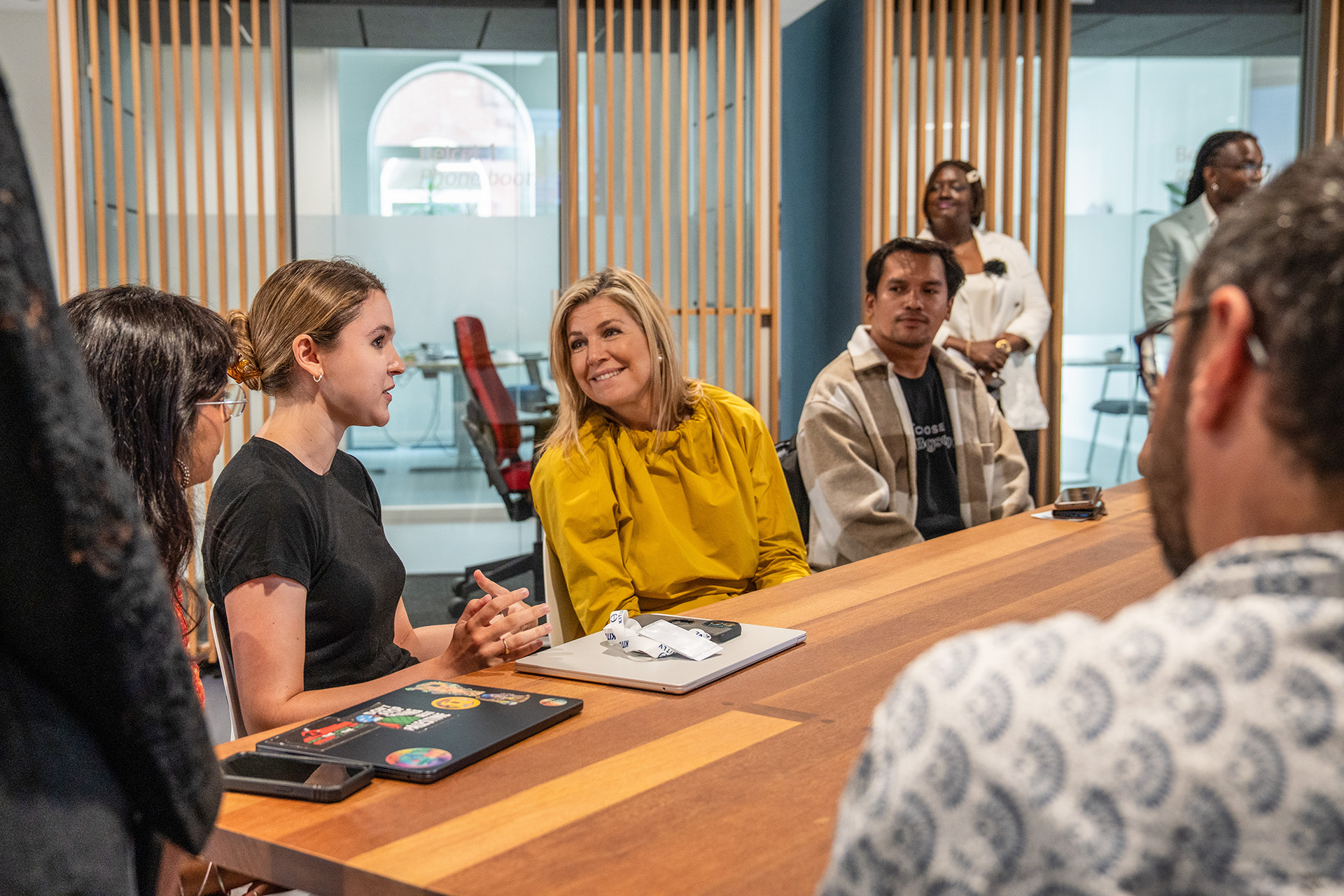
The programme featured the 'Island(er)s at the Helm' project, a study of the effects of climate change on the Caribbean islands. The project focuses on how coastal societies can respond to the increasing damage caused by hurricanes. Máxima took notes and asked the researchers questions, such as: could you give an example of collaboration with communities? Wengki Ariando referred to his research on preparing coastal societies for tsunamis and the valuable insights it is providing.
The widespread destruction caused by the sea is threatening people's livelihoods, moderator Sikko Visscher commented. It is forcing communities to think ahead and redesign the landscape. Francio Guadeloupe, Professor of Public Anthropology and Kingdom Relations, spoke about various educational projects that teach children how to treat the environment with respect.
Sensitivities
Nearly all researchers working on 'Island(er)s at the Helm' come from the Caribbean. Does that help with your research? Máxima asked. It does, said Lysanne Charles, who is exploring the role of faith in times of change. It helps us gain access, and we are aware of certain sensitivities within the communities, Charles explained.
Other crops
In the 'Trace' project, researchers are exploring how communities in Southeast Asia are responding to changing climate conditions. This ranges from the study of forest management along the Thailand-Myanmar border to research on marine ecosystems in the Philippines and agriculture in Indonesia. The queen asked whether farmers are switching to other crops as the weather becomes more extreme. This appears to be the case: Balinese farmers, for instance, are returning to traditional farming methods that are less damaging to the soil.
Provenance research
During the visit, Máxima also spoke with historians about provenance research. 'The KITLV has around 600 manuscripts', historian Alicia Schrikker explained. 'We conduct provenance research and investigate whether forms of violence underpin the collection.' Could this also include unequal power dynamics? Máxima asked. Schrikker confirmed that the team applies a broad interpretation. 'Many of the manuscripts are copies commissioned by the Dutch', heritage researcher Mirjam Shatanawi noted.
The queen also wanted to know how much of the collection has been digitised. Shatanawi explained that manuscripts are increasingly available as digital resources, which can give rise to new ethical dilemmas: for example, whether sacred manuscripts should be accessible to everyone online.
Culinary traditions
The queen then spoke with other researchers working in heritage and history. Historian Karwan Fatah-Black outlined his research on slavery in Suriname. Heritage researchers presented culinary traditions from Indonesia, South Africa, Sri Lanka and Suriname. They study how eating habits and dishes evolve in new environments and the extent to which cultural traditions are retained.
Culinary traditions
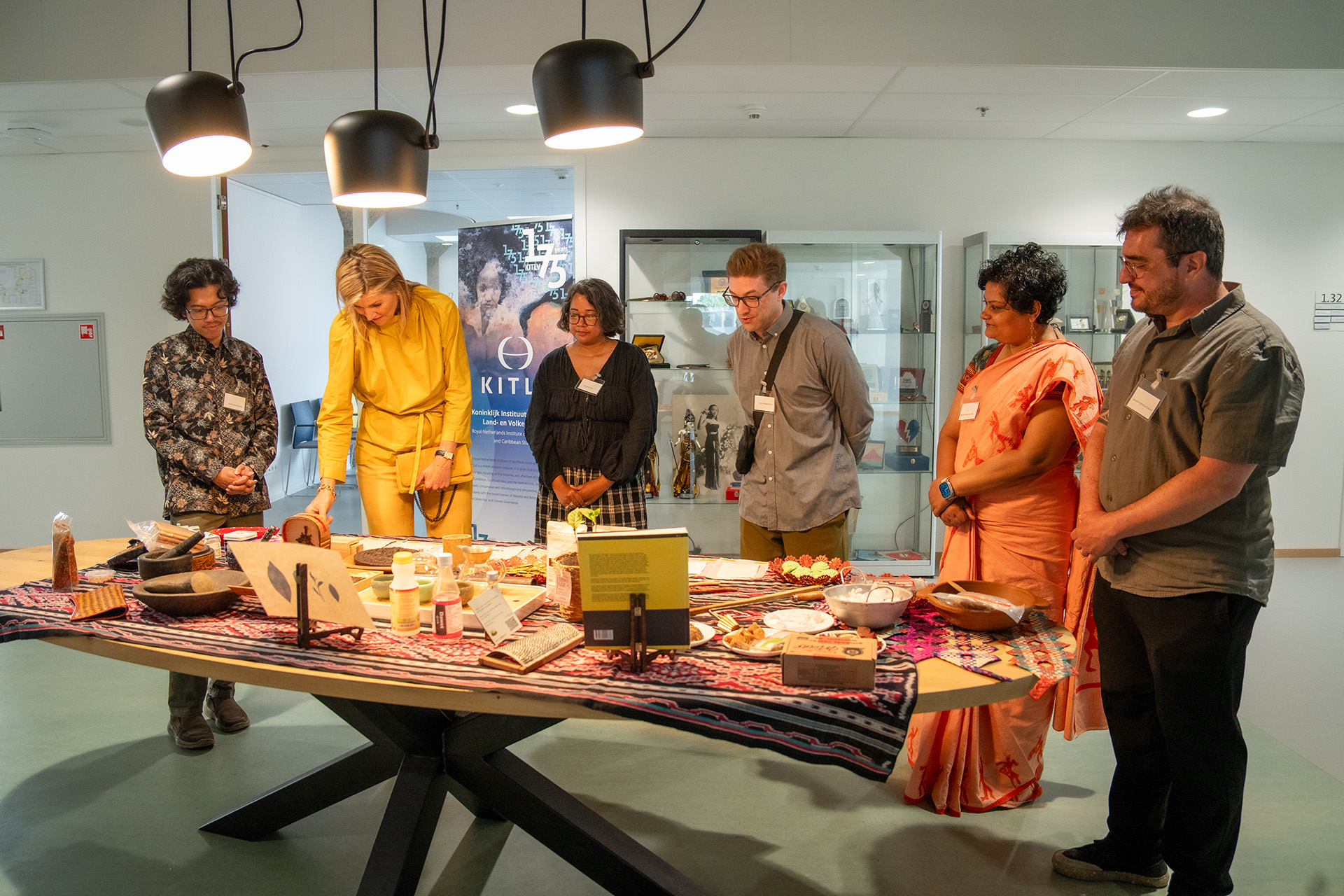
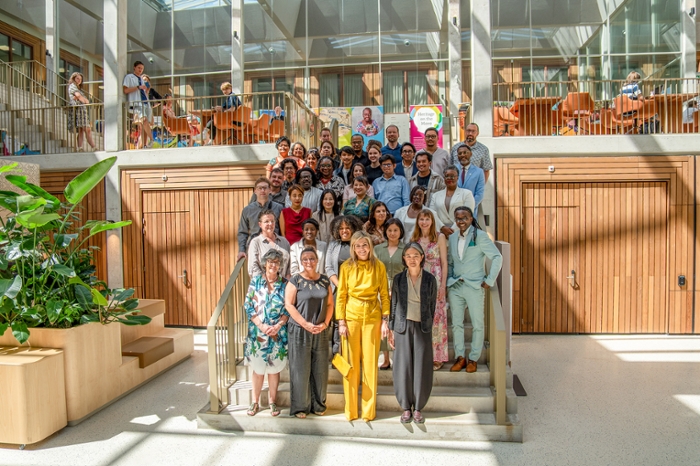
Spices, various types of tea and sweets were arranged on a long table. Máxima smelled the items on display and asked questions about changing culinary traditions. Communities sometimes claim that a particular tradition originated with them, one researcher explained. Yet, for example, an Indonesian dish may turn out to have its roots in Africa. At the end, the group posed for a photo with their patron, while students looked on, surprised to have caught sight of the queen at their faculty.


