
Interviews and images available here.
'Hairy' snail breeding program to bring it back from the brink
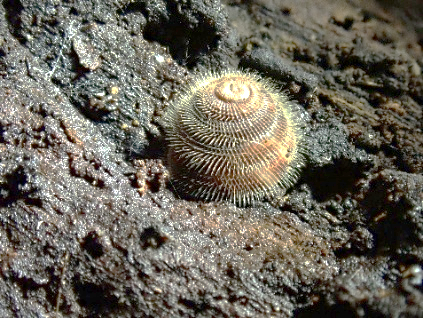
The Norfolk Island hairy snail. Credit: Isabel Hyman
19 October 2026 Sydney
A team of experts is racing to save Norfolk Island's hairy snail from extinction, kickstarting an emergency breeding program to save the unique species.
Fanulena imitatrix, or the Norfolk Island hairy snail, is only found on one small reserve on the island. The unusual species has a fine hair-like covering on its shell and adult snails are roughly the size of the nail on a pinky finger.
Australian Museum Malacologist (snail expert) Dr Isabel Hyman, who is leading the conservation effort in partnership with Taronga Conservation Society Australia, said she originally thought the Norfolk Island hairy snails were extinct, until they found a population alive and well.
"When I saw the beautiful, slightly golden hairs stand out on the shell, I instantly knew that the hairy snail population was holding on," Dr Hyman said.
"Seeing the delicate hairs, which usually wear off in museum specimens, on a living snail was a very special moment.
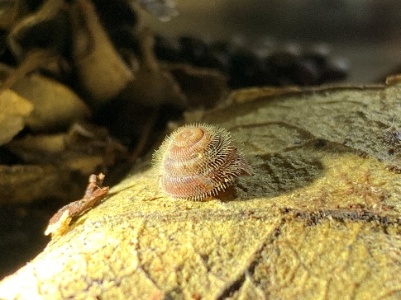
The Norfolk Island hairy snail with its characteristic delicate golden hairs on the shell. Credit: Isabel Hyman
But the hairy snail is still at high risk of extinction. The location at which they were found is in a public reserve, with visitor access and adjacent to a road. In August last year, invasive Argentine ants were found very close to the site.
Parks Australia rangers from Norfolk Island National Park have led regular monitoring of the hairy snail population since August 2025, in conjunction with the Department of Infrastructure, Transport, Regional Development, Communications, Sport and the Arts.
Timed searches from August 2025 to May 2026 revealed a steady decline in live snails and an increase in dead shells observed, usually a sign of increased mortality.
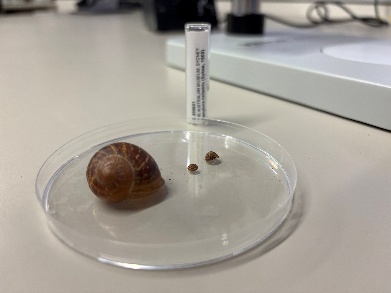
Hairy snail shells (right) next to the shell of a common garden snail (left) Credit: Ivy Shih
Dr Hyman said she realised this was an extreme situation and they needed to act fast to save the hairy snail, otherwise it could become truly extinct.
The team sprang into action, and in August 2026, 30 snails were collected and taken to Taronga Zoo Sydney to establish an emergency conservation program.
The goal was to establish a breeding population to be released back on Norfolk Island to bolster the wild population.
Senior Keeper Tarryn Williams Clow from Taronga Zoo Sydney said that one month on after arriving at Taronga's quarantine breeding facility, the tiny snails have adapted well to their new habitats and replicated diets. They have even started to give birth to live young, giving the Taronga Zoo husbandry team cautious optimism.
"Starting a conservation breeding program for an endangered species that has never been cared for before obviously has its trepidations, but we are so excited to learn everything we can about this species' biology and requirements and how to best support them so we can bolster numbers of endangered species in the wild".
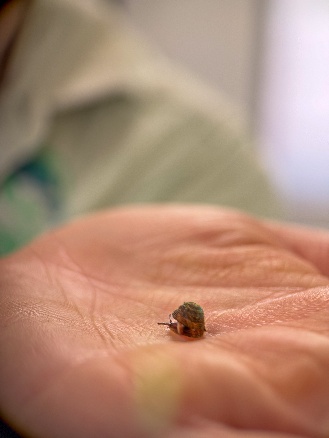
An adult Norfolk Island Hairy Snail being held by Taronga Zoo Senior Keeper Tarryn Williams Clow. Credit: Taronga Conservation Society Australia
The collaborative conservation program is testament to the expertise that each partner organisation fosters.
Earlier this year, the program successfully bred, returned and released another critically endangered Norfolk Island endemic snail, Advena campbellii or the Campbell's keeled glass-snail, back to the wild in a record five-year start-to-finish conservation win.
Hairy snails are just as important as any other living organism
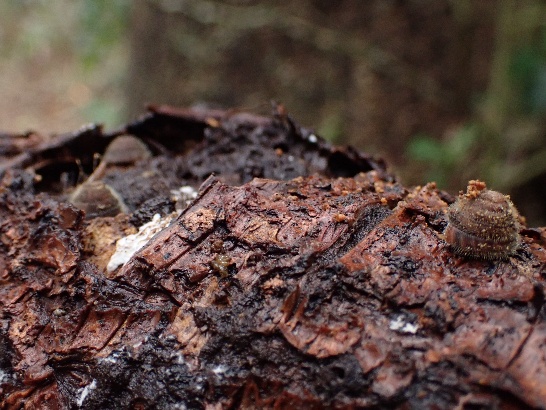
Spot the hairy snails. Credit: James Joseph Roberts
Norfolk Island is an important global hotspot for snails, with about 60 unique species.
PhD student James Joseph Roberts from the Australian Museum and Western Sydney University said snail populations in the wild are facing multiple threats including ants, climate change, and predation by rodents and feral chickens.
"The hairy snails are funky little dudes and look nothing like garden snails. They look a lot like tiny little pom poms," he said.
"We don't know for sure the function of the hairs on their shells, but in some other land snails, hairs can be an adaptation for moving around in very wet conditions. For example, you can imagine how droplets of water can be held away from rough or hairy surfaces. In helps them to move around when it's very wet."
Dr Hyman said that most people are probably only aware of the snails in their garden, which in Australia, are usually introduced species. But Australia has a whole host of beautiful native snails that play an important role in the ecosystem in breaking down leaf litter and are not the culprits munching on your cucumbers.
"Our native snails, like the hairy snail, are really charismatic and just as important as any animal. There are more recorded extinctions of land snails than for any other group of animals."


