
There is a significant gap in South Australia's approach to children's vision screening, with hundreds of children at risk of permanent, preventable vision loss each year, new Flinders University research has found.
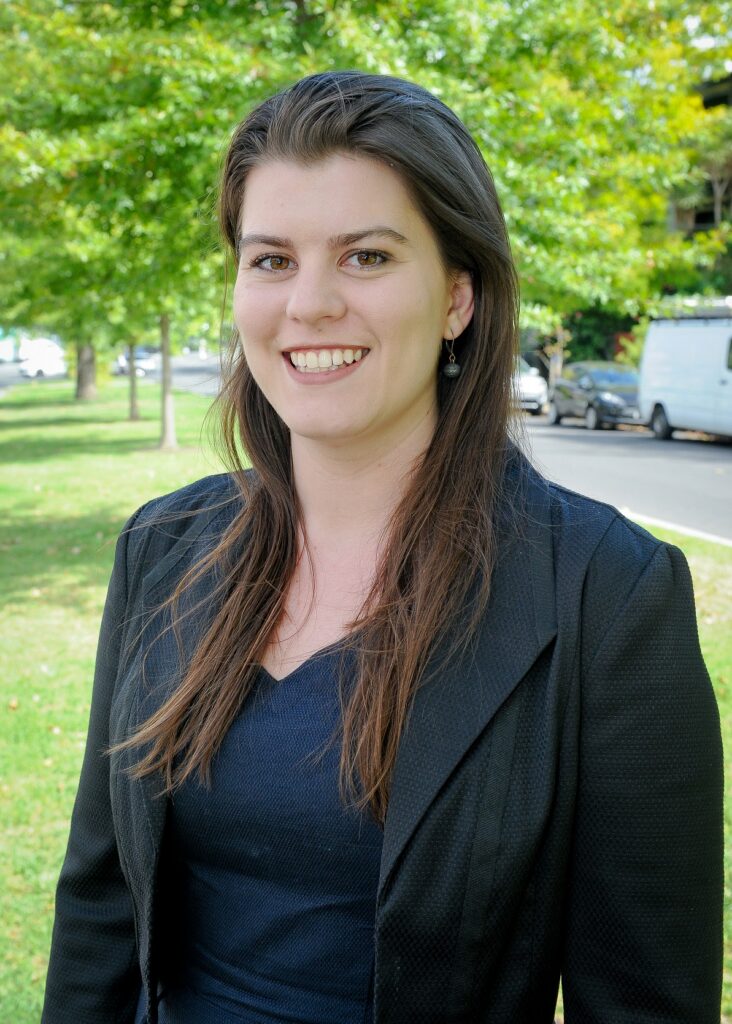
Led by optometrist and Flinders PhD candidate Cassandra Haines from Flinders' College of Nursing and Health Sciences, the study found that 17% of children in a school-based Year 3 sample had an undiagnosed vision condition, with 2.5% having amblyopia (lazy eye).
This equates to more than 400 South Australian children each year who are missing their window for effective treatment, and at risk of lifelong vision impairment as a result.
This is despite children in this cohort already having access to vision screening through the four-year-old health check, delivered primarily through the Child and Family Health Service (CaFHS), as well as access to bulk-billed optometry appointments.
Whilst these services play an important role, children with vision conditions are still going undetected in our community, highlighting the need for a universal screening approach.
The recently published study also supports the use of hand-held photorefractors as a gold standard screening tool, highlighting limitations in current screening approaches where this technology is not routinely used.
The research helps explain why children are being missed. Among those who failed screening, 64% of parents reported no concern about their child's vision, indicating that many families were unaware of an underlying visual problem.
Children themselves rarely self-report vision issues, either because they do not recognise it as abnormal or assume that others see the world the same way.
Access is also a factor. The current system generally requires families to attend a weekday appointment at a CaFHS centre or community place, which may be difficult for families with children in childcare or kindergarten, and for households where both parents work.
CaFHS plays an important role in early childhood health screening; however, the findings suggest that a universal pre-school vision screening program delivered at children's place of learning would enable early detection across the population.
Ms Haines, who is also SA State Lead at Optometry Australia, said the findings warrant serious attention.
"South Australia recognises the importance of early childhood screening, which is positive," Ms Haines said.
"However, our evidence shows that children with serious vision conditions are still being missed; including children who were offered screening through CaFHS.
"Children should not have to fall behind at school before a problem is identified. We need to look honestly at the result and ask whether the system is delivering what parents and families deserve."
A $1.1m investment with lifelong returns
Optometry Australia says modelling indicates a universal pre-school screening program delivered at children's place of learning would cost around $1.1 million per year, a modest investment compared to the lifelong educational, social and economic costs associated with preventable vision impairment.
The call for universal pre-school vision screening is supported by leading eye health experts, including South Australian ophthalmologist Dr Joanna Black.
"The evidence is clear: early vision screening changes outcomes," Dr Black said.
"Simple conditions, if missed, can lead to permanent impairment and years of avoidable challenges in the classroom.
"Universal pre-school vision screening is a practical and proven way to support children's development across the state."
The proposal is also backed by Optometry Australia, the Royal Australian and New Zealand College of Ophthalmologists, Orthoptics Australia, Vision2020, Flinders University and other sector leaders.
"Our goal is simple: every South Australian child deserves the best possible chance to see clearly and thrive at school," Ms Haines said.
"Delivering screening through a child's pre-school or daycare reduces burdens on families and helps capture the most vulnerable children who may otherwise miss assessment.
"We welcome the opportunity to discuss this new evidence with the South Australian Government and to advance a more consistent, universal approach to pre-school vision screening."


