
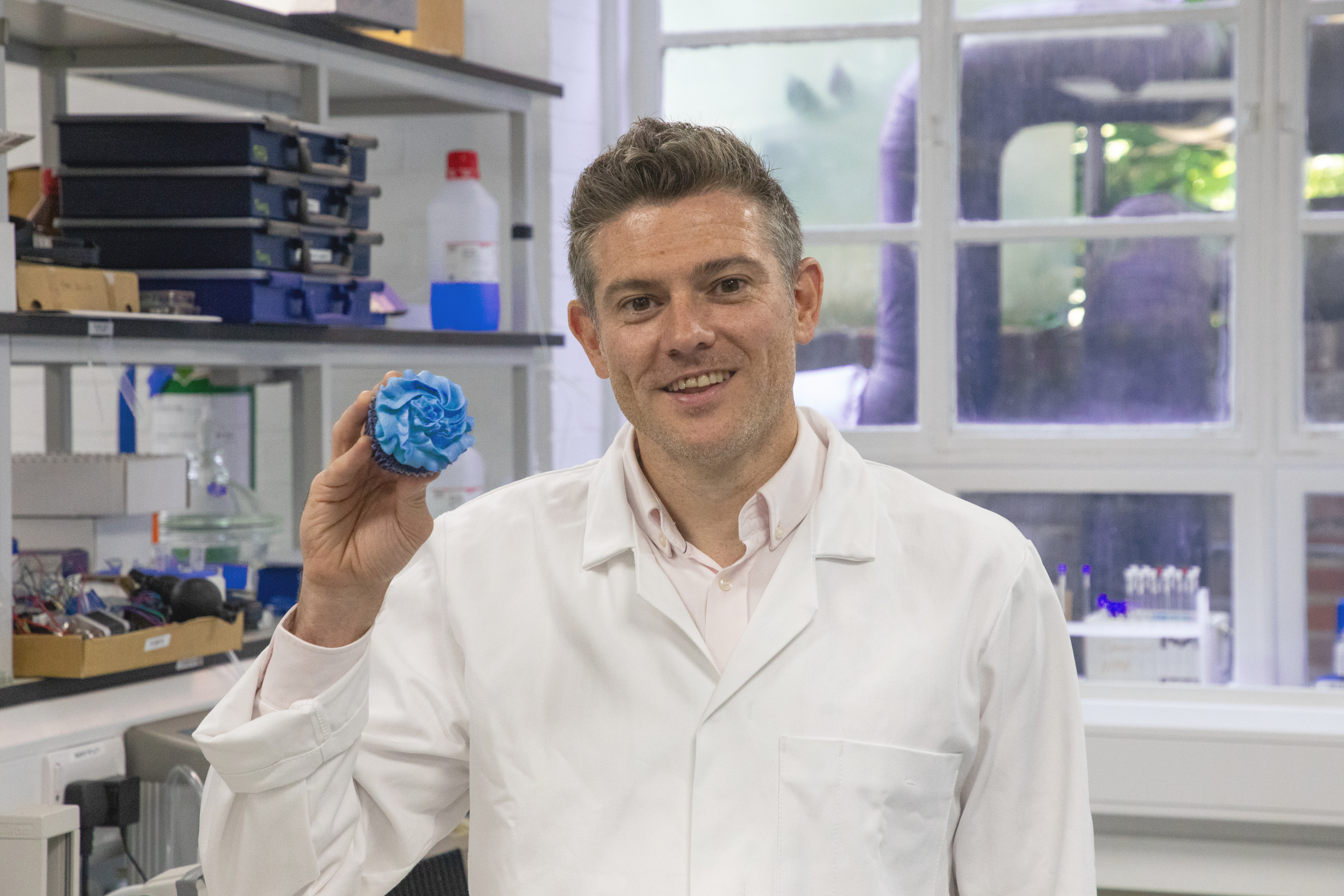
Taking a blue poo might seem like the stuff of nightmares but scientists think it could reveal the connection between speedy digestion and quick thinking.
Experts from the University of Southampton want people to take their toilet test to time how quickly their bodies digest an edible muffin made with dye.
It is part of a citizen science research project to gauge whether the speed at which the cupcakes move through our guts can affect our brain function.
Once their poo turns blue, participants are asked to play mini online games to measure their problem-solving skills and decision-making under pressure.
Southampton scientist Professor Jon Swann , who is behind the mucky study, said there is still a lot about the gut and brain connection experts are yet to fully understand.
He added: "Everyone's gut works at different speeds, telling us something about our gut function, but we still don't really know what that means for our brains.
"This is where our blue-poo test comes in. By measuring how quickly the muffins pass through you, we can work out if a faster gut transit means a sharper mind - or if slower digestion changes how you think."
The Southampton scientists are after data from thousands of participants in the UK.
Prof Swann said the muffins can be baked at home using a simple vegan-friendly recipe with blue food dye purchased online.
The blue poo game is open to kids from as young as five all the way up to adults nearing 100 years old.
After participants complete the five-minute brain game, they get an instant summary of their results - pitting their cognitive performance against others across the country.
Prof Swann added: "We want to map out how gut-digestion times shift across age groups, sexes and regions, and how that links with brain performance.
"While faster digestion may sound better for health, there is likely a sweet spot.
"A slow gut transit means food takes days to move through our body, potentially being broken down to chemical that affect our brain. But very quick transit time reduces our body's ability to absorb water and nutrients."
The blue poo test is led by the Gut Immune Brain Axis Network+ and funded by the Biotechnology and Biological Sciences Research Council (BBSRC) , which is part of UK Research and Innovation.
Southampton scientists hope to publish results next year.
Dr Amanda Collis, BBSRC Executive Director of Research Strategy and Programmes, said: "Research into the gut-immune-brain axis is revealing that the microbes and processes in our gut may influence far more than digestion alone.
"Through the GIBA+ Network, BBSRC is supporting researchers to uncover how signals between the gut, immune system and brain affect health, behaviour, and cognition.
"The Blue Poo Test is a brilliant example of how citizen science can help tackle these questions at scale.
"By taking part, members of the public can contribute to research that could improve our understanding of the links between gut function and brain performance, while learning something fascinating about their own bodies in the process."


