
RMIT University engineers in Australia have built a remote-controlled minibot that hoovers up oil spills using an innovative filtering system inspired by sea urchins.
Oil spills are still a serious problem around the world. They can badly damage oceans and coasts, kill or injure sea animals and birds, and cost billions of dollars to clean up and repair the damage.
The team developed a minibot called the 'Electronic Dolphin' to address this global challenge, by collecting oil from the surface of water, offering a safer and more targeted way to respond to spills in sensitive environments.
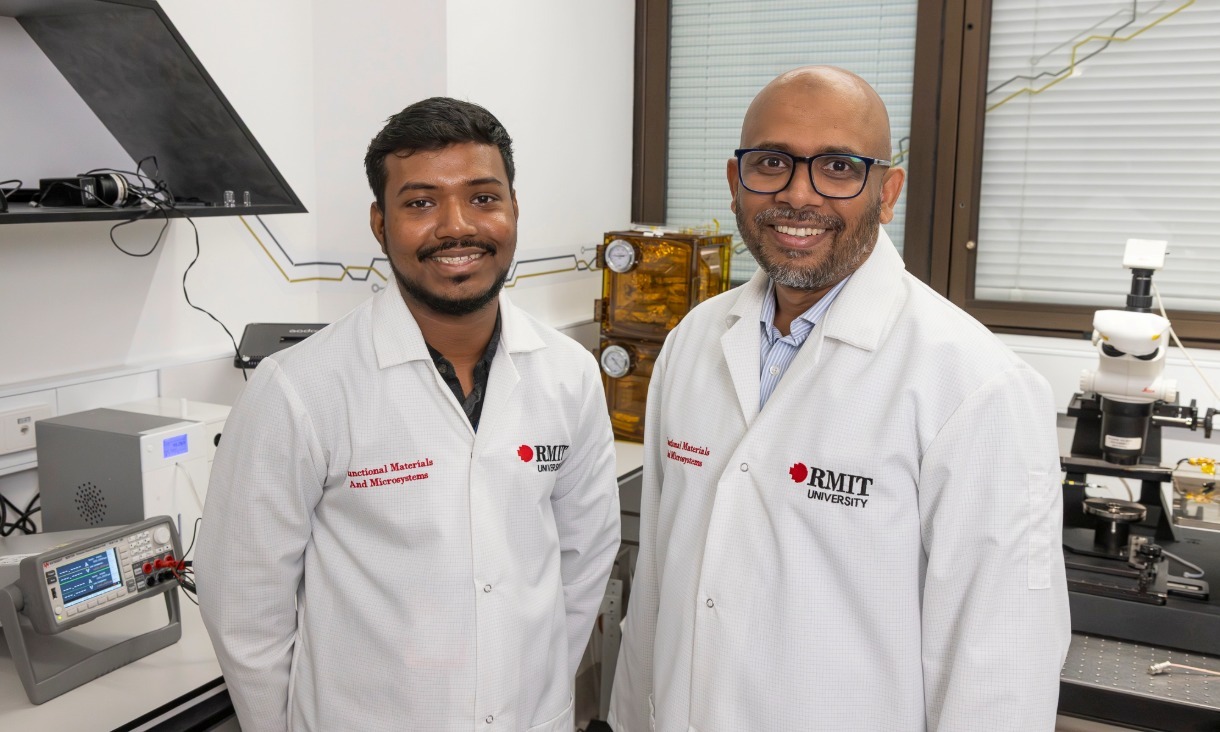
Researchers PhD researcher Surya Kanta Ghadei and Dr Ataur Rahman in an RMIT University engineering lab working on the sea‑urchin‑inspired oil‑spill filtering material. Credit: Peter Clarke, RMIT University
The device, shaped like a dolphin and about the size of a sneaker, integrates a specially designed filter that repels water while instantly absorbing oil, allowing the robot to skim slicks and collect oil with high efficiency.
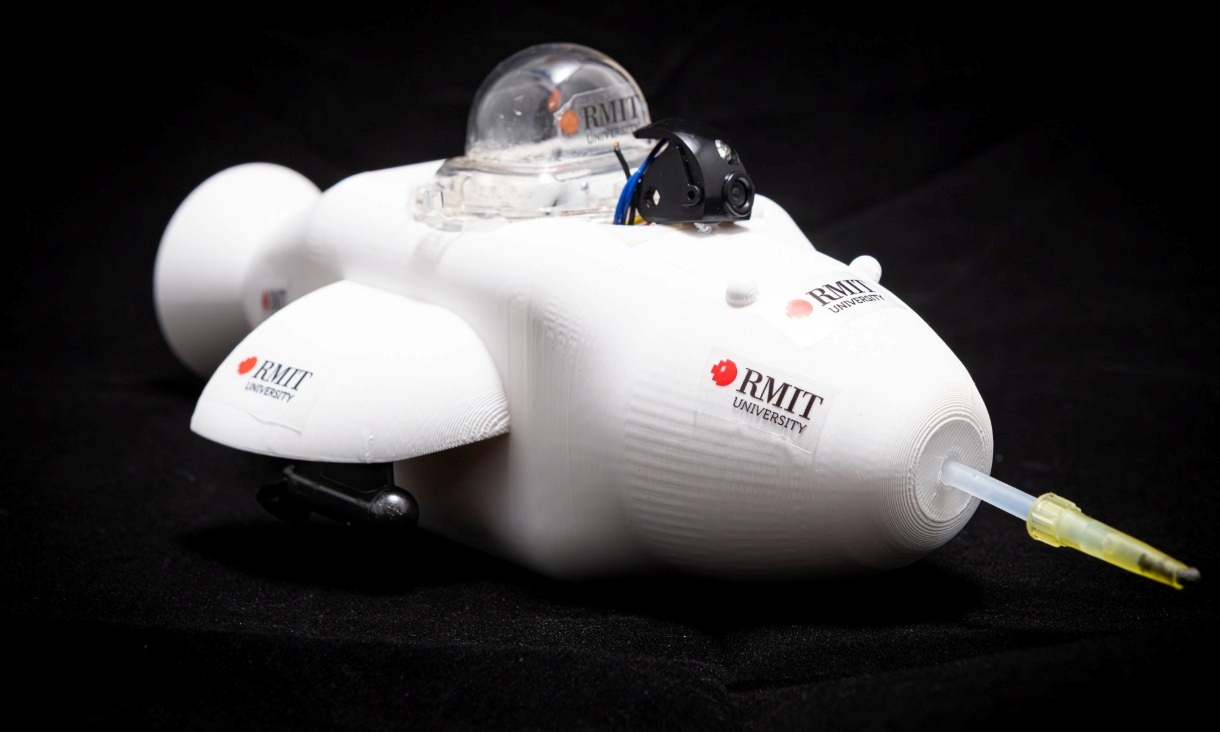
The RMIT team's Electronic Dolphin minibot, a proof‑of‑concept device designed to skim oil from the surface of water, featuring a front‑mounted nozzle and compact dolphin‑like body. Credit: Peter Clarke, RMIT University
Lead researcher Dr Ataur Rahman, from RMIT's School of Engineering, said the proof-of-concept minibot showed how small, adaptable platforms could support clean-up efforts without exposing responders to hazardous conditions.
"Oil spills can take a huge environmental and economic toll. We wanted to create a system that can be deployed quickly, steered accurately and used in areas that are too risky for people to access," he said.
"We have a long-term vision of creating dolphin‑sized robots that can vacuum oil, return to base to empty their tanks, recharge, then redeploy automatically - repeating the cycle until the job's done."
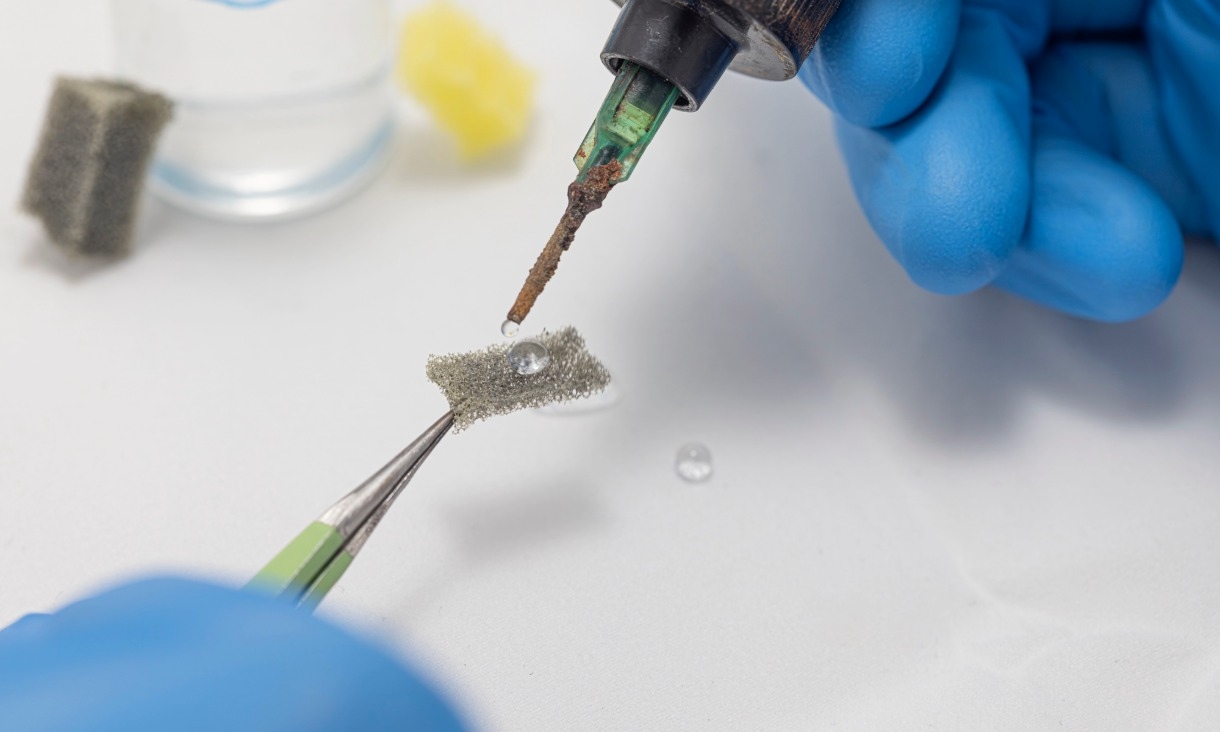
A researcher demonstrates the water‑repellent properties of the coated filter, showing water beading on the surface. Credit: Peter Clarke, RMIT University
The experimental minibot runs for about 15 minutes on its current battery, but the final version would scale up depending on pump size and oil‑storage capacity.
"Unlike past oil cleanup materials that often use harsh, hazardous chemicals and work only as fixed filters involving manual operation, our new technology is made using an eco-friendly coating for filter we developed," Rahman said.
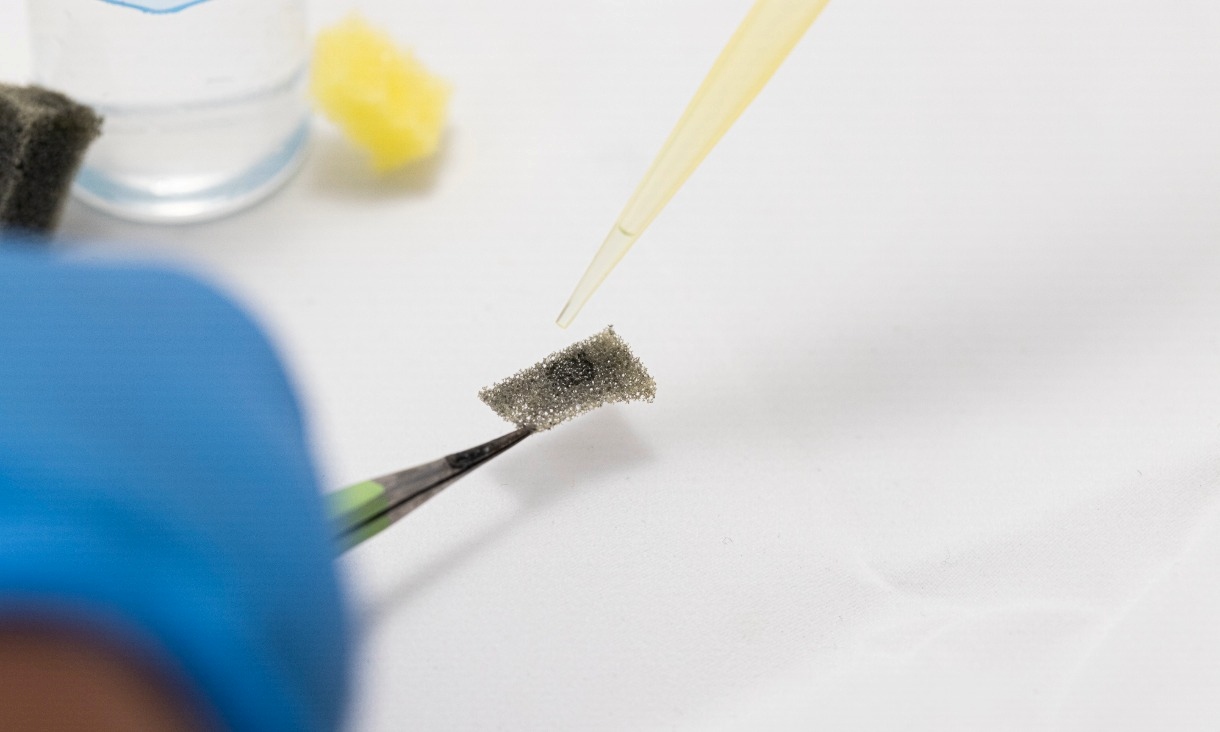
A researcher applies oil to the coated filter material to demonstrate its rapid absorption while remaining water‑repellent. Credit: Peter Clarke, RMIT University
The minibot houses the coated filter at its front, with a small pump drawing oil through the filter into an onboard collection chamber. In controlled tests, it recovered oil at about 2 millilitres per minute with more than 95 per cent purity, maintaining performance without the filter becoming waterlogged.
The filter uses a special coating that grows tiny, sea urchin-like spikes you can only see under an electron microscope. These little spikes hold pockets of air that make water roll straight off, while oil sticks to the surface. That means the material can pick up oil without soaking up water, and because it is light and can be reused many times, it Is practical for real cleanup work.
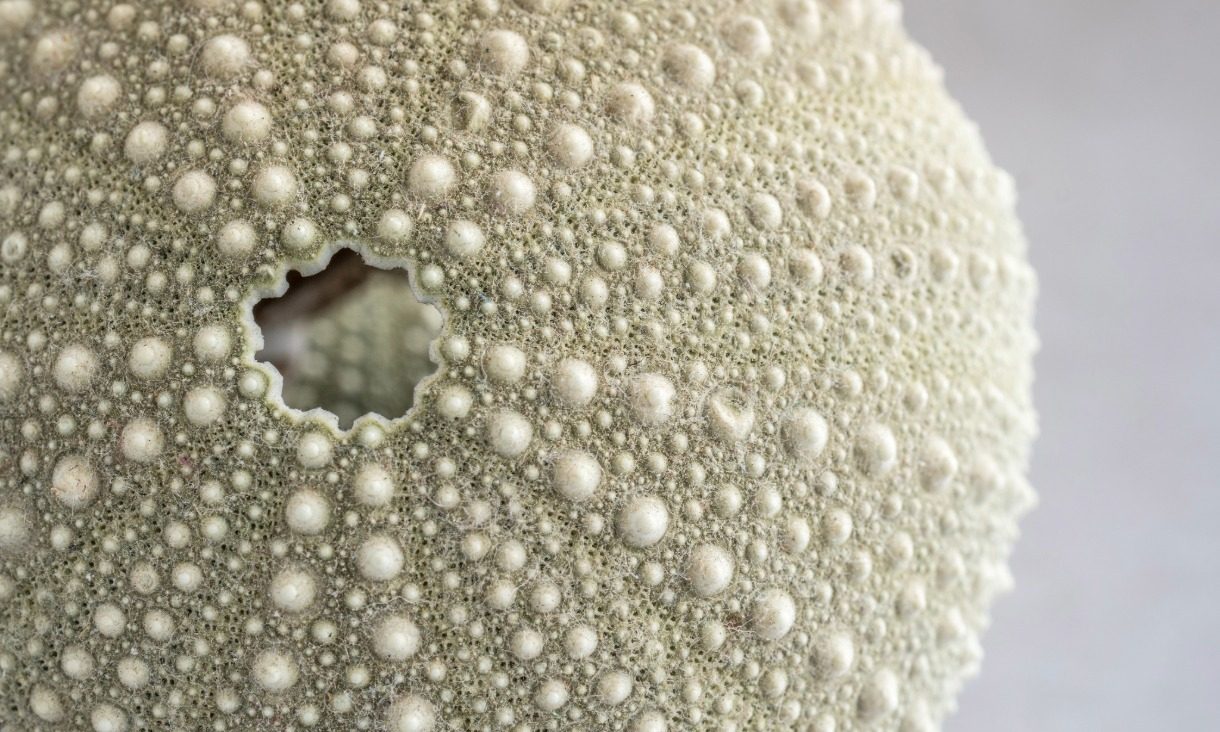
A close-up view of a sea urchin shell, showing its surface covered in raised bumps and tiny spikes that inspired the RMIT team's water‑repelling and oil-absorbing filter technology.
PhD researcher Surya Kanta Ghadei, who led much of the materials development, said the project was driven by both technical ambition and personal experience.
"Growing up in India, I saw the impact oil spills can have on marine life, especially turtles," he said.
"That stayed with me. When I began my PhD, I wanted to create something that could help responders act faster and keep wildlife out of danger."
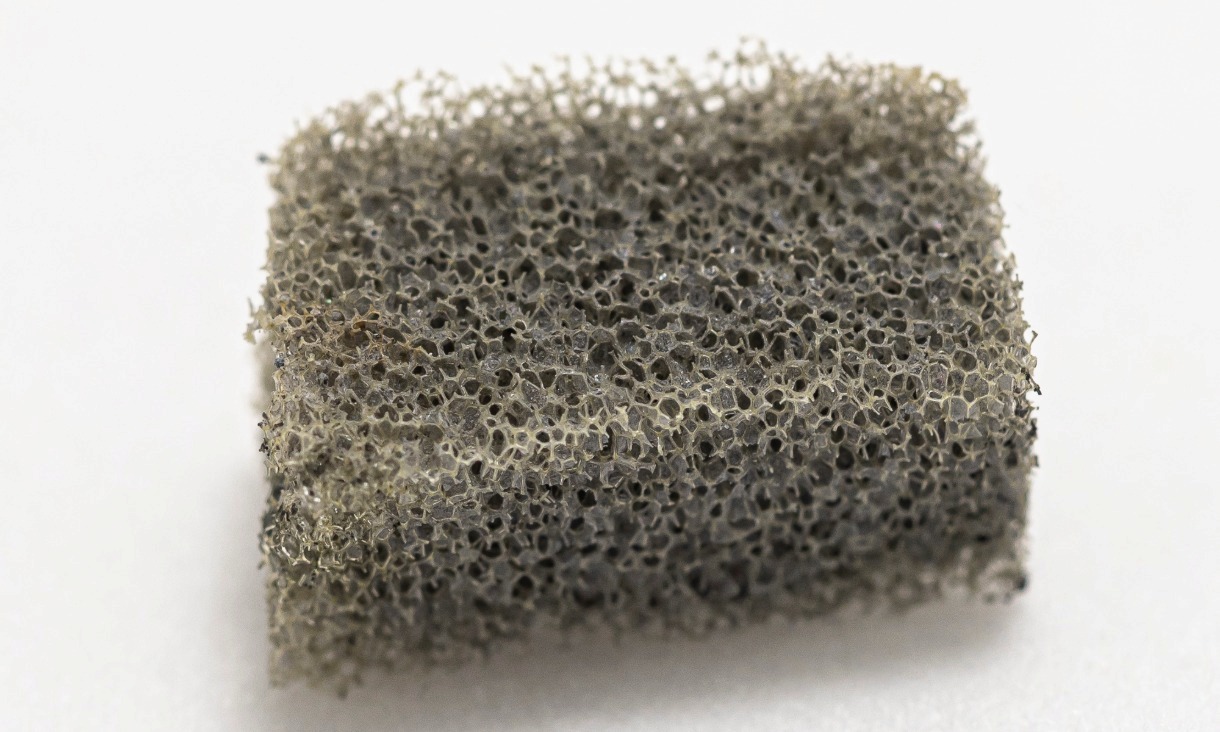
A macro view of the porous, sea‑urchin‑inspired filter material developed for the Electronic Dolphin minibot. Credit: Peter Clarke, RMIT University
The team is now exploring how to scale the technology by increasing the filter area across the robot's surface, which would require a higher capacity pump. Field testing and long-term durability assessments are planned as the next stage of development.
Rahman said the researchers were keen to work with industry or innovation partners to refine the design for specific applications and assess pathways for wider deployment.


