
Creating a small water garden is much easier than you might think, and even a tiny feature can make a big difference in attracting wildlife to a small courtyard. Below, Gardens for Wildlife member Mandy explains how she used a small children's plastic pool, a few local plants, and some rainwater to create a thriving micro-habitat in just a few weeks.
Setting up the trial pond
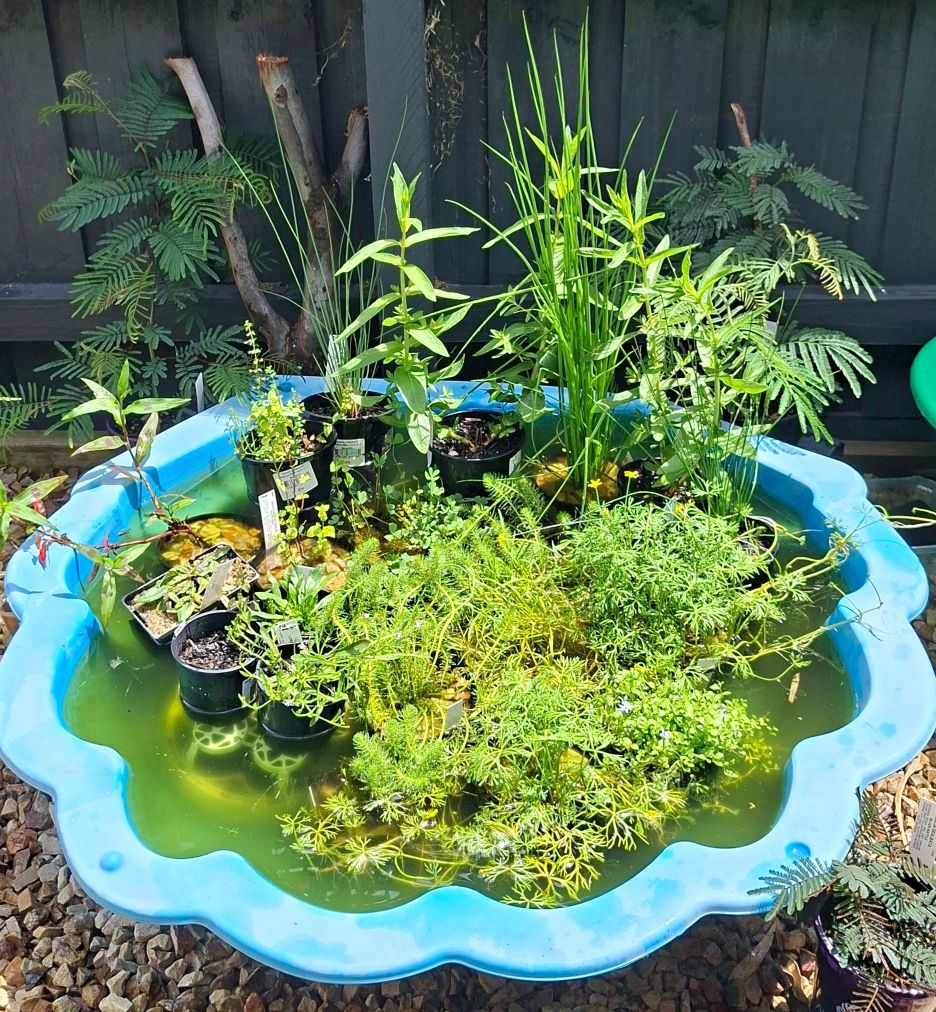
'In October, I picked up a plastic children's pool on the nature strip and wanted to see if I could create a pond in my small courtyard. I placed it in a half-sunny spot and filled it mostly with rainwater. I then visited Greenlink Nursery and got 16 pond and wetland species to see how they'd perform in a small setup.
I repotted the tube stock into 14cm pots filled with native potting mix. I added a thin layer of washed sand and gravel to help the pond plants stay submerged. I also stacked a few racks in the tub so each plant could sit at the right depth. The wetland ones sat partly submerged, and the true pond species were placed fully underwater.
Rapid growth and wildlife visits
Within just a month, a few of the emergent plants, such as Green Rush (Juncus gregiflorus) and Purple Loosestrife (Lythrum salicaria), had doubled in size. Submerged species, including Swamp Isotoma (Isotoma fluviatilis), White Purslane (Montia australasica), Common Nardoo (Marsilea drummondii), Water-milfoil (Myriophyllum crispatum,), and River Buttercup (Ranunculus inundatus) also grew strongly.
Wildlife quickly discovered the new habitat. A female Common Bluetail Damselfly (Ischnura heterosticta) visited the pond and laid eggs among the River Buttercup (Ranunculus inundatus) only a month after the pond was filled. Native bees visited the pond for water on hot days, and hoverflies loved to hang around too.
Bonus for the rest of the garden
The pond also altered the surrounding microclimate. An adjacent moisture-loving Black Wattle (Acacia mearnsii) in a pot began producing larger new leaves and growing toward the pond, likely in response to the increased humidity.
Why you should try one
A tiny water garden is low-effort, surprisingly self-maintaining, and full of rewards. Even in a small courtyard, a single container of water can support local wildlife, improve the microclimate for surrounding plants, and make the garden feel cooler and more alive.


