
The City of Johannesburg, South Africa's economic capital and most densely populated city, is experiencing a water shortage which has seen residents bathing in public in protest. The only thing more ludicrous than the lengths fellow citizens have had to go to try and resolve the matter is the Marie Antoinette-esque response from officials who say that they too are impacted by this shortage, and have even had to "go to a certain hotel to bathe" to navigate the situation.
Some of our city's suburbs have experienced disruptions to domestic water supply for weeks at a time, and city officials warn of even worse times ahead. It is hard to imagine that taps are running dry in the country when just a month ago, the region experienced one of the worst floods in its recorded history. So this isn't simply about "running out of water." It's about climate stress meeting weak systems and the most vulnerable communities paying the price.
Water everywhere, but not a drop to drink
A Red Level 10 storm in southeastern Africa reportedly saw hundreds of thousands from Mozambique, South Africa and Zimbabwe displaced and hundreds dead. Residents from one of South Africa's villages most impacted by the floods, Mbaula Village, Limpopo province, described the water arriving "with a roar; not a rise, but a wall that gave no warning". But, despite all of that rain in the region, and dams servicing the city reportedly sitting at 100 percent capacity, water restrictions persist.
Civil society groups argue that Johannesburg's water crisis was not primarily caused by drought but by chronic infrastructure neglect, the resulting massive water losses, governance failures at Joburg Water, and poor coordination between authorities. Burst pipes around the city are rife. But despite President Cyril Ramaphosa's attempts to upscale repairs and maintenance ahead of last year's G20 meeting hosted there, continuous heavy showers during the subsequent rainy season have not only undone a lot of these patchwork repairs but have also delayed many structural repairs from going ahead.
Very often we think of climate impacts as the dramatic ruin that results from floods, fires and droughts. But the slow and silent ways that climate change chips away at the fabric of our cities frequently goes unnoticed. Southern Africa is currently experiencing a rainy season super-charged by the climate crisis and La Niña. While Johannesburg may not have flooded to the extent of its northern neighbours Mpumalanga and Limpopo, recent continuous showers have accelerated its infrastructural woes. Until planners address this breadth of climate impacts communities will continue to be left in the lurch.
 (@greenpeace)
When the math isn't mathing
Despite general awareness of the climate crisis, and tools developed by scientists to help us anticipate and navigate the destruction it brings, there is often a disconnect in understanding the immediacy and severity of the local risks we face. Perhaps not surprising when on the global stage it is positioned by many decision-makers as a problem for tomorrow (and not a problem at all, by others).
When South African Weather Services issued a Red Level 10 warning for the storm that would eventually destroy many homes and lives, many people stayed put because they could not fathom the extent of the destruction that would ensue. Even South African government officials reportedly ignored the warning, and only started evacuation efforts once the storm hit. This speaks to a much deeper gulf between people and the science that could protect us.
As water woes rise, vulnerabilities deepen
Experts are now warning of the possibility of a malaria outbreak in flood-affected communities across southern Africa. Drinking water has reportedly become contaminated with flood water, which scientists warn could lead to a cholera outbreak. Having to deal with illness threatens to further marginalise those trying to rebuild their lives with limited resources and insufficient access to healthcare. Globally, the UN has warned that freshwater reserves are shrinking due to rising temperatures and mismanagement. South Africa is feeling that pressure acutely.
Given the South African government's delayed response to the flood warnings, one might excuse any cynicism in their ability to proactively deal with the cascading issues to come in its aftermath. South Africa's water crises show what happens when climate stress meets aging systems. It also demonstrates an urgent need for climate adaptation.
The lesson here is clear: climate resilience must be built into water infrastructure before a crisis hits. At the same time we must hasten the transition away from polluting and water-hungry industries that are driving us deeper into environmental crises - and embrace sustainable water and energy systems for all.
Thirsty for AI
We're also seeing a worrying disconnect between decision-making and science as we witness South Africa's AI data centre boom. Despite President Ramaphosa's acknowledgement of the water crisis as a national issue, water guzzling industries like AI data centres seem to be rapidly spreading in the country.
Even the simplest ChatGPT prompt costs roughly one bottle of drinking water to cool down electronic systems at these facilities, according to a Washington Post study with the University of California.
A recent Greenpeace East Asia report found that AI-related carbon emissions are soaring, with electricity consumption for AI chip manufacturing increasing over 350% in recent years. Not only is AI depleting our water supplies, but its growing contribution to the climate crisis threatens to further exacerbate the situation by worsening climate impacts.
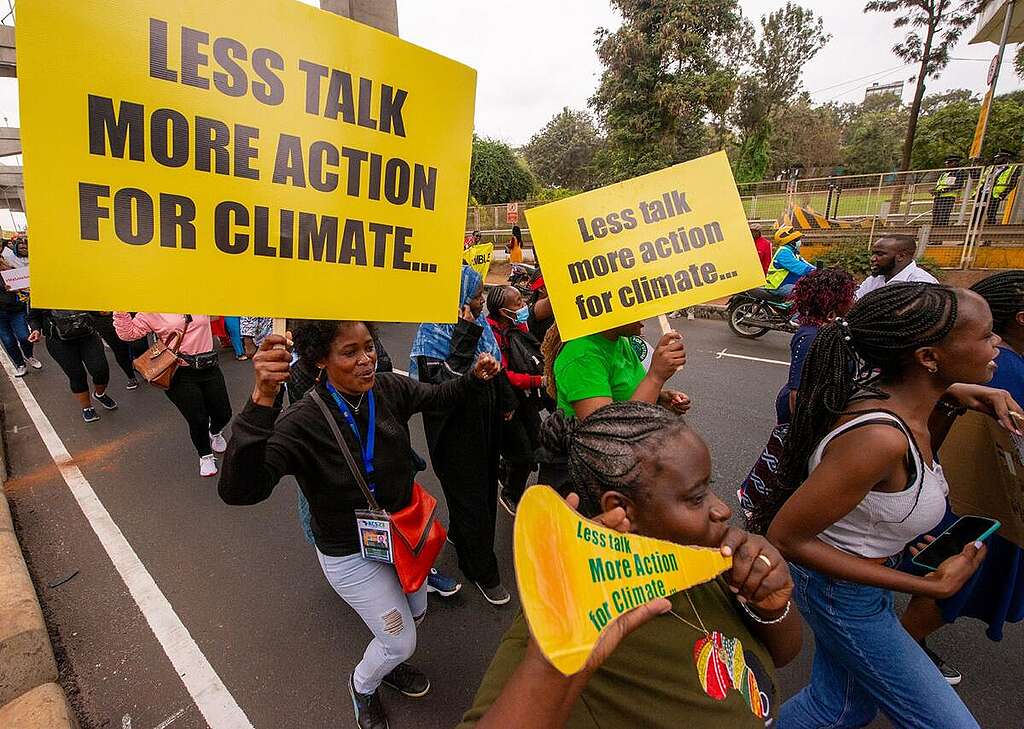
Demand that polluters pay for the damages they continue to cause across Africa and that they change course now
The climate crisis is not a thing of tomorrow. We see it in the increased frequency and severity of extreme weather disasters around the world. But, we also see it in the slow and steady collapse of the world around us. To respond effectively requires urgent, concerted effort.
Only when we see reckless pursuit of profit for what it truly is, can we understand the constant risk that greedy corporations put us in. And what they carelessly take away from us every day. And, maybe then we'd be more selective of the industries we let in.


