
Children and young people diagnosed with aggressive cancers could benefit from a pioneering project supported by Southampton researchers to create new treatments.
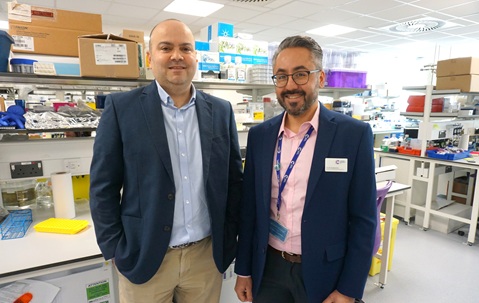
Scientists, Dr Ali Roghanian and Dr Salah Mansour from the University of Southampton, in partnership with teams at MiNK Therapeutics have been selected to develop an immunotherapy treatment that could target paediatric cancers such as bone sarcomas, acute myeloid leukaemia (AML) and medulloblastoma - a type of brain tumour.
Working together, the transatlantic team is among the first to be selected by 'C-Further' - a consortium which aims to rapidly transform innovative ideas into more effective and less toxic treatments for children and young people with cancer. This new initiative is enabled by Cancer Research UK's innovation arm, Cancer Research Horizons, LifeArc, and Great Ormond Street Hospital Charity (GOSH Charity).
Dr Catherine Pointer, from Fareham, has beaten AML twice as a teenager but lives with life-long effects from her cancer treatment.
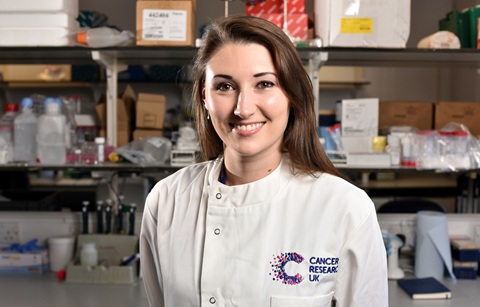
Now a cancer scientist herself in Southampton, Catherine said: "Acute myeloid leukaemia survival has remained poor for decades. After my AML relapsed at the age of 17, my only option was a stem cell transplant from a donor. The treatment I received had such harsh effects on my body and caused irreparable, life-long damage.
"In the 16 years since, I continue to develop new diseases as a result of the intensive whole-body treatment I was given and worry about what the future holds for me. As a cancer scientist I know we can do better and this study is doing just that."
Dr Roghanian and Dr Mansour are based at the University of Southampton's Centre for Cancer Immunology, where they are advancing new treatments that can use the body's own immune system to recognise and attack cancer cells.
In this new immunotherapy research project, the international team will be developing a new type of immunotherapy, specifically for hard-to-treat children's and young people's cancers, that use cells from healthy donors - rather than from the patient.
Dr Ali Roghanian, Associate Professor in Cancer Immunology at the University of Southampton and co-lead investigator, said: "Using cells from healthy donors provides a more reliable starting point for creating effective treatments.
"With existing therapies, cells are taken from the patient's own blood and can sometimes take several weeks to prepare before being returned to the patient. During this process, the patient may then become too unwell to receive them.
"What we're aiming to develop is an 'off the shelf' treatment consisting of cells taken from healthy donors that are engineered, stored and ready to offer to the young patients who need them, without the delays they currently face."
The team will engineer immune cells to target a protein called PRAME, which cancer cells produce to help them grow and spread. In Southampton, Dr Roghanian and Dr Mansour will assess how effective this new therapy is, how safe it appears and how it works in different children's and young people's cancers, often using tumour samples donated by patients. MiNK Therapeutics will provide crucial proprietary immune cell technology and engineering capabilities alongside its translational and manufacturing expertise.
Dr Mansour, Associate Professor of Immunology at the University of Southampton and co-lead investigator, said: "We were delighted to have been selected by C-Further, allowing us to accelerate a new type of immunotherapy for children and young people with cancers that urgently need better treatment options. By combining engineered immune cells with cutting-edge translational research in Southampton, we aim to develop therapies that are both more effective and far less toxic than current approaches."
"Many children and young people with these cancers either do not respond to existing treatments or face life-long side effects. Our goal is to develop therapies that not only improve survival but also protect long-term health."
The University of Southampton has recently announced plans for a groundbreaking new medical institute in the city, bringing together the greatest minds in medicine, computer science and engineering. The pioneering Institute for Medical Innovation will be a joint initiative between the University of Southampton and University Hospital Southampton NHS Foundation Trust. The £100m facility will bring researchers and medics together in the fight against devastating diseases such as cancer, dementia, sight loss, infectious diseases and respiratory and allergic conditions.
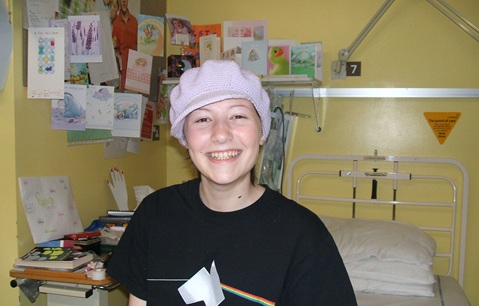
Dr Pointer, who was first diagnosed with AML at the age of 14 and again at 17, said: "This is better than the treatment I experienced because it potentially doesn't involve chemotherapy or radiation, which indiscriminately attack all cells, healthy or cancerous.
"This means patients are stronger and healthier going into their treatment, and most importantly won't experience a lifetime of compromise and fear of what damage has been done."
Professor Nick Evans, Faculty of Medicine Associate Dean for Research, said: "Southampton has a strong track record in advancing innovative immunotherapies from discovery towards clinical impact, and this programme reflects the quality and ambition of our research community. The C-Further scheme provides a powerful framework for uniting academic, industry and charity expertise to accelerate translation, and the combined strengths of Dr Roghanian, Dr Mansour and their collaborators provide an excellent team for progressing new treatment options for children who have cancer."
The project also draws on the translational expertise and global paediatric oncology networks of C-Further's core partners: Cancer Research Horizons, LifeArc and GOSH Charity. The collaboration aims to advance CF-033 to pre-clinical candidate nomination, subject to agreed scientific milestones. It is among the first programmes to join C-Further's growing pipeline, which is backed by an initial budget of £30 million.
C-Further welcomes expressions of interest from researchers, innovators and partners aligned with its mission to accelerate well-tolerated, tailored cancer treatments for children and young people. The deadline for submissions for the next funding round is 13 March 2026.
The University of Southampton's Cancer Immunology Fund supports life-saving research at the university's Centre for Cancer Immunology. Visit the Centre for Cancer Immunology website to find out more about the work or to make a donation to the research.


