Research has shown that conservation campaigns could turn the tide on the illegal ivory trade if they focused less on themes of 'guilt' and more on why people want to buy ivory in the first place.
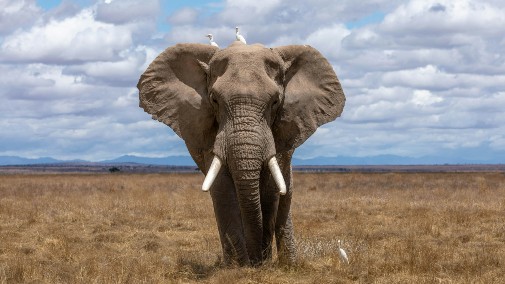 Researchers say cultural insight and behavioural evidence is needed for more effective campaigns
Despite decades of awareness campaigns and trade bans, ivory buying in Asia still persists. At the recent 20th meeting of the Convention on International Trade in Endangered Species of Wild Fauna and Flora (CITES) in Uzbekistan, the international ban on ivory trade was upheld.
Researchers at the University of York say many anti-ivory campaigns have struggled because they miss the human side of the problem - why people buy ivory and how the meaning of it shapes the decision to buy.
The first study argues that conservation organisations could make far greater progress if they applied the same evidence-based techniques used in commercial marketing or modern public health campaigns.
Moral reasons
The second study explores the social, cultural and moral reasons behind ivory consumption in China. It finds that ivory buying is often tied to ideas of status, respectability and cultural identity, rather than an ignorance about elephant poaching.
Lead author, Molly Brown, from the University of York's Leverhulme Centre for Anthropocene Biodiversity, said: "Campaigns are weakened because they focus solely on legality or animal welfare, while ignoring the other social and cultural norms to ivory ownership.
"Ivory buying is about more than just status objects, it is about identity and belonging. If conservation campaigns don't recognise that, they'll struggle to actually change consumer behaviour."
Social marketing
Researchers reviewed dozens of demand-reduction projects and found that while many programmes promote awareness, few apply the tools of social marketing, such as targeting specific audiences, using behavioural theory, or evaluating impact.
Professor Colin Beale, from the University of York's Department of Biology, said: "Many campaigns are still built on assumptions rather than evidence. They are passionately fought campaigns, but they need to be far more strategic in their execution. They need data and psychology to understand what actually moves people to make a change in their buying behaviours, as well as a system to test if these campaigns work.
"We already know why people buy ivory, so the next step is to design better campaigns that respond intelligently to those reasons. That's where meaningful change will happen."
Change habits
This shift, they argue, could help move the conservation sector away from primarily moral appeals and toward strategies that actually change habits.
Despite China's 2017 ban on the domestic ivory trade, markets continue to operate illegally, and ivory remains available through online platforms and private networks. Researchers say that understanding the motivations of consumers, and particularly urban and middle-class buyers who view ivory as a symbol of cultural heritage or social prestige, is crucial for any long-term solution.
If campaigns can link cultural insight with behavioural evidence, researchers argue, they could become far more effective at curbing unsustainable wildlife consumption, not only for ivory, but for other products driving species decline.
The two studies are published open-access in the journals in People and Nature and Conservation Biology.