
Key points
- Mammalian meat allergy is an allergy to a sugar molecule found in most mammals triggered in some by a tick bite.
- Preliminary findings from CSIRO research indicate that nationally case numbers of mammalian meat allergy have increased by 40 per cent annually since 2020, suggesting this is a growing health concern in parts of Australia.
- CSIRO researchers are looking at the link between mammalian meat allergy and increased risk of cardiovascular disease.
Mammalian meat allergy (MMA) is one of the few known food allergies caused by an environmental trigger — a tick bite. In simple terms, MMA results in an allergic reaction to red meat, making it difficult or sometimes even impossible for affected individuals to enjoy meat without experiencing adverse symptoms.
Preliminary findings from CSIRO research indicate it is on the increase in Australia. But it is more than a food allergy. CSIRO research is also focusing on the link between MMA and cardiovascular disease.
Mammalian meat allergy in Australia
Unlike other tick-related diseases such as Lyme disease or tick typhus, MMA is not caused by bacteria or viruses carried by ticks.
MMA is an allergy to a sugar molecule found in most mammals, including cows, pigs and sheep. This sugar is called galactose-α-1,3-galactose, or alpha-Gal for short. It is not found in humans or primates. So, when some humans are bitten by these ticks, our immune system is reprogrammed to defend against alpha-Gal when we eat meat.
In Australia, the main culprit is the Eastern paralysis tick (Ixodes holocyclus), commonly found along the east coast from north Queensland, through New South Wales and down to northern Victoria.
These ticks are already known for causing paralysis in pets and transmitting dangerous pathogens such as tick typhus to humans. Unlike traditional food allergies that develop in childhood, MMA typically manifests in adults. Symptoms can include: 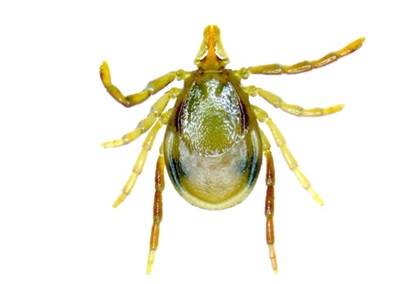
- Hives or itchy skin
- Swelling of the lips, throat or face
- Stomach pain, vomiting or diarrhea
- Difficulty breathing or anaphylaxis.
The condition can extend beyond red meat. Some sufferers report reactions to gelatin which is frequently found in lollies and common medications. In addition, some lifesaving medicines and drugs also contain alpha-Gal, making this allergy a complex health challenge.
MMA reactions often take hours to appear, with symptoms typically emerging three to six hours after eating — making it difficult to connect the delayed hives or nausea to the earlier meal.
How big is the problem in Australia?
Australia was one of the first countries where MMA was identified, with cases linked to tick bites dating back to the 1980s. Since then, research has revealed the scope of this condition is much larger than previously understood.
CSIRO has teamed up Australian pathology providers to produce the first comprehensive national surveillance of MMA in Australia using anonymous testing data from QML Pathology, Douglass Hanly Moir Pathology, Sullivan Nicolaides Pathology, and Laverty Pathology.
Early findings reveal that MMA may be far more common in certain parts of Australia than previously thought. In some tick-prone regions, rates exceed 700 cases per 100,000 people. Nationally, reported cases have been climbing by around 40 per cent annually since 2020, pointing to a growing health concern.
However, not everyone with the allergy experiences symptoms, which means the number of people with undiagnosed MMA is unclear. 
Senior Research Scientist and study lead Dr Alex Gofton said this is significant as recent international and Australian studies have uncovered a potential link between MMA and heart disease.
"A large Australian study of more than 1,000 people found people having heart attacks were 12 times more likely to have alpha-gal antibodies than healthy people," Dr Gofton said.
"Interestingly, most of the patients in this Australian study didn't even know they had a meat allergy. They weren't experiencing allergic reactions, but their immune system was still responding to alpha-Gal."
To understand this complex link, CSIRO researchers are working with Australian Red Cross Lifeblood to screen blood donor samples to try to determine how many Australians may unknowingly have alpha-Gal antibodies and potentially be at an increased risk of cardiovascular disease.
"This base-line data will be crucial to help determine whether tick bites are a cryptic driver of cardiovascular disease, and whether alpha-Gal antibody screening tools could help to better identify people at risk of cardiovascular disease."
How to protect yourself
It goes without saying that the best defence against MMA is avoiding tick bites altogether. But for many, it's not always that simple.
When you're heading into tick territory such as bushland, long grass or even suburban gardens, cover up with long sleeves and pants tucked into socks. Light-coloured clothing makes it easier to spot ticks before they attach.
Insect repellents containing DEET or picaridin work well against ticks. Apply them to exposed skin and clothing, paying special attention to areas where ticks love to hide behind ears, along hairlines and in skin folds.
After spending time outdoors, do a thorough tick check. Ticks can be as small as a poppy seed, so look carefully. Don't forget to check pets too, they're excellent at bringing ticks inside.
What to do if you find a tick
If you discover a tick attached to your skin, FREEZE DON'T SQUEEZE!
Sprays which contain ether, such as Tick Off, can be used to kill ticks in place, allowing them to be safely removed with fine-tipped forceps once dead. Ether is a chemical that rapidly freezes and dehydrates the tick, effectively killing it and reducing the risk of the tick injecting allergens or pathogens during removal.


