
A new UC Davis Health study reveals that transportation challenges create major barriers for patients with end-stage kidney disease who receive hemodialysis at a clinic. These challenges also have a negative impact on dialysis clinic staff.
The study was published in the Journal of Nephrology Social Work.
Hemodialysis and kidney disease
Chronic kidney disease affects an estimated 35.5 million Americans, or more than 1 in 7 U.S. adults.
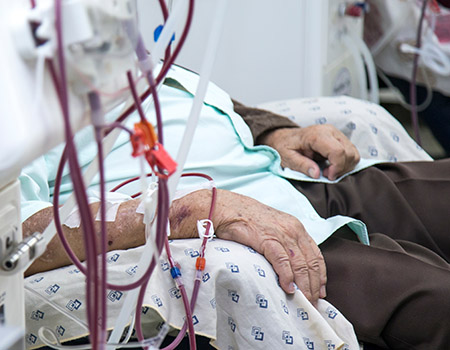
End-stage kidney disease, also known as kidney failure, represents the last stage of chronic kidney disease. This is when the kidneys function at less than 15% of their normal ability. Kidney failure can lead to unexplained weight loss, inability to urinate, loss of appetite and fatigue.
The most common treatment for kidney failure is hemodialysis at a treatment facility. During hemodialysis, a machine moves the patient's blood through a filter outside the body to remove waste and extra fluids. The filtered blood is then returned to the body.
Hemodialysis patients typically travel to a clinic three times a week, which makes reliable transportation essential.
Listening to hemodialysis patients and clinic staff
The research is based on 78 in‑depth interviews with patients and staff at four Northern California dialysis clinics. It highlights how unreliable and complex transportation systems directly affect health, safety and treatment success.
"Our study shows that transportation isn't just a detail — it's a core part of dialysis care," explained the study's lead author Na'amah Razon. "When rides are late or unreliable, it directly harms patients' health and puts tremendous pressure on clinic staff." Razon is an assistant professor in UC Davis Department of Family and Community Medicine and Division of Nephrology. She is faculty affiliated with UC Davis Center for Healthcare Policy and Research.
Transportation challenges overwhelm hemodialysis patients
The study showed that patients often face a confusing mix of transportation options. These include paratransit (door-to-door service), public transit, ride‑hail services (like Uber and Lyft) and insurance‑based non‑emergency medical transportation
Many patients said that figuring out who to call, how to schedule rides, and what to do when a driver did not show up was overwhelming. One patient described long wait times and poor communication, calling transportation companies "untouchable."
The quality of transportation was an even bigger concern. Patients reported late pickups, no‑show rides, unsafe driving and drivers who did not understand the needs of dialysis patients. Some patients were left waiting outside clinics for hours, even while feeling dizzy or weak after treatment.
These transportation struggles caused significant emotional distress. Many patients said they experienced daily anxiety about whether rides would arrive on time. Several explained that the stress of unreliable transportation added to the mental burden of dialysis itself.
Despite these obstacles, patients emphasized their strong commitment to attending treatment, knowing that missed sessions could quickly lead to dangerous fluid buildup and emergency medical crises.
Transportation issues disrupt the work of dialysis clinic staff
Dialysis clinic staff described similar challenges. Unreliable transportation caused late arrivals, early departures or shortened sessions, all of which disrupted clinic schedules. Staff said they often struggled to safely manage patients whose treatments were cut short because drivers would not wait. One nurse described it as a "snowball effect," where one late ride could throw off the entire clinic workflow.
The study also found that staff often took on additional responsibilities, acting as transportation coordinators, translators and advocates. Social workers, in particular, spent significant parts of their days on hold with transportation companies, reducing the time available for counseling and other essential patient support. Many staff members described emotional exhaustion from witnessing patients stranded or distressed because of transportation.
Ultimately, both patients and staff agreed that missed or shortened treatments caused by transportation failures had serious health consequences. They may even affect the patients' eligibility for kidney transplants, which require consistent attendance.
"The findings make it clear that health care and transportation systems must work together. Dialysis patients deserve reliable, respectful and safe transportation every time they go for treatment," said the first author on the study, Bethney Bonilla-Herrera. Bonilla‑Herrera is a clinical research analyst at the Center for Healthcare Policy and Research.
This project was supported by the National Institutes of Health's National Center for Advancing Translational Sciences (grants UL1TR001860 and KL2 TR001859) and the National Institute of Diabetes and Digestive and Kidney Diseases (NIDDK) (grant K23 DK140602). It was also supported by the Paul F. Gulyassy Endowment at UC Davis.
Coauthors on the study are Navkirn Saini, Iris Corina, Bertha Dickerson, Maria Elena Grijalva, Daniel Jovan Pulido, Baback Roshanravan, Joshua J. Fenton and Laura M. Gottlieb.


