
The UAB School for a Culture of Pease alerts of the "reproductive genocide" perpetrated against Palestinian women. The destruction of Gaza's health system affects more than half a million women of reproductive age. In only five months of Israelian attacks, more infants in Gaza have died than in all of the world's armed conflicts in the past four years. These are some of the conclusions of the report on Palestine, entitled Palestina: violències i impactes de gènere en temps de genocidi, which analyses and records the consequences of this armed conflict on women and girls.
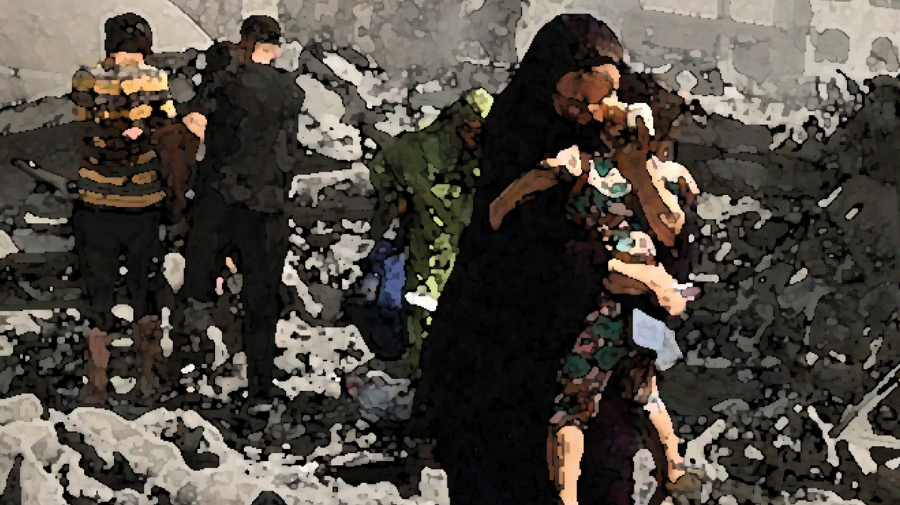
During the first months of this conflict, up to 70% of those who died in Gaza were women and children, a drastic change compared to the past fifteen years, in which women represented less than 14% of mortal victims
The recently announced report on violence in Palestine, entitled Palestina: violències i impactes de gènere en temps de genocidi, created by the UAB School of a Culture for Peace, focuses on how the violence perpetrated by Israel during the genocide has affected the Palestinian population, paying special attention to the consequences on the lives and bodies of women and girls. The publication documents and analyses the repercussions in terms of lethality, the impacts on physical and mental health—particularly analysing the use of reproductive violence—and the effects of the use of sexual and gender-based violence as a method of torture and intimidation.
The research was developed based on documentary analysis and interviews with Palestinian feminist organisations. The report was produced by the UAB School of a Culture of Peace as part of the project "Strengthening the resilience of Palestinian women exposed to gender-based violence (Nablus, West Bank, Palestine)", led by the Hèlia Association and funded by the Catalan Agency for Development Cooperation (ACCD).
The analysis highlights the continuity between the ongoing genocide and the structural logics that have affected Palestinian society for decades. The report shows how the violation of the right to life has reached unprecedented levels, with a high percentage of fatalities among women and children. According to the report, the number of Palestinian fatalities has exceeded 70,000 people by the end of 2025 in Gaza alone, although several investigations indicate that the real figure could be much higher. The lethality of the military campaign has been characterised by the intensive use of bombings and high-destructive weaponry in a highly dense territory, with a frequency of attacks higher than that recorded in other recent conflicts.
The data shows that the levels of lethality in Gaza have been unprecedented compared to other recent armed conflicts, with a daily death rate higher than that recorded in other wars of the 21st century. In the first months of the offensive, up to 70% of those killed in Gaza were women and children, a dramatic change from the previous fifteen years, when women accounted for less than 14% of fatalities.
The data also shows that thousands of women have been killed or injured in attacks on homes, shelters and civilian areas, while children have become one of the main victims of the conflict. In just five months of the offensive, more children died in Gaza than in all the armed conflicts in the world in the previous four years.
Reproductive violence and the collapse of the health system
The report also documents serious impacts on the sexual and reproductive health of Palestinian women. The destruction of the health system, the lack of medicines and the blockade have led to extreme situations such as caesarean sections without anaesthesia, a rise of up to 300% in spontaneous abortions, and increased mortality during childbirth.
One incident that has particularly attracted attention has been the offensive that destroyed the main fertility clinic in the Gaza Strip. Despite being clearly identified as a health centre, the Al-Basma IVF clinic was bombed in December 2023, an attack in which some 4,000 embryos were destroyed (and there is no evidence that the clinic was used for military purposes).
Researchers explain that these practices are part of a broader dynamic of gender-based violence in the conflict. "Reproductive violence is not new in the Palestinian context, but in this episode it has intensified to the point of constituting what has been denounced as reproductive genocide or repricide", says the author of the report and researcher Pamela Urrutia. This concept refers to the use of direct and structural violence to affect the reproductive capacity of a group and its demographic future.
In this sense, several analyses included in the report point out that the objective of this type of practice is to "affect the physical and social reproductive capacities of the Palestinian people". The analysis connects the Palestinian experience with the use of reproductive violence in other contexts, as part of the strategies in episodes of genocide in other latitudes–Rwanda, former Yugoslavia–and also as an instrument of colonisers against native communities for the control of territory and ethnic cleansing.
According to the research, attacks on health infrastructure have directly affected nearly 545,000 women and girls of childbearing age in Gaza. Hospitals and maternity wards have been bombed or have ceased to function, while centers specialising in sexual and reproductive health have had to close or are operating with minimal resources.
This situation has been exacerbated by widespread malnutrition, lack of water and hygiene products, and forced displacement of the population, factors that particularly affect women and adolescents. Several organisations have denounced that these practices constitute forms of "reproductive violence".
The mental health of Palestinian women in Gaza has also been extremely damaged. Studies indicate that 75% of women suffer from depression, 62% have sleeping problems, and 65% have constant nightmares and anxiety, according to data from the United Nations.
The research also documents the use of sexual and gender-based violence as a mechanism of torture and intimidation against prisoners and the Palestinian population in general. At the same time, the study warns of other forms of violence often invisible in war contexts, such as the increase in domestic violence, economic precariousness, or the effects of mass forced displacement.
In a context marked by genocide, forced displacement, movement restrictions and the deterioration of the economic situation of thousands of families, the marriages of Palestinian girls have spread as a negative coping mechanism, both in Gaza and the West Bank. Several Palestinian feminist organisations have warned about the increase in the marriages of girls and adolescents (early marriages). The coexistence of young people of both sexes in very small spaces seems to be leading many families to choose to marry their daughters off for reasons of honour, to avoid "shame" in the future. In some cases, marriage also means access to economic aid or a safer refuge, which can be decisive in a context of devastation, extreme precariousness, truncated projects and lack of future prospects.
Finally, the researchers and authors of the report warn that the persistence of occupation, apartheid and colonisation policies, as well as impunity for reported crimes, constitute a worrying precedent for international law and global human rights.


