
Together they are developing technologies that make treatments safer, more precise, and more accessible worldwide
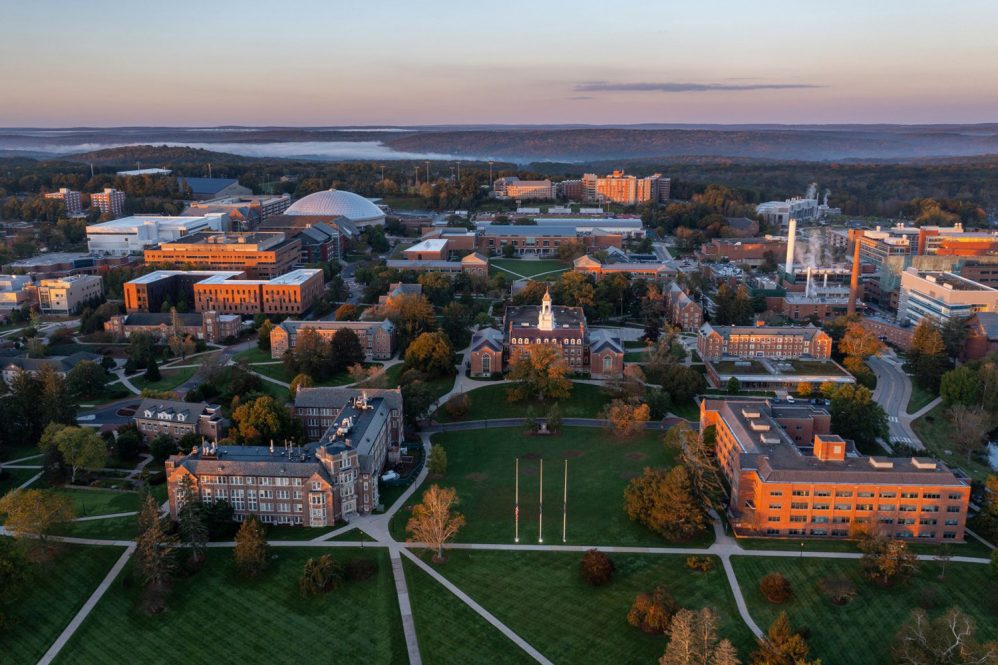
An aerial view of the UConn campus in Storrs. (UConn Photo)
When postdoctoral researchers Hoang Quan Truong and Cao Thuy Giang Nguyen arrived at UConn in the spring of 2025, they brought with them more than technical expertise. They carried a global perspective shaped by years of international experiences and a common goal of improving lifesaving treatments around the world.
UConn's international research community plays a vital role in driving this work forward. Through the J-1 Exchange Visitor Program, scholars like Giang and Quan bring diverse experiences and ideas to campus, strengthening interdisciplinary collaboration. Originally from Vietnam, the married couple completed their Ph.D. programs in South Korea before spending a year as postdoctoral researchers at the University of Massachusetts Lowell. These experiences broadened their scientific outlook and prepared them for the collaborative research environment they were seeking next.
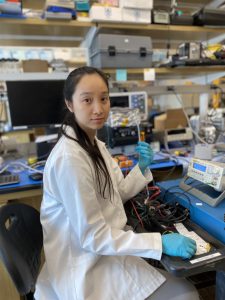
That search led them to the Nguyen Research Group under Thanh Nguyen, an associate professor in the College of Engineering's School of Mechanical, Aerospace, and Manufacturing Engineering. The pair were drawn to the Nguyen Group's innovative approach and diverse group of researchers, looking for a place that would provide strong industry connections and a supportive environment. At the intersection of biomaterials, nano/micro-technology, and medicine, this would be the perfect place to build upon seven years of prior research for Giang and Quan.
Giang's research centers on precision treatment, using extracellular vesicles - tiny "bubbles" - to deliver brain cancer treatment. Guided by acoustic cues, each bubble will release its drug only when it reaches the targeted region in the brain. By designing treatments that work in harmony with human biology, Gian aims to improve effectiveness while minimizing side effects. While her current focus is on brain cancer, the technology holds promise far beyond this single application, and she hopes to expand its use to treating a wide range of diseases.
Working alongside Giang in the same lab, Quan is developing next-generation vaccine delivery systems designed to overcome some of the biggest obstacles in global health. Quan's work focuses on reimagining how vaccines are delivered, using lipid-based nanoparticles to make them more stable, more effective, and easier to distribute- especially in regions where ultra-cold storage and traditional syringe-based delivery create major barriers. Many existing vaccines degrade at higher temperatures, accumulate in non-target organs such as the liver, or create large amounts of medical waste. Quan is developing a new vaccine system that remain active at higher, more practical temperatures, and that can be directed to specific organs, tissues, and cell types such as spleen, lymph nodes, and immune cells. He is also exploring microneedle patches that can deliver vaccines as a needle-free alternative that could simplify immunization efforts globally.
Together, Giang and Quan's work illustrates the dynamic synergy at the heart of the Nguyen Research Group, where interdisciplinary thinking and materials‑driven innovation fuel new solutions in drug and vaccine delivery. Their complementary approaches focused on precision targeting and accessible vaccination highlight how shared expertise can accelerate discovery. As Thanh Nguyen notes, "I am very proud of [them]. I am lucky to have them in the lab. They are great examples for international scholars who are intellectual and hard-working while always willing to help other lab members [with their] work."
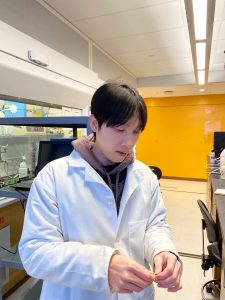
Their partnership reflects a broader truth: UConn's research culture thrives when international scholars bring their perspectives, skills, and curiosity to shared scientific challenges.
Beyond their scientific work, both researchers emphasize the supportive environment they found at UConn. They highlight not only the quality of facilities and equipment, but also a culture of collaboration that extends across labs and departments. When specialized instruments were unavailable in their own lab, colleagues across the university readily shared resources to help them move their research forward.
Outside the lab, Giang has especially valued UConn's efforts to celebrate and support postdoctoral scholars through events such as Postdoc Research Day and career development programming- opportunities that she has not encountered previously. Quan notes that while the University's reputation as a research institution originally drew him to campus, it is the connections that he has built with colleagues, faculty, and staff that have made his experience particularly meaningful.
Giang and Quan reflected on their journeys, emphasizing that success as an international scholar begins with finding the right environment and the right people. Giang encourages future students to "find the best match in the research environment", noting that the right Principal Investigator will shape the postdoctoral experience. Quan echoes the importance of mentorship while urging scholars to think beyond the present moment. He advises scholars to have a clear pathway of what they want beyond their postdoctoral experience but reminds them that building relationships is just as crucial. "Everyone contributes different value to your life and career," Quan says- a perspective shaped by the friendships, mentorship, and community they have found at UConn.
Together, Giang and Quan's work reflects the collaborative nature of research at UConn where diverse perspectives and interdisciplinary collaboration move ideas forward. As their research continues to advance new approaches to drug and vaccine delivery, their journeys underscore how UConn's global research community is shaping innovations that extend far beyond campus.


