
From wartime Ukraine to the Iran energy shock, decentralised renewables are emerging as a real security solution. Community solar and local grids can protect households from price spikes and war‑fuelled crises, showing governments exactly how to protect their citizens.
How renewables became a security imperative in Ukraine
In an era defined by geopolitical instability and soaring household bills, a quiet revolution is taking place where the stakes are highest. Amid continuous infrastructure attacks by Russia, communities across Ukraine are constructing a blueprint for global energy security. Forward-thinking municipalities are actively transforming their energy architecture, moving away from a fragile dependence on fossil fuels to build independent, decentralised clean energy networks.
Most movingly, this transformation is being championed by the people of Slavutych - the purpose-built city constructed to rehome the displaced workers and families who left Chornobyl after the 1986 nuclear disaster. Decades after fleeing a devastating nuclear catastrophe, this community has pioneered Ukraine's first municipal solar cooperative, installing crowd-funded solar arrays on public rooftops to reclaim power over their town's economic future.
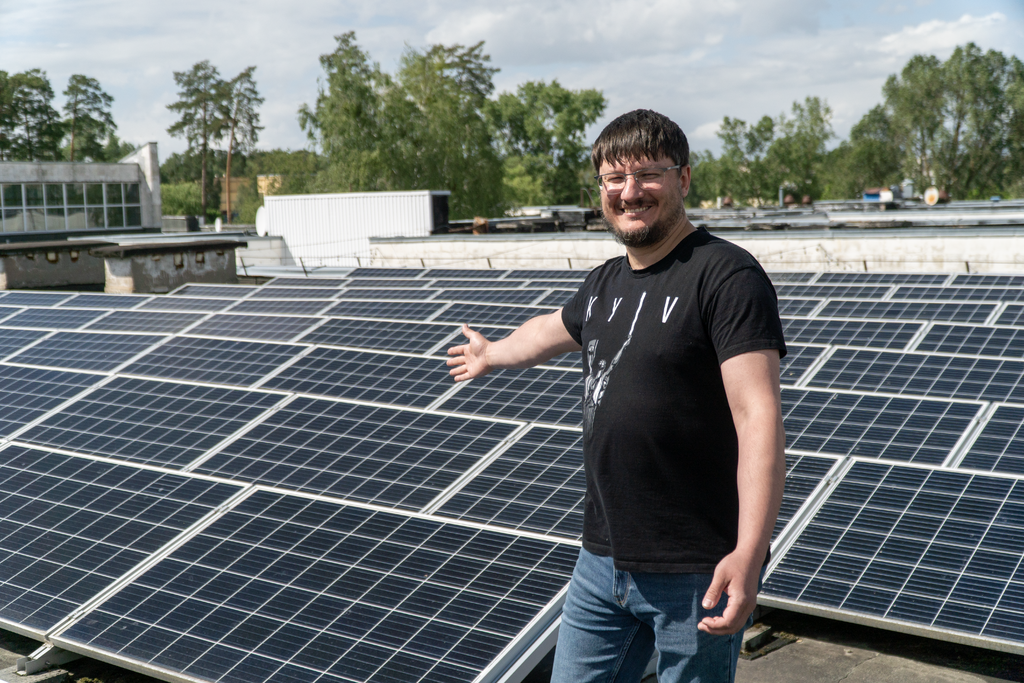
Similar distributed networks are taking root across the country: from the solar-and-heat-pump rebuilding of the Horenka primary care clinic to the resilient power sharing of the Kyiv Green Apartment Building Association and the Trostyanets multi-apartment building reconstruction. Despite dealing with active wartime threats, the municipality of Chortkiv became the first city to sign the Gas-Free Cities Declaration, committing itself to a total fossil gas phase-out. With this historic move, the community is actively breaking its dependence on the volatile fossil fuel system, choosing instead a path towards community resilience, safety, and long-term economic prosperity.
If a city navigating an active war can completely commit to a future free of fossil gas, every city on Earth can. These pioneer projects in Ukraine reveal a profound truth for the rest of the world: decentralised renewable energy is not just a climate solution, it is a foundational global security imperative.

Fossil fuel energy systems engineered for crisis
Forward‑thinking Ukrainian municipalities are actively building resilience, yet much commentary elsewhere still treats modern energy crises as isolated, freak incidents. In truth, the problem is structural.
While decentralised communities insulate themselves from instability, our hyper-centralised global reliance on oil and gas exposes everyday citizens and governments to constant, unmanageable risks.
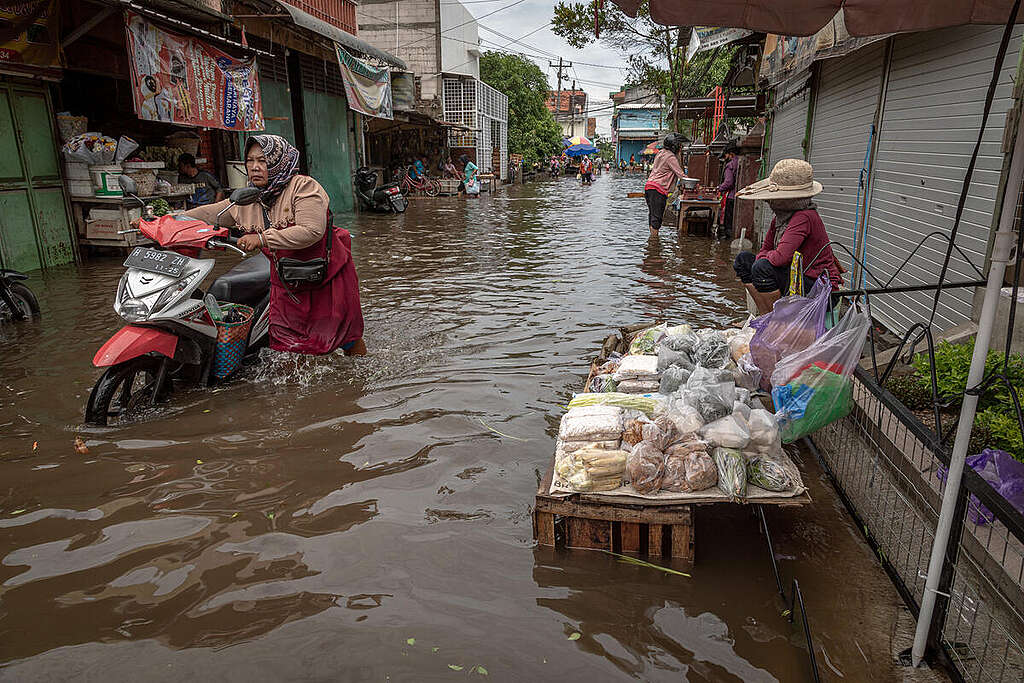
We see this unfolding right now in the compounding economic shocks following the war involving Iran. Gas prices rose for ordinary households across European capitals, while energy importing nations across Africa and Asia are bearing the brunt of the Middle East conflict's energy shocks.
The sudden surge in global fuel prices has completely priced local economies out of the market, forcing governments to ration energy, mandate rotating power cuts, and, in some parts of Asia, even restrict household cooking gas.
As we see, volatility usually hits domestic budgets directly, anchoring the macro-crisis in painful daily trade-offs for families forced to navigate soaring utility bills alongside rising food costs. Such a disruption is not a failure of the fossil fuel system; it is the predictable, inevitable outcome of how it is designed to work.

The predictable volatility trap of fossil fuels
For decades, the public has been sold a corporate narrative: fossil gas is a reliable "bridge fuel" necessary to stabilise energy networks. Yet, history tells a starkly different story of cyclical crises. Whenever geopolitical hostility erupts - from the 1970s OPEC oil embargoes, to the global price spikes triggered by Russia's full‑scale invasion of Ukraine in 2022, to modern supply crunches around the Strait of Hormuz - global commodity prices shoot up with algorithmic predictability. These are not separate events; they are the recurring symptoms of a broken energy system engineered around two core vulnerabilities:
Physical infrastructure is fragile. Fossil fuel systems rely on rigid, highly concentrated bottlenecks - vulnerable shipping choke points, international pipelines and massive processing plants - that double as high-value military targets. The moment geopolitical hostility ignites, global financial markets immediately panic over potential supply cuts. Speculative trading floors violently spike global commodity prices before a single drop of fuel is even lost. We see this vulnerability starkly in Ukraine, where strikes systematically targeted centralised thermal power plants and the energy grid, plunging millions into darkness, leaving entire communities to freeze in their homes. This demonstrates well how easily a centralised energy architecture can be weaponised to trigger global financial panic.
Corporate war profiteering. The physical fragility of the grid is directly converted into massive private wealth because the system is engineered to capitalise on crises. A textbook example of this occurred during Russia's full-scale invasion of Ukraine: as Europe rightfully phased out Russian pipeline gas, LNG suppliers aggressively exploited the supply shock, outbidding vulnerable regions and locking countries into expensive, decades-long contracts. These corporations never absorb geopolitical shocks; instead, they immediately pass the inflated costs down to consumers. Consequently, while ordinary families are forced into devastating energy poverty, fossil fuel corporations consistently register record-breaking windfall profits during wartime.
The moment peace is on the horizon, this entire profit machine stalls: when a ceasefire was announced to pause hostilities, oil giants saw their shares immediately tumble with BP dropping 6% and Shell losing 4.7%. The market's reaction exposes a profound truth: the fossil fuel business model treats international chaos as a corporate asset, turning global instability and human suffering into investor payouts.
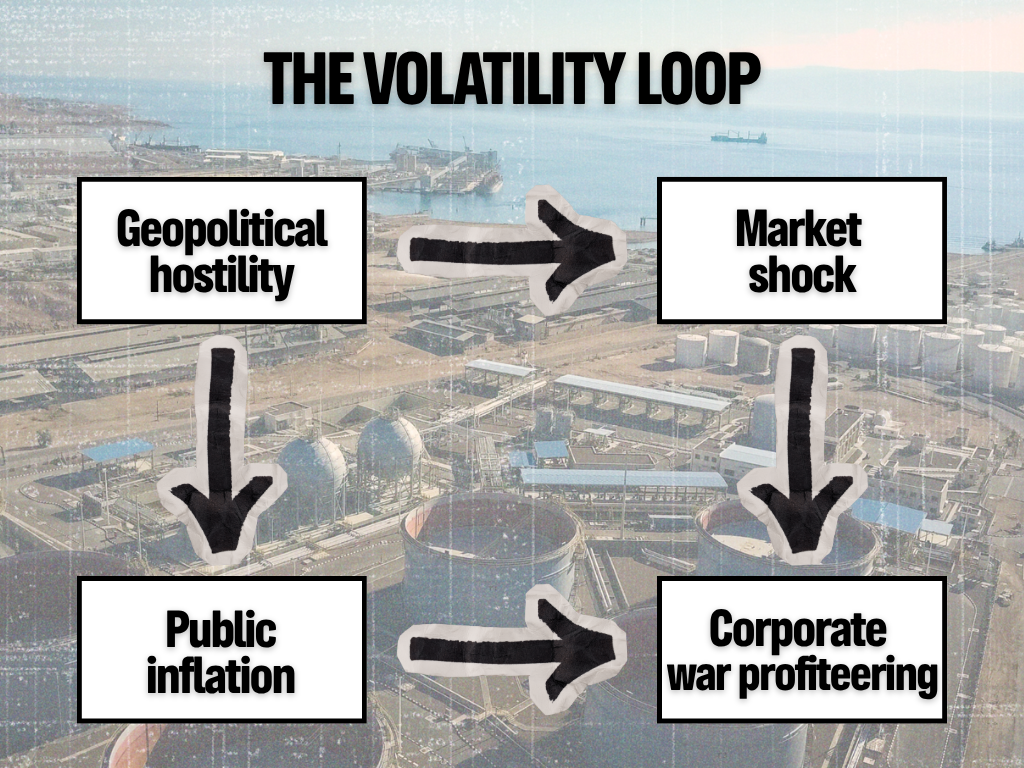
The solution that breaks the loop is distributed clean energy that permanently dismantles this entire apparatus. By shifting power generation away from vulnerable bottlenecks to millions of local, interconnected points - rooftop solar, community wind co‑operatives and regional battery storage - we physically remove the targets.
When a disaster occurs, these localised power networks keep critical hospital operating rooms, clean water pumps, and local schools fully operational. Local sunlight and wind cannot be manipulated by speculators, or turned off by a hostile foreign power.
The independence illusion of the gas industry driving real‑world insecurity
To protect corporate interests, the energy lobby continues to claim that expanding domestic oil and gas extraction - or swapping one foreign supplier for another - will deliver national energy independence and cheap energy bills. This claim is false in most countries where fossil fuel prices are tied to volatile global commodity market prices.
Data compiled by global energy authorities confirms that the regions navigating modern economic shocks with the greatest resilience are precisely those that have scaled local renewable energy capacity and prioritised aggressive energy efficiency.
Expanding gas infrastructure creates permanent economic and environmental traps. Beyond binding communities to decades of unjust debt, burning these fuels accelerates the extreme weather events tearing through people's everyday safety net and global stability. Scientists can now calculate how corporate pollution has supercharged deadly heatwaves, devastating floods, and prolonged agricultural droughts - making these catastrophes structurally impossible without human-induced warming.
This is no longer just a scientific debate - it is an international legal reality. Reinforcing this accountability, a historic landmark ruling by the United Nations General Assembly has declared that tackling the climate crisis is a strict legal duty under international law, not a voluntary political choice. Governments that keep expanding and burning fossil fuels are now legally vulnerable for the thousands of early deaths caused by supercharged heatwaves, the complete destruction of homes and livelihoods swallowed by catastrophic floods, and the systemic agricultural breakdowns causing global food shortages. While these climate disasters impact almost everyone, they crush the most marginalised and financially sensitive populations first and hardest.
Renewables as public safety
To prevent future systemic shocks, governments must make sure they reach their net-zero targets by immediately pivoting public resources into tangible energy upgrades. Transitioning to decentralised renewables is no longer just an environmental goal - it is a core pillar of public safety and household self-defense.
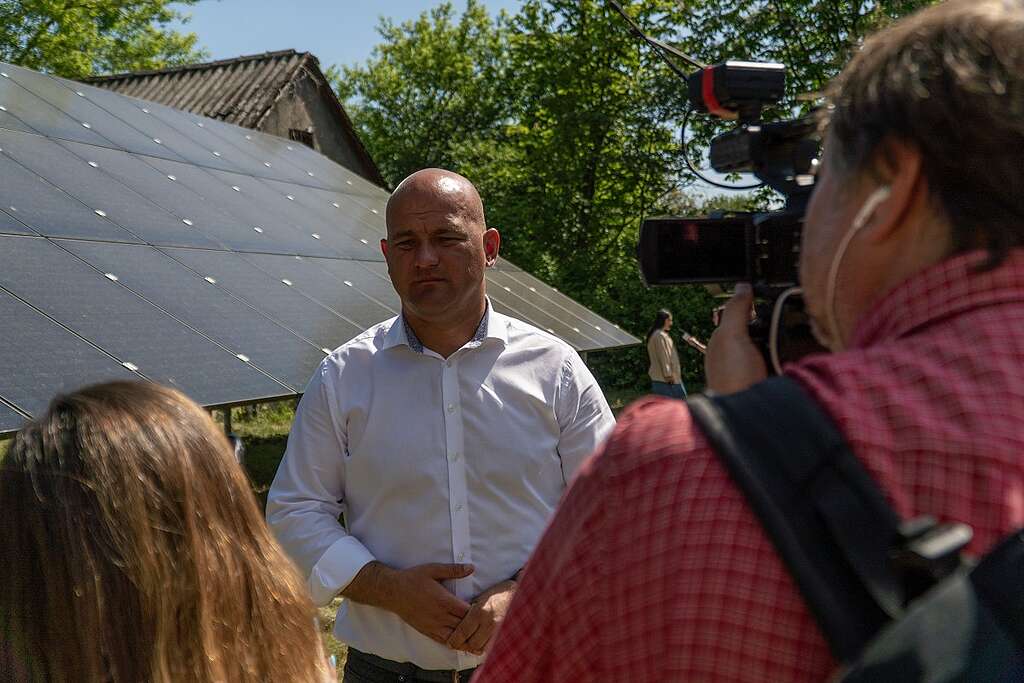
Towns in war-torn Ukraine have already given the world a solid template: from crowd-funded municipal solar in Slavutych to solar-powered clinics in Horenka and Trostyanets, community-led clean energy is actively defending human life under the harshest conditions. Scaling these resilient models globally is the ultimate investment to shield communities from corporate exploitation, enhance economic prosperity, and ensure true security.
Accelerate decentralised renewables and efficiency: Replicate Ukraine's pioneering community models globally by prioritizing public investments into decentralised municipal solar grids, regional battery storage reserves, deep building insulation upgrades, and residential heat pump installations. This lowers baseload demand and permanently shields regional economies from global market speculation.
Halt all fossil infrastructure expansion: Enact immediate moratoriums on new gas drilling exploration, pipeline infrastructure, and LNG terminals. Switching one pipeline or LNG supplier for another does not reduce dependency.
Enforce systemic accountability: Tax fossil fuel profits - clawing back the wealth generated from wartime profiteering and climate-induced tragedies to directly finance the public deployment of clean energy systems for low-and middle-income households worldwide.
The ultimate lesson from Ukraine's resilient municipalities and the economic ripples of the global energy crisis is clear: true security cannot be built on a volatile, centralised foundation. We must revoke the social and political licence of the fossil fuel industry, reclaiming their profits to build a community-owned, genuinely resilient energy landscape that serves people over profit.
Take action now
The fossil fuel system is built to maximise corporate profits while passing the risk to everyday people. Join us in demanding that governments hold energy profiteers financially accountable and mandate an immediate, fair transition to local clean energy.

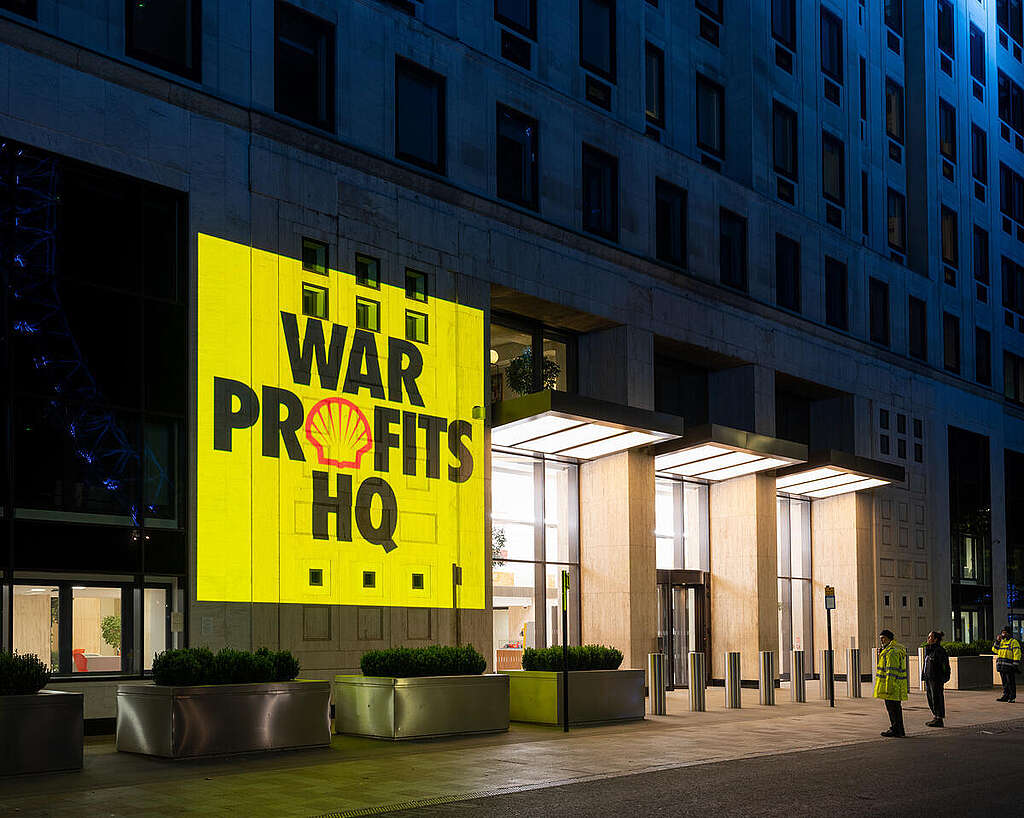
Tax fossil fuel profits to support communities hit by disasters and invest in energy independence.
Reka Hunyadi is the Communications Lead of Greenpeace's Global Gas campaign with Greenpeace Central and Eastern Europe.


