
New data on child migrants published on Wednesday highlighted the harrowing treatment many face while travelling to Europe in search of work and shelter.
Just over 31,000 children arrived in Greece, Italy, Spain, Bulgaria and Malta last year - 25 per cent less than in 2024.
Of more than 4,600 teenagers and young adults aged 15 to 24 surveyed, nearly half reported suffering physical violence.
One of the main routes migrants take today is the through the central Mediterranean from Libya and Tunisia in northern Africa to Italy, according to the UN migration agency, IOM .
IOM spokesperson Kennedy Omondi said there has to be stronger cooperation between European countries and those along migration routes to protect children travelling alone.
"The latest data in our report shows how vulnerable children are subjected to violence and exploitation when safe pathways are limited and they are forced to rely on smugglers," the spokesperson said.
Confined and coerced
Among the adolescents and young adults who made the journey, 28 per cent said they had been held against their will and 17 per cent said they had been forced into work. Almost eight in 10 are male.
One 19-year-old migrant worker from Bangladesh cited in the report said his boss in Libya took away his passport and forced him into slave labour, hitting him when he was considered not to be working hard enough.
A 20-year-old woman from Liberia said she arrived in Algeria where she was raped and forced to work as a cleaner. Seven months' pregnant, she escaped on a boat to Spain.
Most cases of abuse occurred in Libya, according to IOM. More than 20,000 of the 31,100 children who reached Europe along mixed migration routes last year arrived without a parent or guardian, according to a joint report with the UN Children's Fund ( UNICEF ) and refugee agency, UNHCR .
IOM Director General Amy Pope called for stronger cooperation between European countries and States along migration routes to protect children travelling alone. Ms. Pope also called for action to tackle the smuggling and criminal networks that exploit them.
Greenland scandal: UN experts warn against minimising abuse
Independent UN human rights experts have warned that attempts to downplay the forced contraception of thousands of Inuit women and girls in Greenland threaten any prospect of genuine redress.
The concerns follow a dissenting report by two former members of an expert group appointed by Greenland's Government.
It concluded there were no empirical grounds to assume that Danish or Greenlandic authorities intentionally and systematically inserted intrauterine devices without consent.
Facts before healing
The two governments have already recognised that the Indigenous women and girls endured the practice for decades in public care institutions and have apologised.
But, the independent experts - who receive no salary for their work and are not UN staff - said true remedy cannot be achieved without "a clear, accurate and undisputed record of historical facts".
They urged Denmark to make compensation schemes more accessible linguistically and culturally, ensure women with disabilities are not forgotten and address wider abuses such as forced adoption and the removal of Inuit children from their parents.
"Their dignity, voices and rights must remain at the centre of all efforts toward truth, justice, healing and reconciliation," the Human Rights Council -appointed experts said.
FAO says farming aid cannot wait
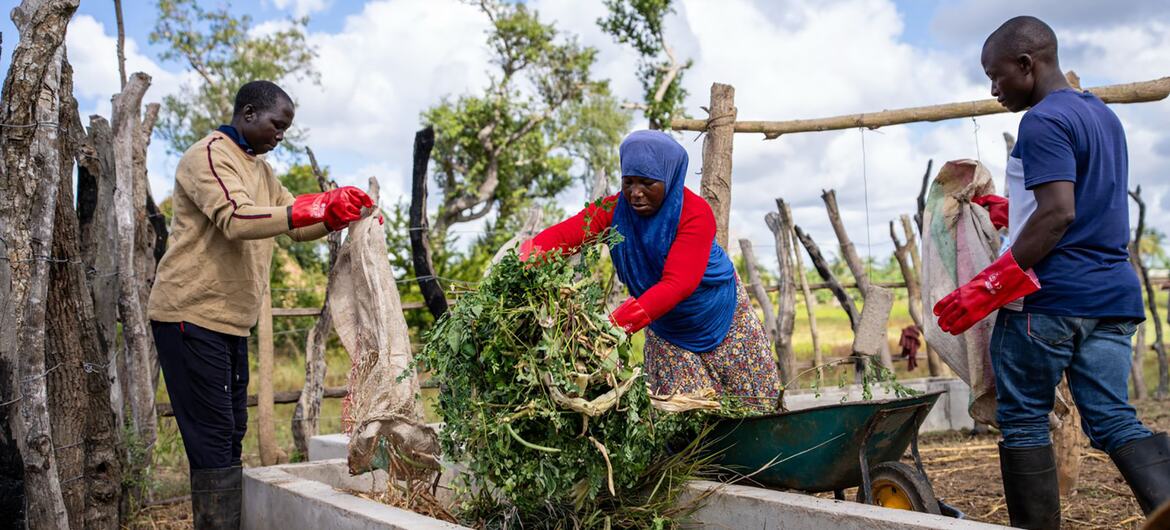
The UN Food and Agriculture Organization ( FAO ) has called for urgent funding to help families in the Near East and North Africa to keep growing food and earning a living as conflict, displacement and climate pressures deepen hunger.
More than 45 million people across the region face crisis-level hunger or worse.
At the same time, funding shortfalls are limiting support to protect food production.
Funding gaps
In Sudan, where 19.5 million people face high levels of acute food insecurity, only 23 per cent of the $193 million needed under the 2026-2028 emergency response plan has been funded. In Yemen, FAO has secured less than one per cent of the $87.9 million it requires for 2027.
In Lebanon, more than one million people were displaced after the March 2026 escalation, and more than 22 per cent of agricultural land has reportedly been damaged.
"Investing early in seeds, livestock, water and other agricultural support can protect livelihoods, prevent hunger from deepening and reduce humanitarian needs over time," said FAO Deputy Director-General Beth Bechdol.


