
After more than 100 years as neighbors and partners in the eastern foothills above Salt Lake City, the University of Utah and U.S. Army Reserve (USAR) will finalize a process decades in the making.
The university and the Army Reserve have completed a historic relocation of military units and personnel and transfer of the final 50 acres of active military land at Fort Douglas. On Saturday, Aug. 8, leaders from the military, state and federal government, and higher education will celebrate a new $127 million, 227,000-square-foot headquarters for the Army Reserve at Camp Williams.
"The story of Fort Douglas has always been a story of service. For more than 160 years, generations of soldiers prepared here to defend our nation. Today, that legacy continues through an extraordinary partnership that strengthens both the U.S. Army Reserve and the University of Utah," said Taylor Randall president of the University of Utah. "We are profoundly grateful to the Army Reserve, the Utah National Guard, our elected leaders and the many partners whose vision and trust made this day possible."
Events on Aug. 8 will begin with a program and ceremonial flag folding at Fort Douglas in the morning, followed by a luncheon, time capsule "burial" and tour of the new building in Bluffdale.
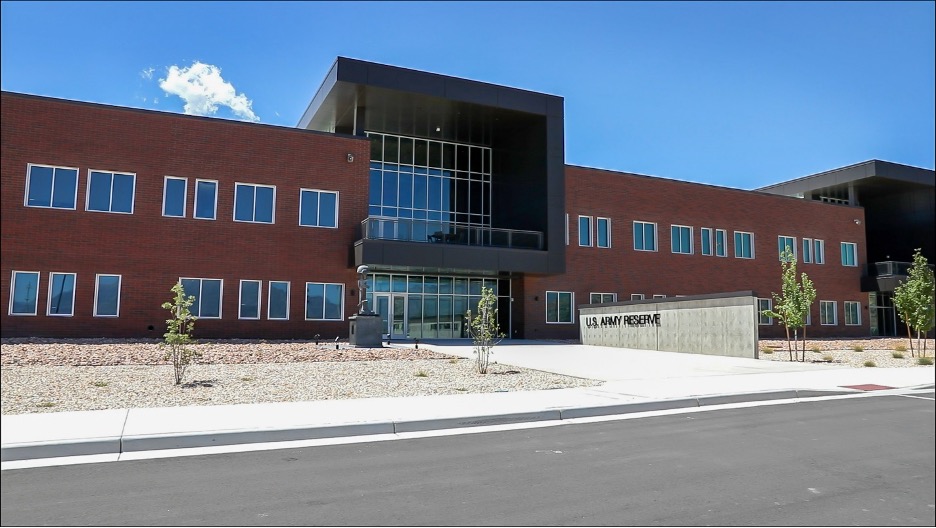 The complex transfer required action from both the Utah State Legislature and the Utah Governor's Office, as well as Congress. Using state funding, the U constructed a $127 million state-of-the-art U.S. Army Reserve Center for the Army Reserve at Camp Williams, clearing the way for the military to vacate the remaining acres it occupies just east of the university campus.
"This collaborative effort is one of the most significant modernization efforts in our region's military history," said Utah Gov. Spencer Cox. "This move to a high-tech new facility will strengthen soldier readiness, expand training capability, and enhance long‑term support for operational missions across the western United States. And it will continue a strategic partnership between federal, state, tribal, and academic institutions committed to supporting America's soldiers."
The new U.S. Army Reserve Center in Bluffdale opened in June, marking the transition of Army Reserve units and personnel previously stationed at Fort Douglas to their new location 30 miles to the southwest. The move was completed on June 19. The Army Reserve will continue to operate the Fort Douglas museum, and the federal government will manage the fort's military cemetery on Chipeta Way.
The university owes its history, and most of its future, to the fort. Founded in 1862 by a United States trying to defend the western frontier and keep an eye on Utah's Mormon settlers, the fort at one time stretched over 10,500 acres along the eastern bench of Salt Lake City-from 900 South to 6th Avenue, and from 1300 East to the mouth of Emigration Canyon. Much of the fort's acreage became east bench neighborhoods and recreation spaces. Prior to the most recent transfer, a total of 1,534 acres had been transferred to the university over the past 126 years, including:
- Land now used for Utah Athletics facilities
- The Natural History Museum of Utah
- Red Butte Garden
- Research Park
- University of Utah teaching and research buildings
- U of U Health Hospitals and Clinics
- Student housing along historic Fort Douglas Circle
- 469 acres in a Heritage Preserve
After the last large land transfer, in 1991, the university and its Research Park surrounded the remaining 50 acres of military property.
"As we accept stewardship of this historic place, we do so with a commitment to honor its past while creating new opportunities for future generations through education, discovery, health care and innovation," Randall said.
The 50-acre Stephen A. Douglas Army Reserve Center (AFRC) at Fort Douglas had been constrained by outdated infrastructure and buildings. Some still in operation in 2026 were more than 100 years old. The new, 31.9-acre site near Camp Williams offers modern facilities and better access for reservists, supporting future expansion and enhancing operational synergy with the Utah Army National Guard. The 227,000-square-foot Army Reserve Center-which includes administrative offices, storage and a separate vehicle maintenance shop-replaces the operations of nearly a dozen buildings at the fort.
"The Army Reserve is very proud of our heritage and ties to Fort Douglas and the greater Salt Lake City area," said Maj. Gen. Kevin Meisler, commander of the U.S. Army Reserve's 88th Readiness Division. "The relationships we build with our community partners like the University of Utah, the Utah National Guard, and the State of Utah have been instrumental in setting the stage for this historic land agreement. This project ensures that our Army Reserve Soldiers will continue to be the best-trained army in the world defending our freedom for many years to come."
The 76th Operational Response Command is a critical center for Defense Support of Civil Authorities, coordinating with state and local officials during emergencies and natural disasters. It comprises 62 units and over 6,300 soldiers and civilians. Additionally, the 807th Medical Command (Deployment Support), the largest medical command in the Army Reserve, manages deployable field medical units across 26 states, with over 10,000 soldiers and civilians.
"Utah's success has always been built by people willing to look beyond today and plan for tomorrow," Utah Senate President J. Stuart Adams. "This partnership strengthens our national defense, provides our Army Reserve soldiers with the modern facilities they deserve and creates new opportunities for the University of Utah to educate, innovate and serve future generations. It's a powerful example of what can happen when state, federal and local partners come together around a shared vision for Utah's future."
Following the relocation of Army Reserve personnel, Fort Douglas property will be transferred to the university for future campus development. The entirety of Fort Douglas is on the national register of historic places and the state historic register. Federal preservation laws will guide the renovation process. Because the University of Utah is a public university, the Utah Office of Historic Preservation has oversight and will provide guidance for developing fort property and buildings.


