
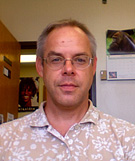
In 2012, fossils from a rare Homo habilis skeleton were uncovered along the shores of Lake Turkana in northern Kenya. Scientists who made the find turned to University of New Mexico anthropologist Osbjorn Pearson, a professor and regents lecturer in UNM's Anthropology Department, to help interpret what the bones could reveal about one of humanity's earliest ancestors.
Pearson's main research focus is on early human ancestors and the origins of modern humans, by focusing on how bones and bodies were shaped and used. Pearson uses measurements to understand human evolution, primarily analyzing fossils from Africa and Europe.
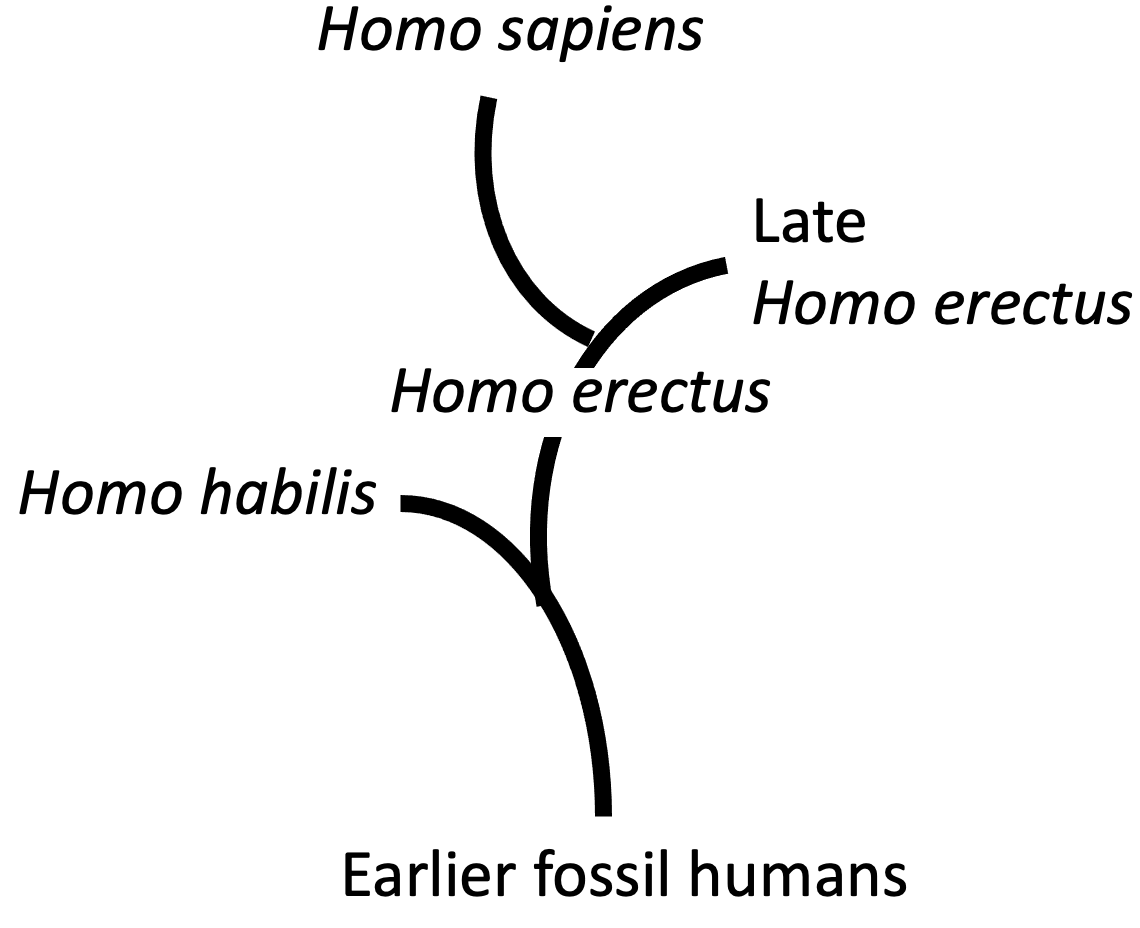
Anthropologists have long believed that the modern-day Homo sapiens evolved from the earlier Homo habilis, which lived in Africa approximately 1.4 to 2.5 million years ago. However, until recently, almost nothing was understood about this early hominin.
Studying the Homo habilis fossil is crucial for understanding the types of changes and when they occurred from one genus to another. Unfortunately, not enough fossils from Homo habilis have been discovered to fully illustrate their existence and the transition to Homo erectus, until recently.
This is what makes the discovery at Lake Turkana monumental and the work so meaningful.
"As a whole, this finding and analysis work moves the knowledge of science forward and gives a fuller understanding of Homo habilis," said Pearson. "Through this work, we are shaping the understanding of what it means to be a human today."
The esteemed international research team was led by Louise Leakey and Meave Leakey, both affiliated with the Turkana Basin Institute at Stony Brook University. The team included Arbollo Aike, a Kenyan member, two other faculty members from Stony Brook University, Frederick Grine and William Jungers and Deming Yang, a researcher from the Department of Anatomy at Midwestern University. Grine enlisted Pearson's help for a portion of the large-scale analysis.
"It was an honor to be involved with this project," Pearson said. "Each participant is a high-caliber researcher and one of the best in the world in their field. It really pushes you to do the best work you can."
In 2012, a complete set of lower teeth, known as KNM-ER 64060, later identified as Homo habilis genus.
That same season, the research team found a partial skeleton, KNM-ER 64061, on the eastern shore of Lake Turkana, where the sediments are ideal for preservation. The team strongly believes that both sets of fossils come from the same individual.
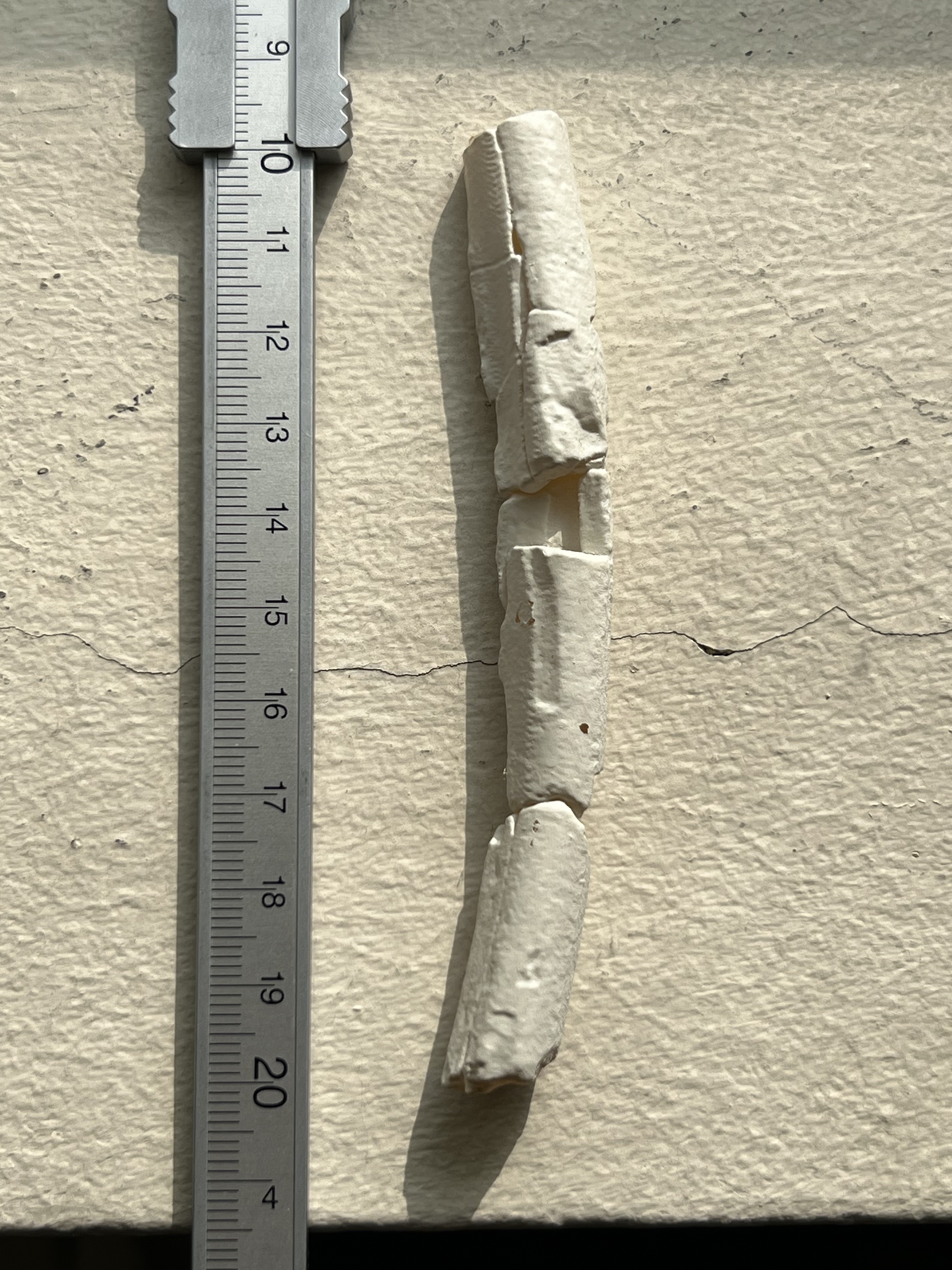
The fossils consist of upper limb bones, clavicles, a scapula, and a small part of the pelvis.
Pearson said, "The fossils are much larger specimens, so we are able to obtain more information than we have had before."
Pearson worked with 3D-printed bones in his lab at UNM. He primarily examined the radius, the longer of the two forearm bones, but also studied the humerus and ulna, ultimately assessing the bones' strength relative to body mass.
His comparison findings produced one of the most interesting results from the analysis. The fossil had proportionally stronger arms than Homo erectus or modern humans, Homo sapiens.
The full analysis revealed that Homo habilis's anatomy closely resembled that of Homo erectus and later species. However, KNM-ER 64061 was shorter and lighter and due to its longer, stronger arms, its arm strength was more similar to that of earlier human species, such as Australopithecus.
Homo habilis fossils have been found in Kenya, Tanzania and South Africa. Over the years, researchers and scientists have discovered and examined teeth, jaws and skulls, but it is rare to find fossils from a single individual.
With the highly trained research team and Pearson's key analysis, scientists now understand that Homo habilis was neither fully primitive nor fully modern as a species, but something uniquely in between.
Pearson's analysis of the arm bones shows traits seen in earlier species, but their overall stature resembles that of the later hominids, leading to a clearer picture of how this species of Homo adapted, survived and ultimately evolved into Homo sapiens.
The Homo habilis research discovery and analysis was published on Jan. 13 in The Anatomical Record journal. To learn more about this significant find, visit the online library webpage.
To learn more about Pearson's work, visit his UNM faculty profile.


