The world has poured a record US$ 2.7 trillion into military spending in 2024, with global spending rising every year for the past decade.
From Ukraine to Sudan, Gaza, Lebanon, Iran and Venezuela, people are living through war, bombardment, occupation, militarisation or political violence, while the damage reaches far beyond the frontlines. Homes, hospitals, power grids, water systems, farmland and coastlines are all drawn into the same cycle of destruction, showing that conflict is not only a human tragedy but also an environmental one, with consequences for public health, ecosystems and climate that can last for decades.
Like all wars, the current war in the Middle East will leave a toxic legacy
War does not only kill people and destroy homes. It also damages the systems that make life possible, including water networks, sewage plants, farmland, ports, fuel depots and electricity infrastructure, often leaving polluted air, contaminated soil and unsafe water long after the fighting slows. Across recent conflicts, research points to the same pattern: fires, toxic debris, damaged sanitation, collapsing public health systems and ecosystems pushed beyond recovery.
This environmental harm is not incidental. It is one of the ways war reshapes daily life.
In Iran, within days of the first US-Israel strikes, energy itself became a direct battleground as attacks and counter attacks targeted fossil fuel infrastructure. The Strait of Hormuz became a flashpoint with dozens of tankers carrying billions of litres of oil trapped in the Persian Gulf. Greenpeace Germany warned that a single oil spill in the Gulf could damage this fragile marine habitat beyond repair with devastating consequences for people, animals, and plants in the region, adding to the terrible human toll this illegal war has already taken on local communities.
In Gaza, Greenpeace MENA analysis has highlighted severe damage to water, sanitation, cropland and fisheries, alongside estimates that the first 120 days of the war generated more than half a million tonnes of carbon dioxide. That combination of bombardment, infrastructure collapse and pollution makes a place harder to inhabit, less healthy and less resilient to climate breakdown.
Sudan offers another stark example: research from the Conflict and Environment Observatory (CEOBS) hows how war is driving deforestation, agricultural decline, industrial pollution, and the collapse of health and sanitation systems, undermining people's access to food, water and energy.
War also carries a climate cost beyond the battlefield. Researchers cited by the CEOBS estimate that militaries account for around 5.5% of global greenhouse gas emissions, while conflict adds more through fires, fuel use, reconstruction and the loss of resilient public infrastructure. The environmental cost of war is therefore both immediate and cumulative, destroying ecosystems today and weakening societies' ability to cope with heat, drought, floods and crop loss tomorrow.

History shows the damage lasts for decades
This is not new. During the Vietnam war, US forces sprayed almost 80 million litres of herbicides, including Agent Orange, affecting roughly 2.9 million hectares of land and leaving dioxin in soils, water and food chains for decades. In Iraq, UNEP and later field investigations warned of long-term environmental and health risks linked to depleted uranium contamination and other toxic remnants of war. These older conflicts matter because they show that the environmental damage of war does not end with a ceasefire.

The lesson running from Vietnam and Iraq to Gaza and Ukraine is simple. War contaminates the conditions for life itself. It degrades land, water, air and health in ways that can shape people's lives for generations, especially where the fighting meshes with chemicals, oil, radiation risks and damaged public infrastructure.
Ukraine maps the environmental cost of war
Ukraine has made this damage unusually visible. Greenpeace Central and Eastern Europe, together with the Ukrainian organisation Ecoaction, launched an environmental damage map built from almost 900 collected cases, with 30 of the most serious verified by satellite imagery to show how Russia's illegal invasion has damaged land, habitats, water and air. Documenting this destruction is essential not only for accountability, but also for planning reconstruction and nature restoration in parallel.

The map matters because it shows the breadth of environmental damage that modern war causes. Missile strikes trigger wildfires, industrial sites leak toxins, shelling pollutes soil and water, and mined or occupied land becomes dangerous to farm, restore or even enter. This points to a larger argument about how war-affected countries can build back better in ways that restore nature and reduce dependence on the same vulnerable energy systems that war keeps targeting
Ukraine also shows how war magnifies and weaponises the environmental risk of nuclear infrastructure. Greenpeace Ukraine and Greenpeace Central & Eastern Europe have repeatedly warned that the Russian occupation of the Zaporizhzhia nuclear power plant (Europe's largest nuclear power plant) has created an ongoing nuclear safety and security crisis. There is no credible nuclear safety, security or legal basis for restarting reactors at Zaporizhzhia while the site remains under Russian military and Rosatom control, and it has warned that any restart would sharply increase the risk of a nuclear disaster.

That warning reaches beyond Ukraine. Nuclear plants are designed for stable operating conditions, not occupation, militarisation and repeated threats to cooling, staffing and external power supply. The example of the Zaporizhzhia nuclear power plant Zaporizhzhia shows how war can turn critical infrastructure into a potential regional environmental catastrophe, with consequences that would not stop at any front line.
The environmental damage caused by war is not only a consequence of conflict. It is also shaped by the fossil-based energy systems that power modern economies.
Oil and gas fuel war and intensify its environmental impact
Oil and gas are not just caught up in war. They often sit near its centre. Oil and gas revenues bankroll war machines, while control of pipelines, ports, tankers and shipping chokepoints helps drive geopolitical confrontation in the first place. When the global economy depends on centralised, combustible resources, attacks on depots, refineries, tankers or shipping routes do more than disrupt trade. They threaten marine ecosystems, public health and economic stability at the same time.

This dynamic helps explain why conflicts around fossil fuel infrastructure so often become ecological emergencies. During the 1991 Gulf war, burning Kuwaiti oil wells blackened skies and polluted land and water on a massive scale. More recently, Greenpeace Germany warned that the US-Israel war on Iran, and the retaliatory strikes that followed across the Gulf, left more than 85 large oil tankers trapped in the Persian Gulf and sharply increased the risk of an oil spill. Local communities would pay that long-term price first, with any spill threatening livelihoods as well as fragile marine ecosystems, including coral reefs, mangroves and seagrass meadows, for decades. The environmental threat is built into an energy system that concentrates risk in a handful of highly flammable, highly polluting sites.
Fossil fuels do not only worsen the damage once fighting begins. They can also shape the motives, incentives and power struggles that make conflict more likely in the first place. President Donald Trump's illegal military action against Venezuela was tied to control of its oil industry, after he said the US would be "very strongly involved" in Venezuela's oil sector. Venezuela holds the largest proven crude oil reserves in the world and warned that the crisis must not be exploited for short-term oil profiteering or extractive gain by foreign governments or corporations.

A world organised around oil and gas makes communities and ecosystems expendable in the pursuit of strategic control and profit. That is why the environmental consequences of war cannot be separated from the political economy of fossil fuel extraction itself.
Yemen's FSO Safer became one of the clearest examples of that intersection between fossil fuels, humanitarian crisis and conflict. The abandoned tanker, carrying roughly 1.1 million barrels of oil, threatened a major Red Sea spill for years while war blocked proper maintenance and response. That immediate catastrophe has now been averted because a UN-led operation removed the oil and transferred it to safer long-term storage. But the Safer crisis showed how a single neglected piece of fossil fuel infrastructure in a war zone can endanger fisheries, food deliveries, coastal livelihoods and marine biodiversity across an entire region.

Renewables are a security imperative
There is no sunlight stuck in the Strait of Hormuz, no wind held hostage by a tanker route. Distributed renewables are harder to bomb or blockade than giant oil fields, pipelines and centralised thermal plants because they remove single points of failure from the energy system. A decentralised network of rooftop solar, batteries, local grids and efficiency measures can help keep hospitals, schools and homes functioning even when national infrastructure is attacked or fuel imports are disrupted.
That is why the energy transition should also be understood as a security and resilience strategy. Countries generating power from their own sun and wind are less vulnerable to shipping disruptions, fuel price shocks and political blackmail tied to oil and gas imports. Local renewables cannot stop a war, but they can reduce the leverage of fossil fuel cartels, keep essential services running and lower the environmental damage that comes from defending centralised, combustible infrastructure.
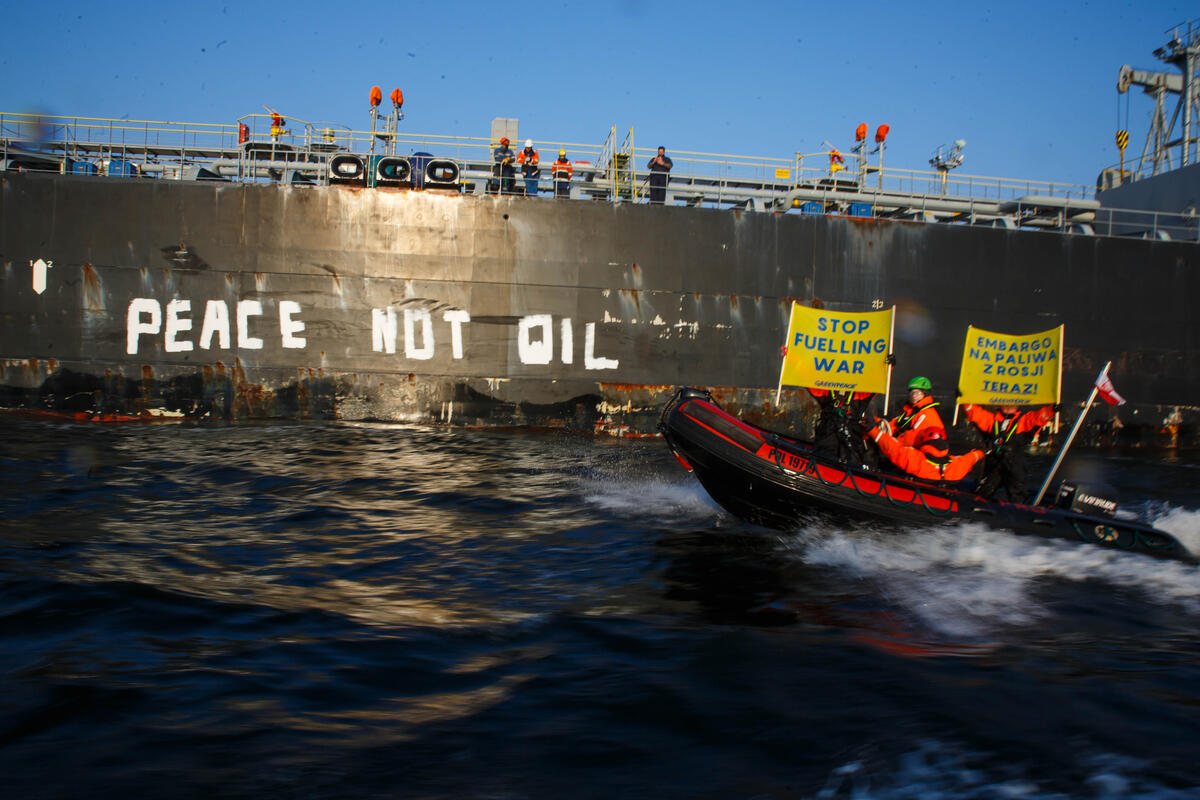
War and conflict do not only kill people. They also poison water, damage soil, foul the air and destroy the systems that make everyday life possible. Naming that devastation matters, because peace is not only the absence of bombs but the possibility of living on safe, healthy and habitable land, something now recognised in the human right to a clean, healthy and sustainable environment.
Moving away from fossil fuels can help make that future more possible by reducing both environmental harm and the dangerous dependencies that so often intensify conflict.