
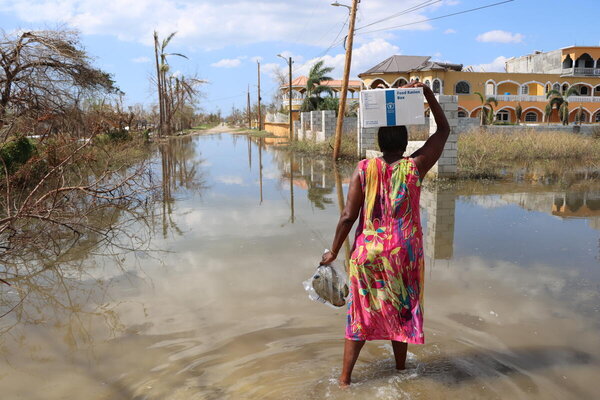
Despite the progress that has been made, recovery remains a marathon, not a sprint. The storm's impact on food security, livelihoods, and local economies will be felt for months to come and sustained support for affected communities is critical to avoid sliding into food insecurity. This is a summary of food insecurity and WFP's response across affected countries.
Jamaica:
- WFP has supported over 108,000 people in Jamaica with emergency food assistance to meet the most urgent needs of affected families, as requested by national authorities.
- WFP plans to reach an additional 100,000 people with cash assistance, if funding is received, to give families greater choice and stimulate market recovery.
- Market assessments in St Elizabeth, Westmoreland, and St James confirm that local markets are gradually recovering, enabling the move to cash support.
- Through a disaster risk financing partnership with the government of Jamaica, WFP has ensured that US$ 1.9 million from the Caribbean Catastrophe Risk Insurance Facility (CCRIF) will be paid out to vulnerable people impacted by the storm through the national social protection system.
WFP is also aiming to support the restoration of agriculture and fisheries to revive incomes, nutrition, and further stabilize markets through programmes such as home-grown school meals which utilize local food production.
Cuba:
- Food distributions have so far reached 340,000 people across the provinces of Granma, Santiago de Cuba, Guantánamo, and Holguín.
- The response continues to scale-up to reach up to 900,000 people for six months. Of these, 450,000 of the most vulnerable will be provided with food assistance for 12 months to aid recovery.
- One month on, thousands of people are still without electricity, clean water, or adequate shelter. The storm wiped out an estimated 40 percent of Cuba's vegetable production and inflicted severe damage on its fishing industry.
- Access to some communities remains constrained due to difficult terrain and flood waters, which has slowed the response.
An outbreak of mosquito-borne diseases is affecting WFP staff and threatens to worsen conditions for affected communities, adding complexity to the emergency.
Haiti:
- Hurricane Melissa has deepened an already complex humanitarian crisis, where half of the population faces food insecurity amid widespread instability.
- Homes, infrastructure and farmlands were destroyed along the Haitian southern coast affecting 1.25 million people. More than half a million of these were already severely food insecure (IPC3+).
- WFP has reached 139,000 people with food rations and cash assistance where markets are accessible and functioning. This includes people who received anticipatory payments to help them prepare before the hurricane hit.
- WFP aims to assist an additional 95,000 people across affected areas Despite rising insecurity and poor road infrastructure which has slowed the response.
- Food assistance will continue for an additional two months, followed by early recovery efforts focused on resilience building and infrastructure reconstruction to help communities rebuild their livelihoods.
- Regional support and partnerships
- Close to 2,500 metric tons of food and essential supplies has been dispatched so far from WFP's Caribbean Regional Logistics Hub in Barbados and the WFP-managed United Nations Humanitarian Response Depot (UNHRD) in Panama.
- An EU-funded airbridge helped transport more than 200 MTs from the UNHRD in Panama and French and Dutch naval vessels have been instrumental in transporting humanitarian aid to affected countries.
- Coordination with the US military has also enabled helicopters to reach isolated communities cut off by landslides and flooding in Jamaica.
- WFP is urgently appealing for US$83 million to deliver life-saving assistance to up to 1.36 million people across the region. The appeal also includes UNHAS, logistic support, assessments, telecommunications and non-food items. To scale-up cash-based assistance, additional resources will be required.
- WFP worked with Caribbean governments ahead of the hurricane to provide early warnings, preposition stocks, and help people secure their livelihoods - all of which helped protect lives and will contribute to early recovery.


