
The world needs the World Meteorological Organization. This has been the central message of 75th anniversary activities highlighting the central role of the WMO community in human safety and economic prosperity and transforming science into action for the global good.
Months of activities started on World Meteorological Day on 23 March and reached a climax with a high-level event at the Extraordinary World Meteorological Congress which endorsed a Call to Action from the WMO Secretary-General to fast-track universal coverage of life-saving early warnings against dangerous weather and a special address from UN Secretary-General Antonio Guterres on Early Warnings For All .
"WMO is becoming more important than ever," Mr Guterres told Congress in October 2025. He praised the organization as "a barometer of truth … a credible and clear-eyed source of data and information about the planet we share … and a shining example of science supporting humanity."
Mr Guterres said that early warnings will be more important than ever "as the world approaches inevitable overshoot" of the 1.5°C target set out in the Paris Agreement on Climate Change.
The temporarily overshooting of 1.5°C - and the need to limit the size and duration of this overshoot - was a theme which was repeatedly echoed at the UN Climate Change conference, COP30, in Belem, Brazil.
WMO Secretary-General Celeste Saulo was the opening speaker at the Belém Climate Summit, presenting the State of the Climate Update for 2025 , showing that 2025 is once again set to be one of the warmest years on record, capping the 11 warmest years on record.
Throughout 2025, extreme weather caused massive economic losses and casualties, underlining the need to accelerate Early Warnings for All.
Artificial Intelligence emerged as a major potential catalyst to achieve this goal. Its potential to greatly improve the accuracy, accessibility and reach of weather forecasts and warnings was recognized by the World Meteorological Congress , which passed a landmark resolution to guide WMO action in the coming years and decades.
The backbone of the global economy
The rapid pace of technological change is a far cry from 1950, when WMO was founded in a world without satellites or supercomputers.
The realization that no country could face the weather, the water, or the climate challenges alone gave rise to one of the greatest achievements of international collaboration: the free and open exchange of meteorological data - a principle that sustains every forecast made today, according to Celeste Saulo.
"WMO remains the backbone of a global ecosystem that saves lives and money every single day, from aviation routing to flood protection, from drought preparedness to climate monitoring," she told a Special Event hosted in partnership with the Geneva Diplomatic Club on 27 November .
"WMO is a showcase for data diplomacy, based on science and trust. Because trust begins with evidence. And evidence begins with observations. WMO is proof that knowledge, when shared, becomes the strongest bridge between nations and generations," she said.
The Diplomatic Club gathering brought together the International Geneva community, including Ambassadors and heads of international organizations, to reflect on the importance of global cooperation in addressing climate challenges. It was the final official ceremony for the 75th anniversary.
75th anniversary activities
Activities began on World Meteorological Day with the launch of the official 75th anniversary webpage and publication of an article in UN Today highlighting WMO's global role and importance in transforming science into action.
The WMO Bulletin issued in May was devoted to the 75th anniversary. The second 75th-anniversary issue of WMO Bulletin in October looked at the coming 75 years, exploring topics such as forecasting the future, the role of new technologies, and the importance of Youth in developing science for action.
At the Executive Council held in June, WMO Members and Permanent Representatives gave testimony about WMO's impact. The Voices of Members Video Series focused on WMO's most important on-the-ground deliverables and priorities.
In October, a targeted communications rollout built momentum for the Extraordinary Congress. WMO milestone timeline marked the signing of the WMO Convention on 10 October in 1950.
During the Extraordinary Congress week starting 20 October, WMO's presence was amplified across Geneva through city-wide promotion on trams, at the airport, and with flags on Pont du Mont-Blanc .
Digital highlights included the rollout of the flagship anniversary video, alongside the 75th drone show which visually narrated WMO's history, scientific achievements, and global impact.
Read the full 75th Anniversary Drone Show Narrative
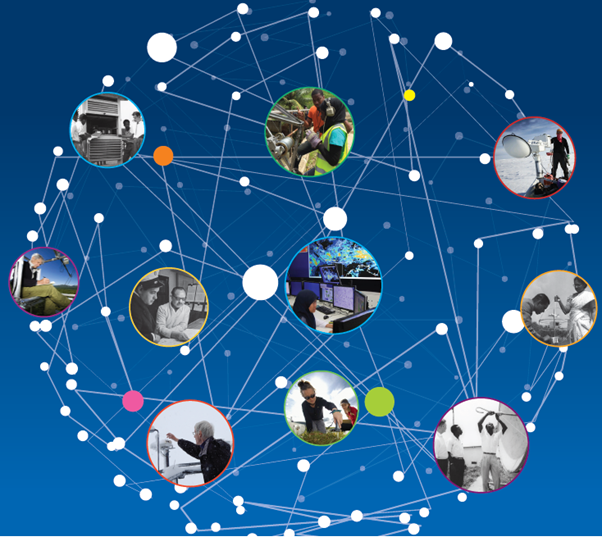
Youth Action Plan
In addition to leveraging the potential of rapidly changing technologies, WMO is seeking to embrace and empower future scientists.
The Extraordinary Congress in October adopted the first WMO Youth Action Plan , marking a structured approach to integrating youth perspectives into its work and empowering the next generation of leaders.
This is a landmark step in nurturing young meteorologists, hydrologists and climate and ocean scientists, marking a new era of shared inter-generational responsibility and expertise in weather, water, and climate action.
The Youth Action Plan marks the culmination of a year-long global consultation engaging over 200 participants across WMO bodies, regions, and the wider youth community.
Looking Ahead
Celeste Saulo also looked to the future in her intervention to the Geneva diplomatic corps in November.
WMO is more relevant and needed than ever before. And yet, the Organization faces a paradox familiar to many multilateral organizations, she said.
The issues we deal with - weather forecasts, early warnings, data exchange, water resource management, climate monitoring - are central to development, security and humanitarian objectives. And still, investment patterns fall far short of needs.
It is simply a structural reality: the huge socio-economic benefits of weather, climate and water services are long-term and diffuse, while budgets are short-term and constrained.
- As we look toward the next 75 years, three threads of continuity guide us:
- First, science and trust must remain the anchor of collective action.
- Second, the value of WMO will increasingly depend on our ability to protect and expand global public goods.
- Third, adaptation, innovation and equity must advance together.
"As we look forward, the partnerships that guide us today will only deepen," said Celeste Saulo.


