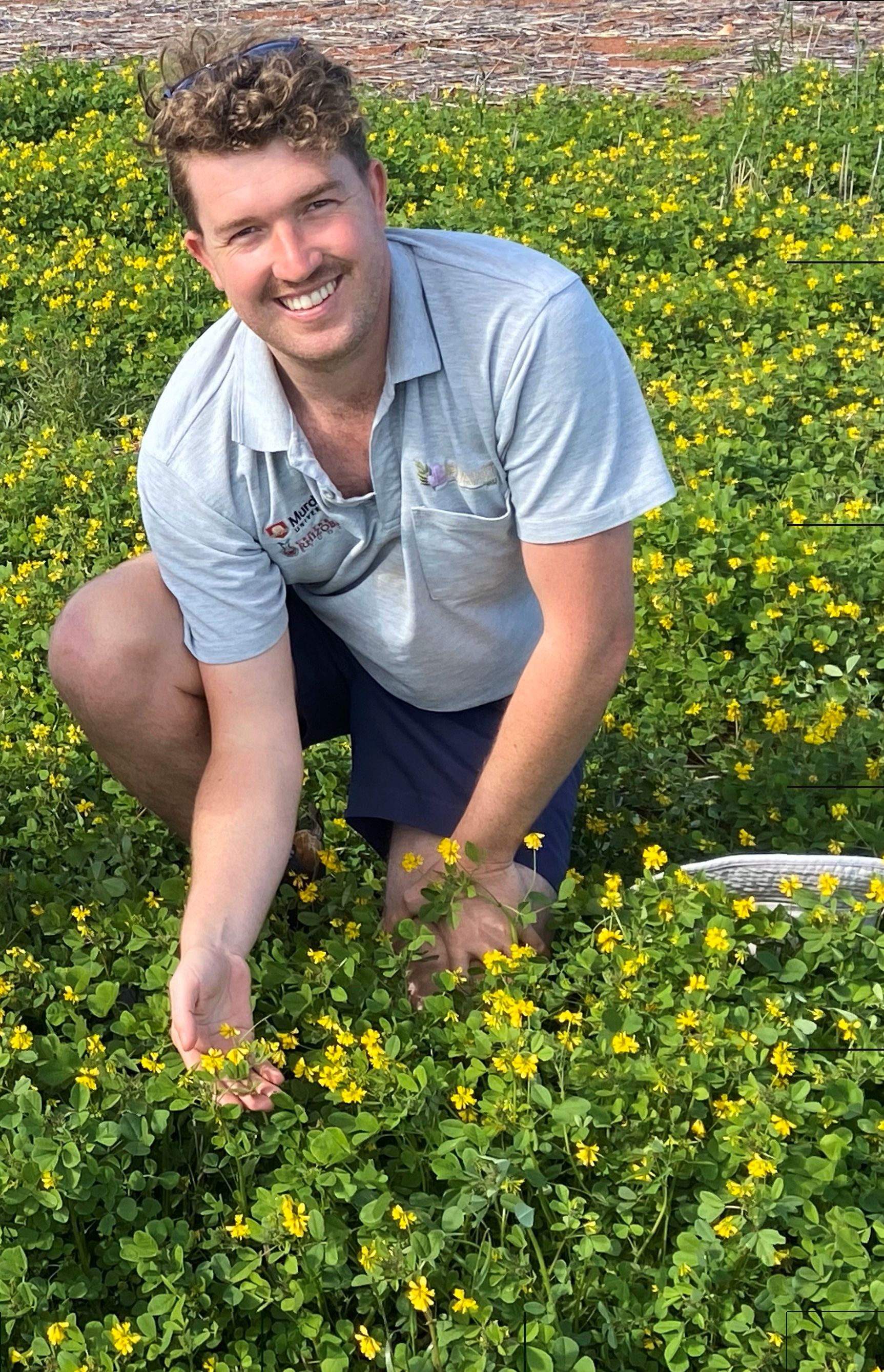
The nitrogen benefit from different legume species in cereal-based crop rotations has been quantified by Western Australian research to help boost yields, reduce fertiliser costs and industry emissions.
The nitrogen benefit from different legume species in cereal-based crop rotations has been quantified by Western Australian research to help boost yields, reduce fertiliser costs and industry emissions.
The Department of Primary Industries and Regional Development (DPIRD) profiled the study at the Grains Research and Development Corporation (GRDC) Research Updates in Perth today.
The research quantified the timing and magnitude of nitrogen release from decomposing legume stubbles and determined the extent to which this nitrogen was recovered by subsequent cereal crops.
The four year rotational trial, undertaken with GRDC co-investment and support from the WA Agricultural Research Collaboration, CSIRO and Murdoch University, was established in 2023 on duplex soil at Konnongorring, south of Wongan Hills.
The work evaluated nitrogen supplies from residue mineralisation (decomposition) of clover, serradella, lupins, Trigonella and woolly pod vetch.
DPIRD research scientist Robert Harrison said bladder clover and vetch stubbles were the top performers, contributing significant plant available nitrogen to subsequent cereal crops.
"Bladder clover, woolly pod vetch and Trigonella consistently supplied more nitrogen to the rotation than decomposing stubbles of sub clover and lupins," Mr Harrison said.
"These differences translated into superior performance from the subsequent wheat crop, including higher protein and yield, due to higher nitrogen uptake.
"There were also residual yield benefits to barley crops sown two years after the legume species was grown."
The research will help pave the way to more sustainable crop production by providing alternative options for nitrogen supply in dryland cropping systems.
"This work demonstrates that integrating harvestable annual legumes improves nitrogen system efficiency when managed correctly," Mr Harrison said.
"Selecting high nitrogen fixing legumes with favourable residue decomposition characteristics can improve soil nitrogen supplies, reduce fertiliser dependence and enhance the productivity of cereal-based systems."
The presentation paper 'Contribution and Availability of Nitrogen from Harvestable Annual Legumes in a Cereal Rotation' can be found on the GRDC website .