
The Assembly follows 15 neurodivergent and autistic Macquarie University journalism students as they interview Aussie celebrities.
On-screen, the talented cohort are mentored by veteran journalist Leigh Sales and behind-the-scenes, they are taught by Senior Radio and Journalism Lecturer, Dr. Helen Wolfenden.
Season three saw Macquarie students interview the likes of singers Jimmy Barnes and Jessica Mauboy, comedians Dave Hughes and Andy Lee, and Olympian Ian Thorpe. And now, they've been awarded one of the highest honours in Australian showbusiness.
"Thank you… to the celebrities who trust us and come in and do a two-hour interview where anything can be [asked of] them, and also to the public who have just gotten so behind this show," Sales said as she accepted the Silver Logie for Best Factual or Documentary Program for The Assembly on Sunday.
"People stop me all the time to talk about it and say how much they appreciate the representation of the autistic community. So thank you very much."
Australian stories were front-and-centre at the 66th Annual TV Week Logie Awards, with the national broadcaster taking home eight gongs on the night.
Other contenders in the documentary category were:
- But Also John Clarke (ABC)
- Revealed: Death Cap Murders (Stan)
- Revealed: Joh – Last King of Queensland (Stan);
- The People vs Robodebt (SBS)
- The Secret DNA Of Us (SBS)
The win was a major milestone for the ABC series after being nominated but missing out on the trophy the previous year.
 Journalism lecturer Helen Wolfenden and The Assembly star James Rapp take us behind-the-scenes of ABC's groundbreaking series. Photo: Chris Barlow/Macquarie University.
Adapted from the French series Les Rencontres du Papotin, the show allows student interviewers to ask unfiltered, unconventional, and deeply direct questions without standard media taboo.
Speaking to the media in the room afterward, Sales admitted that the show's autistic student journalists have the courage to ask celebrity guests tough questions that she "doesn't have the guts to ask herself".
Showrunner Melissa Maclean added that because the students are so delightfully unpredictable, some mainstream personalities actually turn down the show because they don't like the lack of control. "And there are some personalities that just don't work well and they don't like the unpredictability of it," she said.
"The Logie is wonderful recognition of what The Assembly has achieved, and we are proud of Macquarie University's contribution to the program," Wolfenden told Lighthouse.
"From the beginning, our role has been about taking the students' development seriously: giving autistic students the training, support and opportunity to develop and demonstrate their skills as journalists.
"It has been particularly rewarding to see Macquarie journalism student and Assembly participant James Rapp bring his own skills and perspective to the program. This award is wonderful recognition of the students and of a program built around genuine opportunity, appropriate support, and high expectations."
Rapp, 25, joined season two after responding to an open casting call while studying at Macquarie. "I was elated to join the show," he said.
"I think the thing I appreciate the most about Helen's teaching style is that she really meets us where we are. She's very good at opening the floor up to questions and calling on people who might not feel confident enough to ask them."
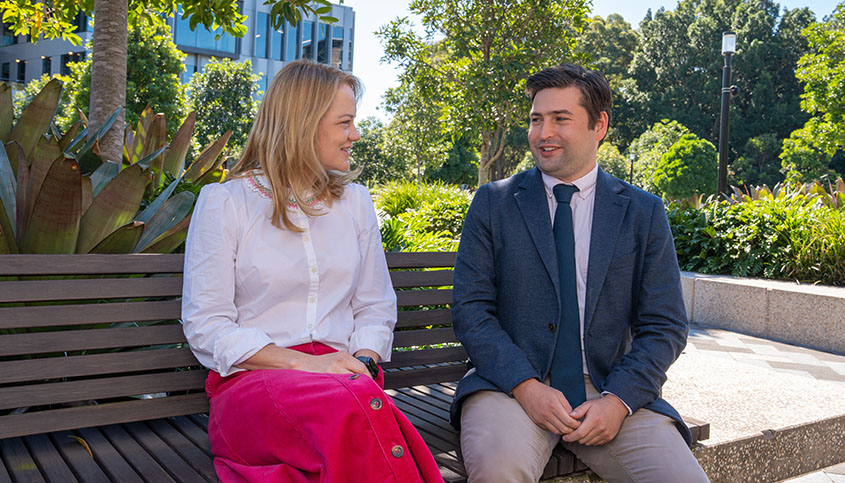 Helen and James want to break down popular misconceptions about autism and learning Photo: Chris Barlow/Macquarie University.
Participation stops being something you assume and becomes something you design for. You pay more attention to preparation, to clarity, to removing environmental barriers. You stop thinking about support as something that gets withdrawn once someone is "ready", because readiness isn't fixed. It shifts with the conditions.
The Assembly has produced 19 episodes and interviewed guests ranging from the Prime Minister to A-list actors and athletes. That's the visible outcome. The more important question, at least for Wolfenden, is what counts as success for the people doing the interviewing.
It isn't one thing, and it isn't always what ends up on screen.
Success might be asking a question in a room that feels manageable. It might be staying for the full session. It might also be leaving the room when that's what's needed, or asking for an adjustment that makes participation possible. It might be deciding that this is something you want to keep doing.
"We did studies with Helen on campus, where we gained the theoretical knowledge that we'd later put into practice in our filming sessions with Leigh Sales," Rapp said.
"I found that journalism really suited me, and as a result, I've changed my degree so I can continue exploring it. I think it's so great that something like The Assembly exists. Because until something's been done before, it's really hard to picture what that might look like."


