
Key Facts:
Barcelona has been named European Capital of Christmas 2026, recognised for combining centuries-old Catalan traditions with creativity and multicultural influences.
More than 130 kilometres of streets will be illuminated, featuring 255 arches, 272 light figures and over 50 decorated fountains.
Designer lighting will reach new neighbourhoods, with new installations along Rambla de Prim and Passeig de Maragall.
Giant galets will return to Barcelona, celebrating the shell-shaped pasta traditionally served in Catalan homes at Christmas.
The festive season will culminate with the Three Kings Parade, when the Kings arrive by sea before travelling through Barcelona on 5 January.
More than 130 kilometres of Christmas lights, new artistic installations and centuries-old Catalan traditions will transform Barcelona this festive season.
Barcelona, Catalonia, 15 November 2026. Barcelona has been named European Capital of Christmas 2026 by the international jury of European Capital of Christmas. The jury praised a festive landscape enriched by "centuries of history, art and traditions", where deeply rooted Catalan customs meet the city's multicultural identity. Throughout the 2026 Christmas season, Barcelona will celebrate the recognition with an expanded programme of lighting, artistic installations, markets and cultural activities across the city.
More than 130 kilometres of Christmas lights
Barcelona's Christmas illumination will extend across more than 130 kilometres of streets. The display will include 255 illuminated arches, 272 light figures across most districts and more than 50 decorated fountains.
New designer lighting will appear along Rambla de Prim and Passeig de Maragall, taking the festive programme beyond the city centre. Barcelona will also welcome back the giant galets, oversized versions of the shell-shaped pasta traditionally served in Catalan homes at Christmas.
The official switch-on will take place on 26 November, marking the beginning of the city's festive season.
Christmas traditions with a Catalan character
Beyond the new lighting installations, Barcelona's festive identity can be found in traditions passed down through generations. The historic Fira de Santa Llúcia brings nativity figures, handmade decorations and Christmas greenery to the square outside Barcelona Cathedral, while another traditional market surrounds the Sagrada Família.
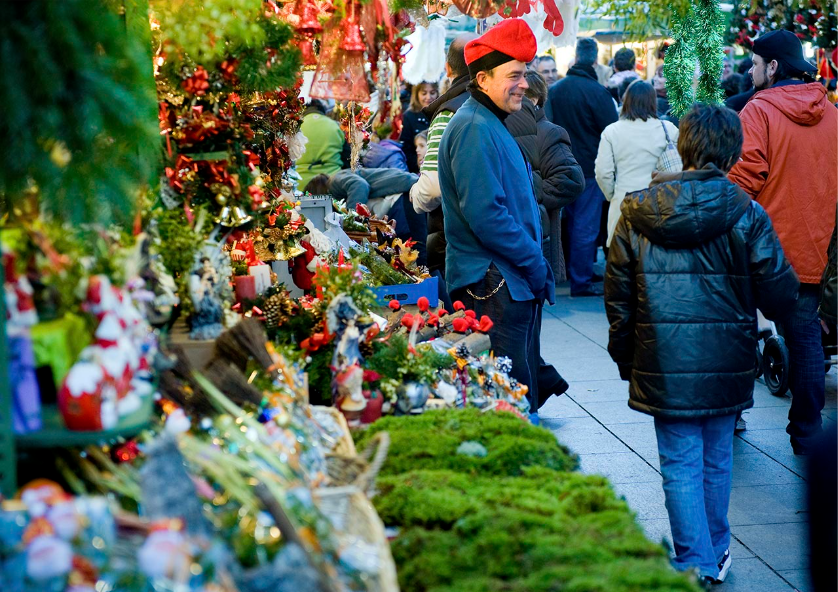
A vendor selling Christmas products at a stall at the Santa Llúcia Fair.
Children feed the Tió de Nadal, a decorated wooden log that delivers presents on Christmas Eve, while nativity scenes appear in museums, public squares and homes. The festive calendar also includes carol concerts, liturgical celebrations, family performances and Els Pastorets, a popular Catalan theatrical tradition.
Festive celebrations across Barcelona
Museums and cultural venues across Barcelona will complement the citywide programme with their own seasonal activities. Among them, the Sant Pau Art Nouveau Site will present a renewed edition of Els Llums de Sant Pau, inspired this year by The Little Prince.
The celebrations will culminate on 5 January with the Three Kings Parade. The Kings arrive in Barcelona by sea before travelling through the city on elaborate floats, accompanied by performers, music and thousands of spectators.
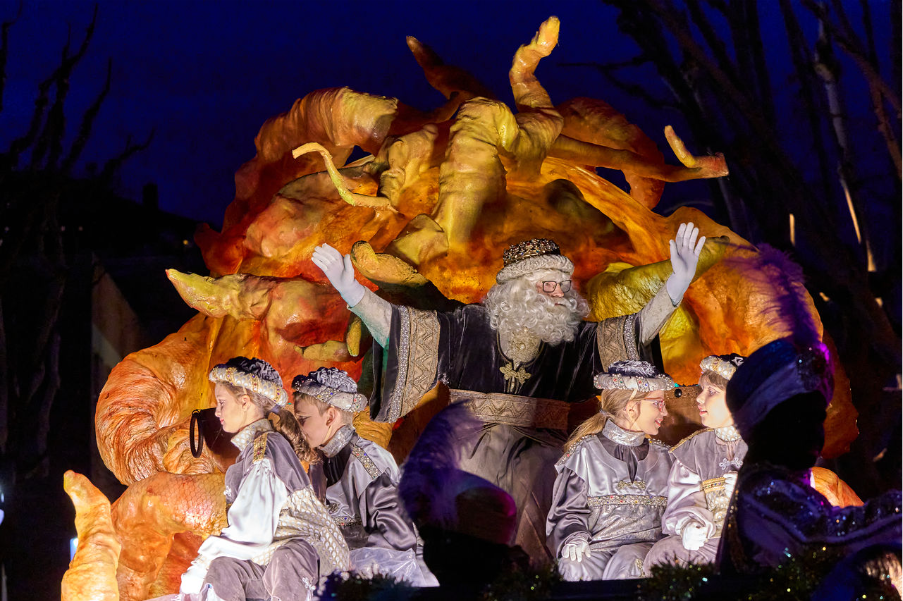
King Melchior greets the crowds during Three Kings Parade.
With contemporary light installations appearing alongside historic markets and distinctly Catalan customs, Barcelona's year as European Capital of Christmas offers travellers a new reason to discover the city during the festive season.
About us:
About the Catalan Tourist Board
The Catalan Tourist Board is the official tourism promotion body of the Government of Catalonia, a region in north-eastern Spain whose capital is Barcelona. The organisation is responsible for positioning Catalonia internationally as a leading travel destination, promoting its culture, gastronomy, nature, heritage, meetings industry and premium travel experiences.
Through its headquarters in Catalonia and its network of offices abroad, the Catalan Tourist Board works with the tourism sector to promote a high-quality, sustainable and diverse tourism model.


