
Meet Bleeding Disorders Research Coordinator Ali Serrantino, MS, of the New England Sickle Cell Institute and Connecticut Bleeding Disorders Center.
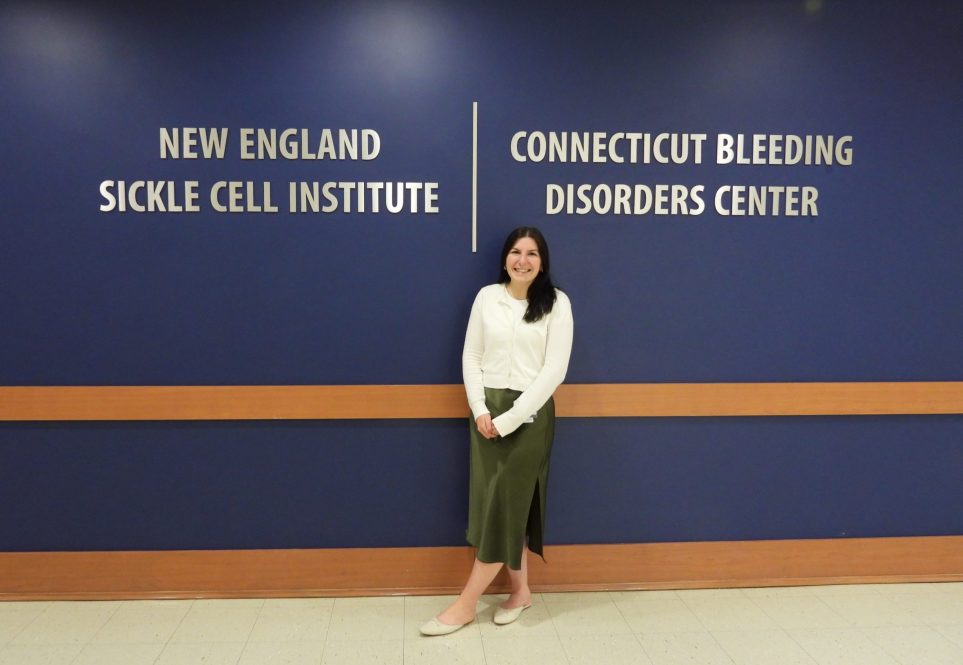
Meet Ali Serrantino, the Bleeding Disorders Research Coordinator for UConn Health. In addition to advancing research, she's also advanced her career at UConn by just completing her master's degree in data science at UConn Storrs. (Photo by Lauren Woods/UConn School of Medicine).
Ali Serrantino, MS, of Cromwell is closing in on three successful years working at UConn Health's New England Sickle Cell Institute and Connecticut Bleeding Disorders Center.
Her work's focus has been coordinating and advancing bleeding disorders research including UConn's participation in regional and national bleeding disorder registries.
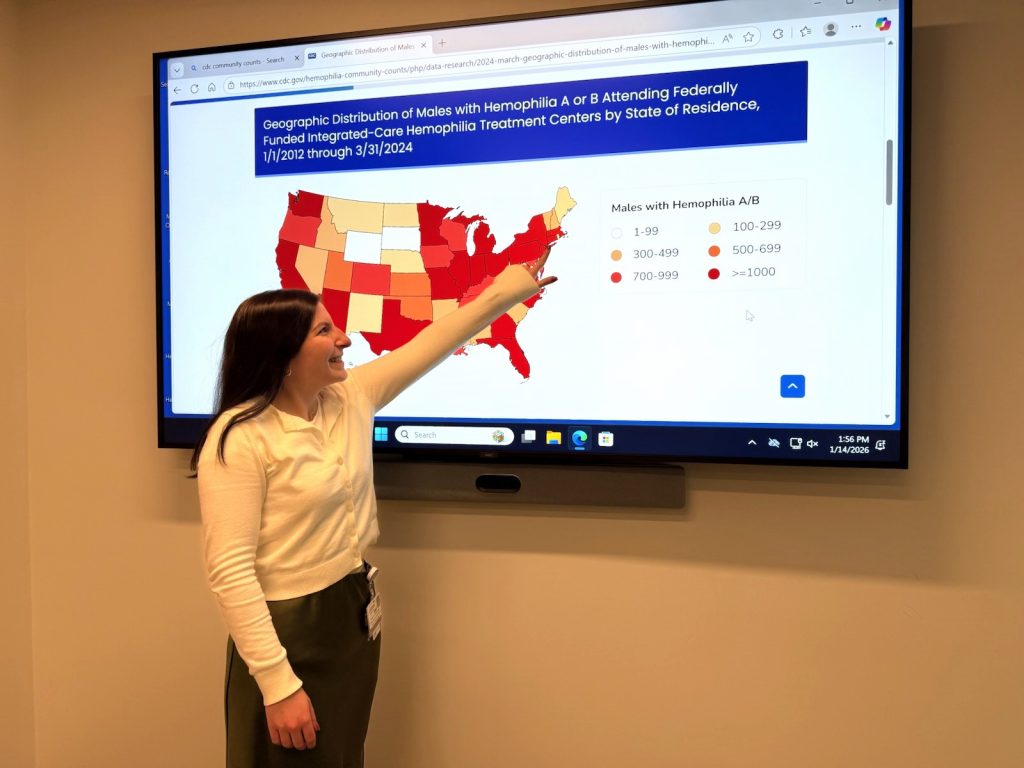
One of the national registries UConn's patients are participating in is the CDC's Community Counts project, which is an anonymous, volunteer registry for bleeding disorders patient surveillance to benefit the nation's bleeding disorders community by tracking their health data, trends, and blood samples. The CDC's project goal is to monitor trends in bleeding disorders over time to contribute to greater knowledge to benefit the bleeding disorders community nationwide by advancing research and improving treatments.
This clinical research is one of the many studies supported by the Clinical Research Center at UConn School of Medicine.
"More data increases our bleeding disorders knowledge and helps more patients. The CDC Community Counts project is working thankfully to get a better national view of all bleeding disorder patients in the country, to better understand who they are, where they live, and what greater resources can help this community of patients," says Serrantino. "When we have a better measure of bleeding disorders locally and nationally it will advance research and lead to new better treatments."
Serrantino excitedly just completed her master's degree in data science at UConn Storrs. She previously worked in research at Yale.
"Being Connecticut born, the opportunity to work at UConn always stands out. I have been able to learn so much here at UConn about bleeding disorders. I couldn't have gotten a better research opportunity experience anywhere or mentorship. Dr. Biree Andemariam is the best leader, amazing person, and mentor," says Serrantino. "Dr. Andemariam is at the center of it all at our Bleeding Disorders Center and its excellence."
Andemariam is the director of UConn Health's New England Sickle Cell Institute and Connecticut Bleeding Disorders Center. The Bleeding Disorders Center is very special and historic. It is one of the longest-running specialty clinical programs in the institution's history. In fact, it has long been recognized as a premier center for the care of patients with hemophilia and other bleeding disorders and one of only two adult bleeding disorder programs in the state. This year marks the Center's 51st year.
"Bleeding disorders are more common than you think. They also affect people from all backgrounds and walks of life. Also, some such as hemophilia can be underdiagnosed or misdiagnosed in certain groups such as women," reports Serrantino.
"While I spend a lot of time working with registry data and numbers, I actually have the privilege to interact with our special bleeding disorder center patients. It's really nice getting to know our patients."
One long-time patient of the Bleeding Disorders Center that Serrantino has had the privilege to encounter is Mr. Robert Hoyt, who was born with the most severe type of hemophilia called hemophilia A with inhibitor. And no matter what, he continues to thrive and persevere.
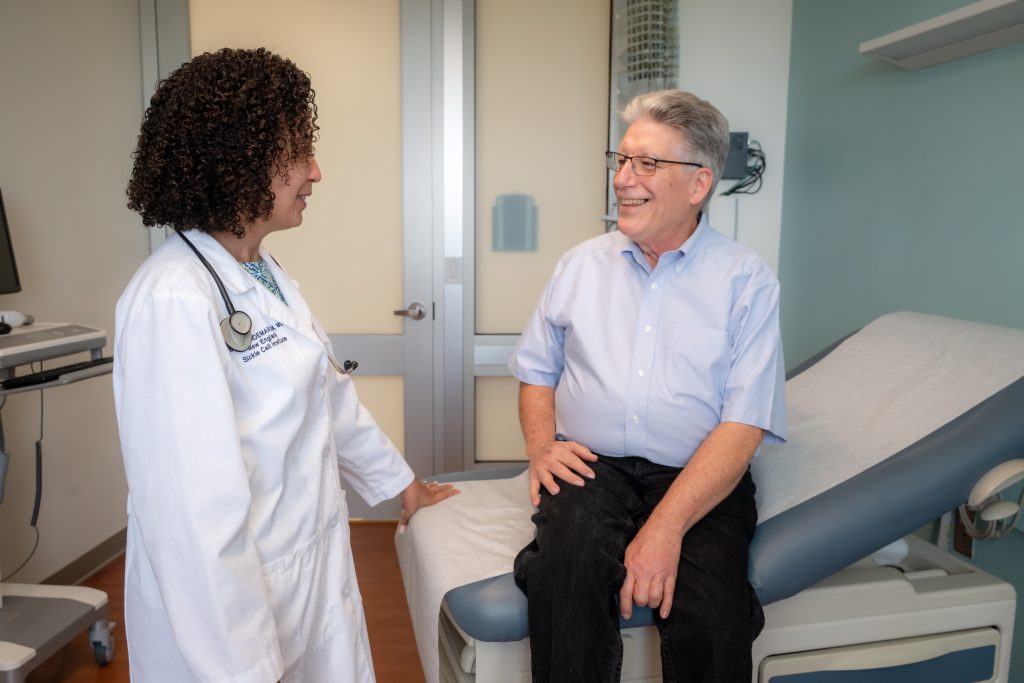
"Mr. Hoyt is always very interesting to speak with, and his clinical success and advocacy for other bleeding disorder patients is so inspiring to patients and to me personally,"
The Bleeding Disorder Center treats all bleeding disorders but mostly hemophilia A, hemophilia B, and Von Willebrand Disease which is the most common inherited bleeding disorder that doesn't allow for one's blood to clot properly.
"The biggest hope of our Bleeding Disorders Center is to keep pushing medicine and research advances for bleeding disorder patients forward, no matter what!" says Serrantino.
Adding, "There is a lot of heart and community among bleeding disorder patients. They stay very involved in their care and their community's care."
UConn Health's Bleeding Disorders Center is also part of the New England Regional Network, one of 8 regional networks of Hemophilia Treatment Centers (HTCs) funded by the Health Resources and Service Administration (HRSA) . UConn is one of the three Connecticut centers in this regional bleeding disorders network, along with Yale and UConn-affiliate Connecticut Children's.
UConn Health is looking forward to getting patients involved in more bleeding disorder registries soon, and bringing the latest treatments for bleeding disorders such as new gene therapy for hemophilia to Connecticut too.
The CRC of UConn School of Medicine is currently providing support for over eighty open clinical trials. Learn more at: health.uconn.edu/clinical-research-center.


