
- Takahiro Masuda, a university student in Hiroshima majoring in bioinformatics, participated in the UNITAR SDGs and Digital Futures: Changemaking Through AI/Digital Storytelling training programme in 2025.
- For his final project in the programme, Takahiro developed an app that uses AI and extended reality (XR) technologies to allow viewers to vividly see and compare Hiroshima immediately after the atomic bombing with the city today.
- The UNITAR training provided a valuable opportunity for Takahiro to explore how technology can be used for social goals and applied to peace-related challenges.
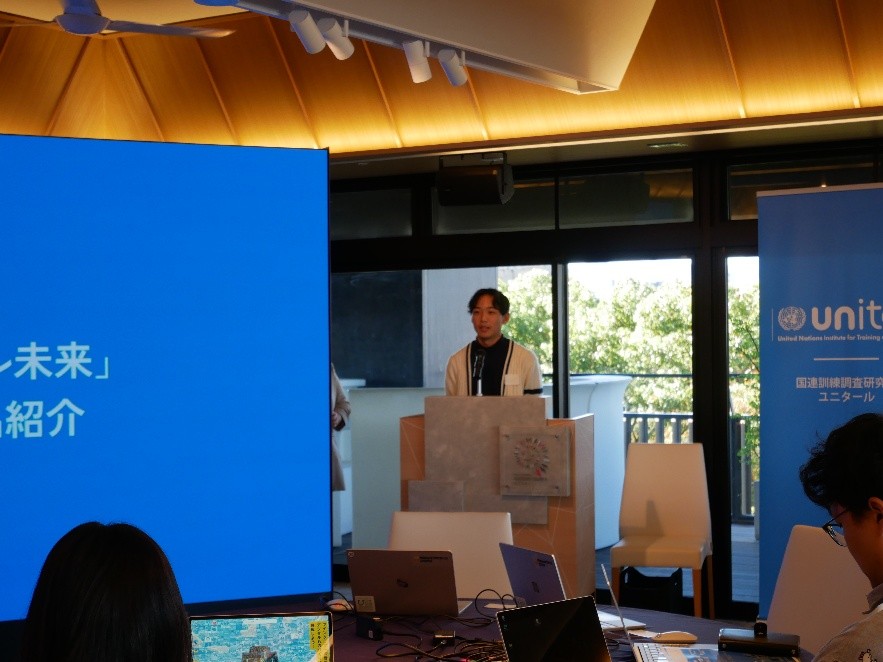
30 December 2025, Hiroshima, Japan - Takahiro Masuda is a university student in Hiroshima majoring in bioinformatics, where he studies the intersection of healthcare and information technology. Raised in Nagasaki as a third-generation atomic bomb survivor, Takahiro joined the UNITAR SDGs and Digital Futures: Changemaking Through AI/Digital Storytelling training programme, seeking new ways to convey messages of peace through digital technology.
Expanding Interest in the Intersection of Technology and Social Issues
Takahiro's interest in applying data and AI technologies to address social challenges grew in high school, when he researched the uses of machine learning to identify various types of microplastics as part of inquiry-based learning on the Sustainable Development Goals (SDGs). He also had the opportunity to engage with global leaders from Japan and abroad at an international event in Nagasaki. This experience broadened his perspective and motivated him to look beyond national boundaries.
After moving to Hiroshima for university, Takahiro learned about the UNITAR AI/digital storytelling programme. Drawn to the programme's focus on AI-driven initiatives and its international perspective, he decided to apply.
Learning About the Social Implementation of Digital Technologies
The UNITAR SDGs and Digital Futures programme aimed to enhance the capacity of young people from Hiroshima and across Asia to communicate social issues using artificial intelligence (AI) and digital technologies. Commemorating the 80th anniversary of the Hiroshima atomic bombing, the programme ran between June and November 2025 and was implemented with support from the Hiroshima Prefectural Government and Hiroshima City. Participants learned through online sessions and an in-person training component in Hiroshima , featuring expert lectures, fieldwork, and final project presentations .
Takahiro describes the visits to companies, during the August study tour , and discussions with experts as valuable opportunities to learn about industries and fields he had not previously been aware of. He was particularly fascinated to see how local companies were using digital technologies to address challenges in the medical field. As someone studying the medical industry, witnessing the integration of technology and medicine in real-world settings proved highly motivating.
Being able to see first-hand how technology and healthcare are combined and applied in actual practice was a fascinating experience.
- Takahiro Masuda, university student and UNITAR AI/digital storytelling training participant (Japan)
Connecting Past, Present and Future Through the Hiroshima XR Application
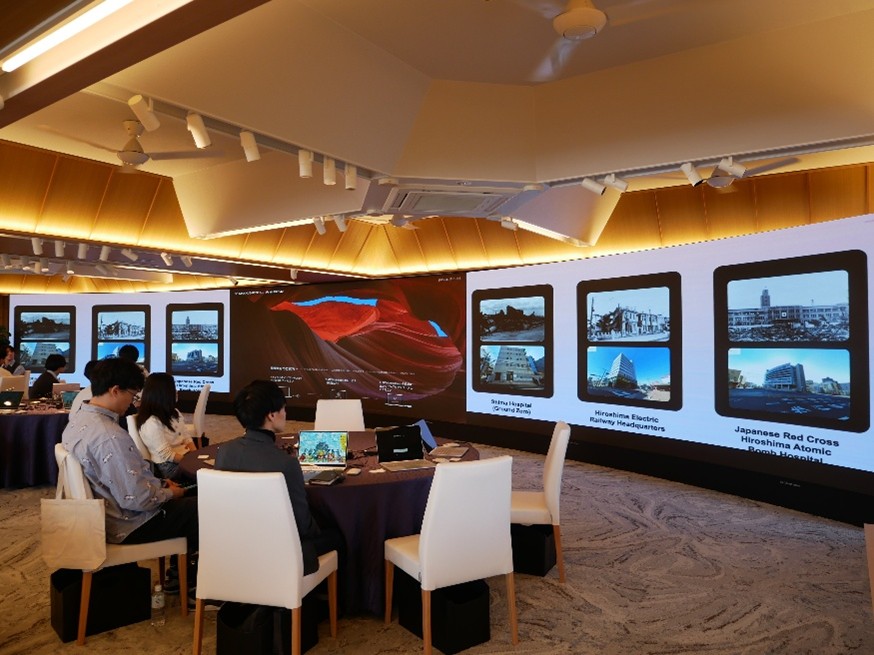
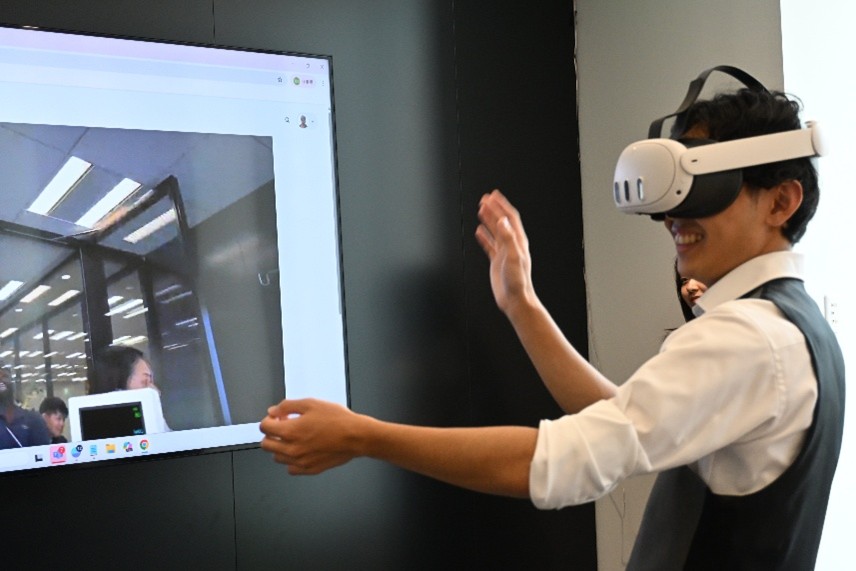
As the final assignment of the programme, participants developed and presented digital storytelling projects . For his project, Takahiro created an application called Hiroshima XR. The app uses extended reality (XR) technology to overlay images of Hiroshima immediately after the atomic bombing with the city as it appears today, allowing users to experience the environment in an immersive way.
The inspiration for Hiroshima XR, Takahiro says, was one of the programme lectures in which Professor Hidetaka Watanabe (University of Tokyo) spoke about preserving memories of the past through digital archives and spatial expression. While survivors' testimonies have long played a central role in conveying the horrors of the atomic bombing, preserving these memories has become critical as the number of survivors dwindle, 80 years after the bombing. Beyond capturing videos of the survivors telling their stories, Takahiro sees digital technologies as indispensable to meet this need.
Verbal testimony can be easily distorted and changed over time. To preserve history as accurately as possible, I believe it is essential to make use of digital technologies.
- Takahiro Masuda, university student and UNITAR AI/digital storytelling training participant (Japan)
To build a realistic virtual environment, Takahiro combined aerial photographs taken shortly after the bombing with modern imagery, using the game development engine Unity and machine learning implemented through the Python programming language.
By respecting the weight of survivors' experiences while creating an entry point for engagement through digital technology, Takahiro hopes to demonstrate new ways to pass precious memories on to future generations.
Reflections After the Training Programme
The UNITAR programme helped Takahiro come to realize that engineering knowledge can be applied not only to medicine but also to peace. While continuing to pursue his path in information engineering, he hopes to engage in future research and initiatives that connect digital technology with peace studies.
No matter what your field of expertise is, I believe everyone can contribute to addressing social issues. I hope one will start by bringing shape to what interests them.
- Takahiro Masuda, university student and UNITAR AI/digital storytelling training participant (Japan)


