
Gathered around the Security Council's iconic horseshoe table, ambassadors were challenged on Monday to look backwards - when, despite deep rivalry and distrust, the body chose leaders capable of steering the world away from catastrophe towards active cooperation.
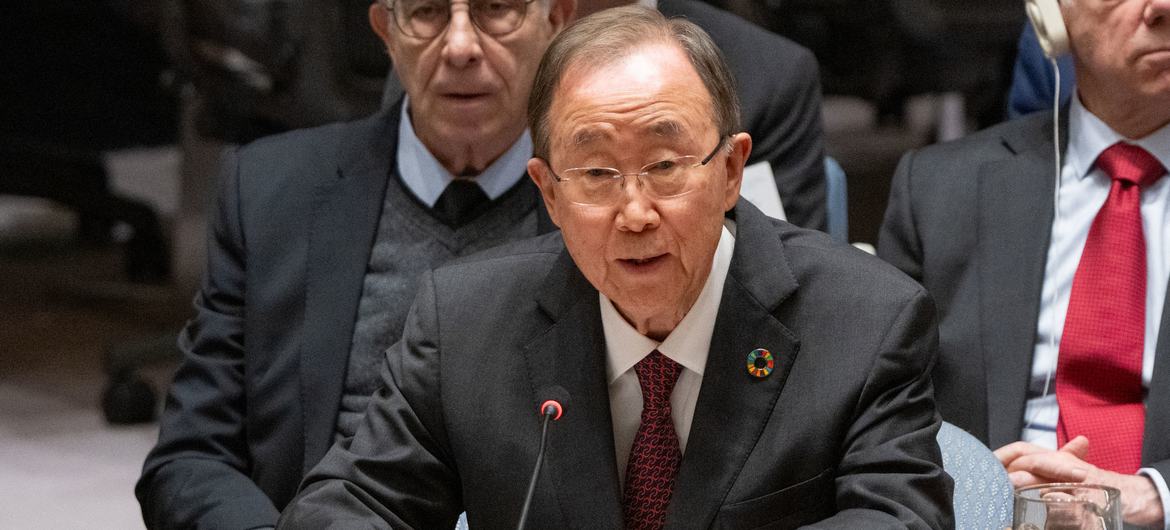
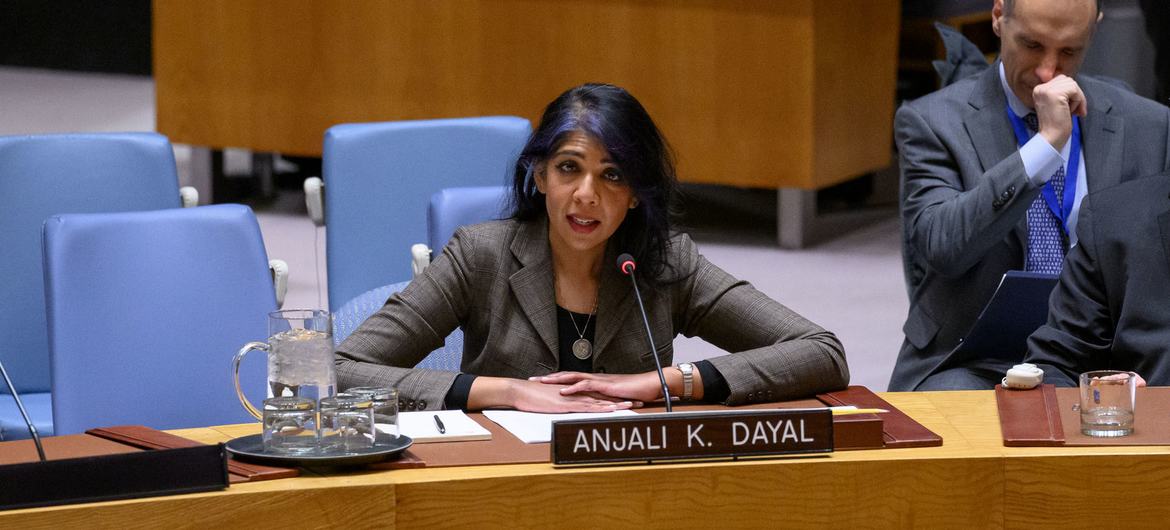
That call came during an open debate on "Leadership for Peace," where former Secretary-General Ban Ki-moon and academic Anjali Dayal pressed members to confront both the external crises facing the UN and internal constraints that have weakened its ability to act.
Mr. Ban, now an emeritus member of The Elders group, warned that global conditions have worsened since he left office at the end of 2016, marked by deepening confrontation among major powers, eroding multilateralism and conflicts in which civilians continue to pay the highest price.
"This deeply disappointing situation is characterized by confrontation rather than cooperation among major powers," he told the Council, citing the war in Ukraine, mass civilian casualties in Gaza and weakening international cooperation - even as the global climate crisis accelerates.
Lurching towards irrelevance
The former UN chief said the overall crisis cannot be separated from the Security Council 's own failures.
"The Security Council's ongoing failure to properly function constitutes the most egregious cause," he said, highlighting the repeated use of veto by permanent members "to shield themselves, their allies and their proxies from accountability."
Without meaningful reform, Mr. Ban warned, civilians will remain unprotected and impunity will persist. "Without it, the UN risks lurching towards either collapse or irrelevance," he said.
Reduce political pressures
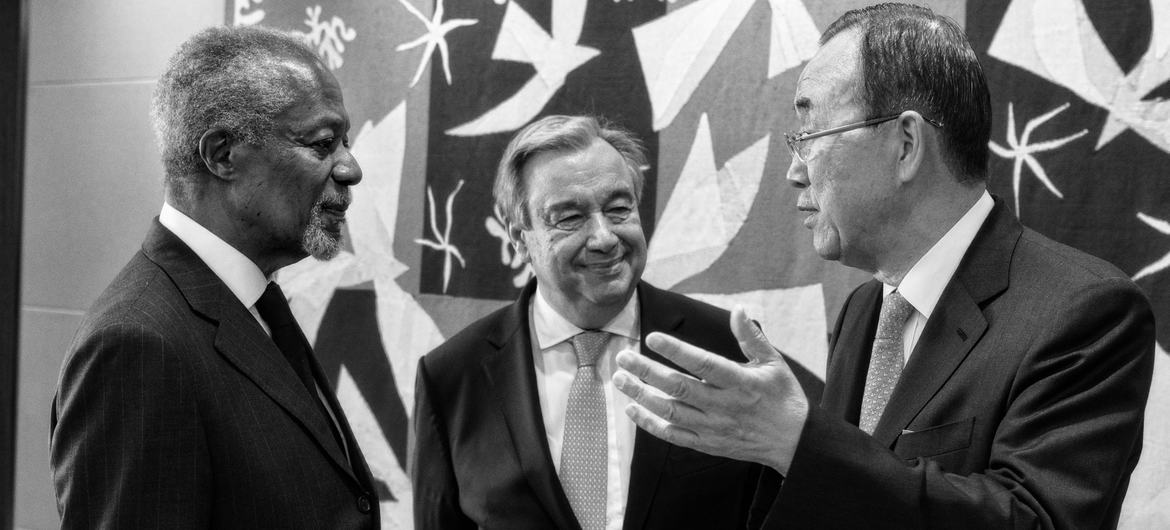
Turning to the selection of the next Secretary-General, Ban called for a single, non-renewable seven-year term to strengthen the independence of the office.
The current practice of two five-year terms, he said, leaves Secretaries-General "overly dependent on this Council's Permanent Members for an extension," even though the arrangement is a convention rather than a requirement of the UN Charter .
"The General Assembly holds the power to set the terms of the appointment itself," Mr. Ban noted, urging member states to use that authority to empower the next UN leader more fully.
The selection process
Secretary-General António Guterres 's second term expires at the end of next year, and the formal selection process is already under way.
In November, the Presidents of the General Assembly and the Security Council launched the process together, in line with General Assembly resolution 79/327 , which emphasises transparency and inclusivity.
Under the established procedure, candidates are nominated by Member States or groups and are required to submit a vision statement, curriculum vitae and campaign financing disclosures.
The President of the General Assembly convenes publicly broadcast interactive dialogues with all candidates, while engaging closely with Member States throughout the process.
As of mid-December, only Rafael Mariano Grossi - the Director-General of the UN nuclear watchdog International Atomic Energy Agency ( IAEA ) - has been nominated by Argentina.
You can find the list of candidates on the UN website here .
Unprecedented strain
Anjali Dayal, Associate Professor for International Politics at Fordham University, told the Council that the next Secretary-General will assume office at a time of unprecedented strain, including a deepening funding crisis that is already shrinking the UN's capacity to deliver essential services.
"That will result not just in shrinking this Organization, but also in less of the work that only the UN can do at scale," she said, pointing to fewer vaccinations, reduced humanitarian aid and diminished mine-clearance efforts, even as global needs grow.
Ms. Dayal said history shows that even in periods of intense division, the Council has been capable of choosing leaders who advanced peace and cooperation.
She recalled the protracted deadlock that preceded the selection of Javier Pérez de Cuéllar in 1981 and the critique of U Thant, yet they deftly maneuvered an end to the Iran-Iraq war, resolve conflicts in Cambodia and Nicaragua, and help end the Cuban Missile Crisis.
Jaw-jaw better than war-war
Those examples, she said, underscore that the Secretary-General's influence lies less in material power than in the ability to shape ideas, narratives and long-term cooperation - "to make conference rooms always more attractive than the battlefield."
For Mr. Ban, that responsibility ultimately rests with the Council itself. Reforming veto use and renewing support for UN leadership, he said, are essential if the Organization is to remain relevant in the twenty-first century.
"The path of each for themselves is no different from the path of mutual destruction," he warned.


