
Water is a fundamental human right, but the industry claiming to "feed the world" is quietly poisoning what we drink.
From rural Aotearoa (New Zealand) to Denmark, an invisible health crisis flows through our taps: nitrate contamination. For decades, industrial meat and dairy, Big Ag, has treated our rivers and groundwater as a free sewer for its waste. Now scientists are sounding the alarm, with major studies showing the link between industrial runoff and chronic illness. Yet, while the evidence is mounting, our laws remain stuck in the past.
How Big Ag turns our groundwater toxic
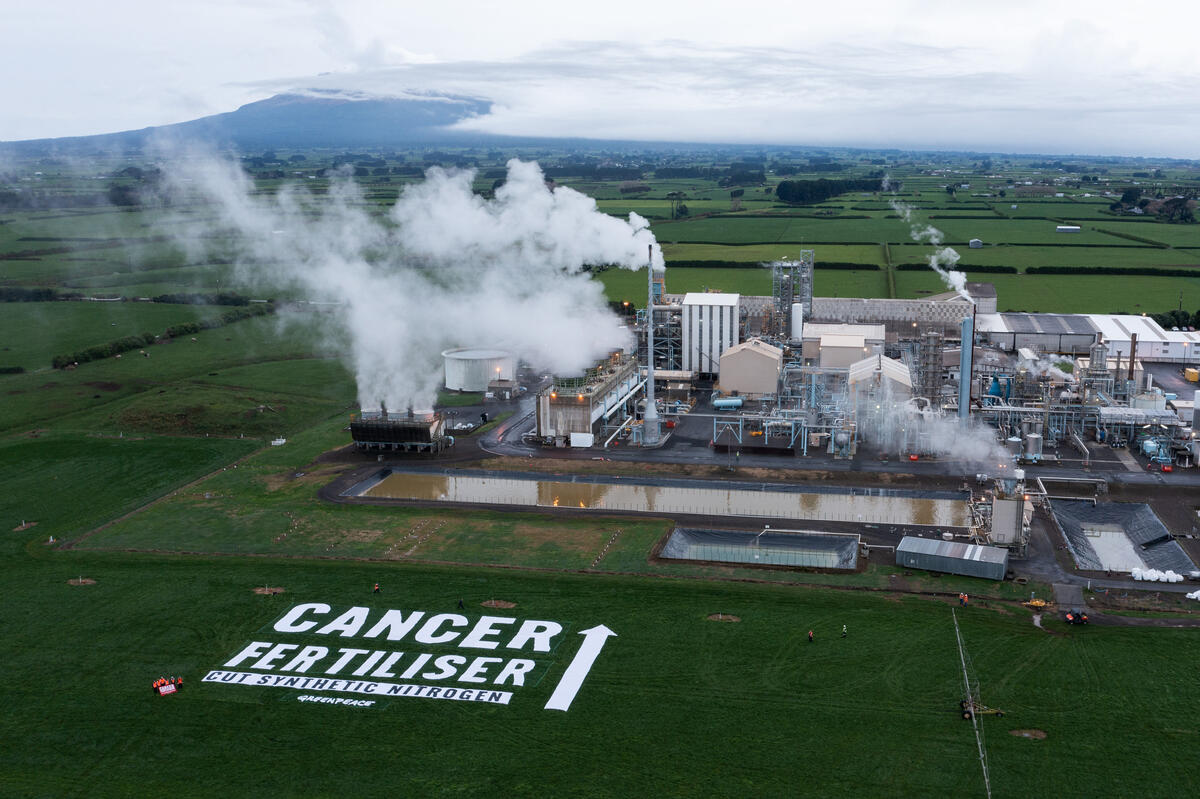
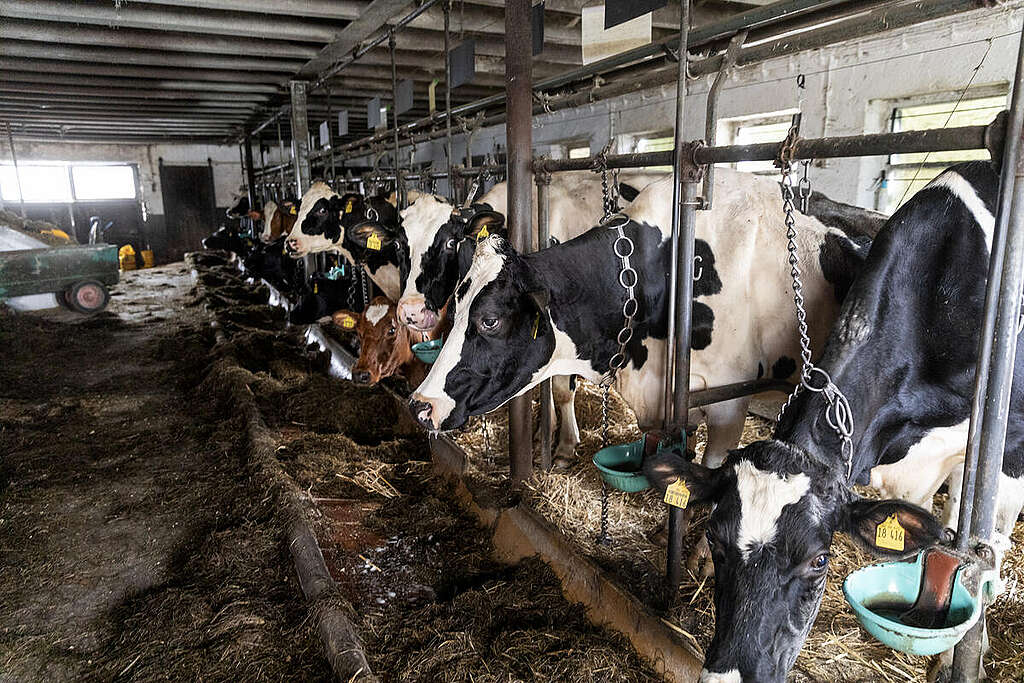
Nitrates in drinking water primarily come from the massive overuse of synthetic nitrogen fertilisers and the staggering volume of urine and manure from industrialised livestock production.
The industry routinely applies far more nitrogen to fields than grass or crops can actually absorb. This excess doesn't just disappear. It leaches deep into the earth and into our water.
Agribusiness lobbyists want us to believe they can go on polluting and hope that technology will be able to clean up their mess. But science tells us something else: filtering these toxins is a false, expensive solution. The root cause of this crisis is the sheer, unsustainable volume of animals on the land.
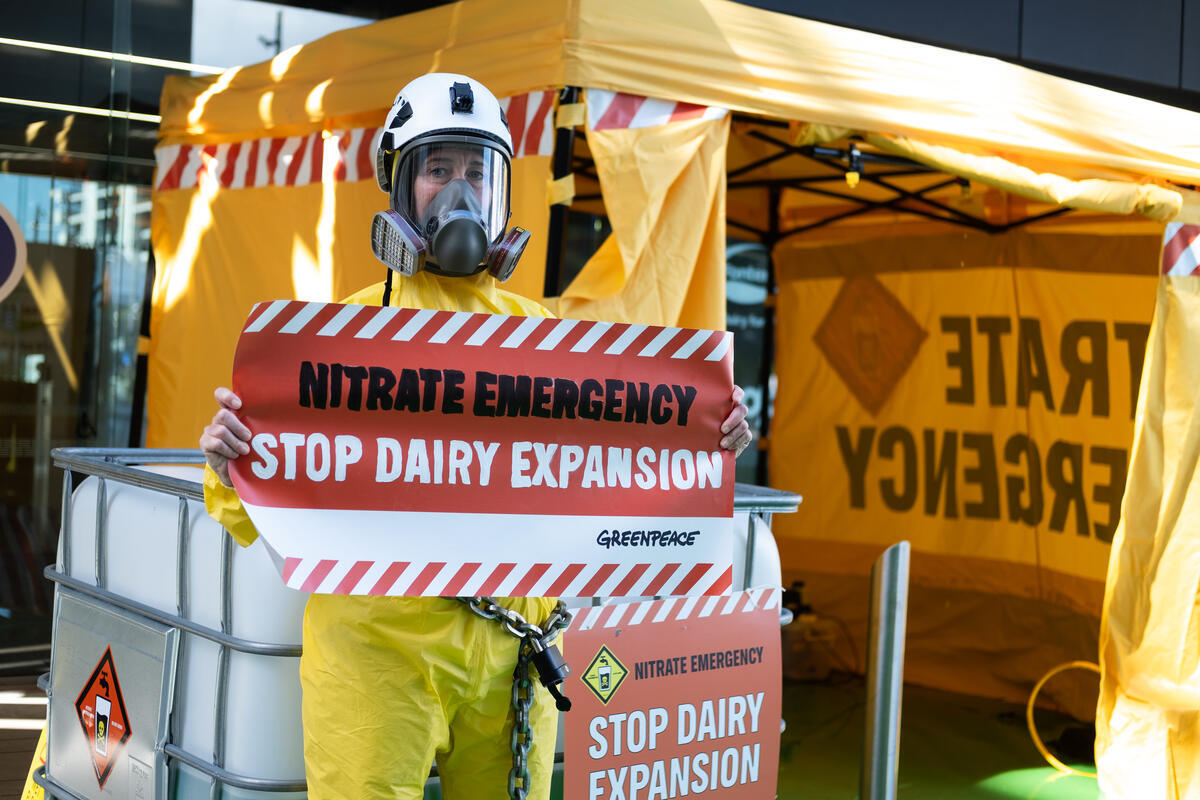
For over 60 years, the global guideline for nitrates in drinking water has been 50 milligrams per litre (mg/L) of nitrate (NO3), a standard set in the 1950s. But scientists are today warning that this limit is hopelessly out of date.
The evidence is being noticed. Building on a massive cohort study of 2.7 million people that first identified increased bowel cancer risks at just 3.87 mg/L NO3, the Danish authorities have been forced to act. Following a 2024 study that attributed roughly 127 annual bowel cancer cases in Denmark directly to nitrate pollution, the momentum for reform became unstoppable. By 2025, an international expert group commissioned by the Ministry of Environment officially recommended a new, health-based standard of 6 mg/L. This official recognition marks the end of the era of denial. Science is no longer just 'on the horizon', it is now the roadmap for protecting public health.
The true cost of agricultural pollution
Corporate meat and dairy industries generate record profits by pushing ecosystems to the brink, but they don't pay for the mess they leave behind. We pay with our health, our children's safety, and our taxes.
The direct and indirect health costs linked to colorectal cancer and drinking water nitrate in Denmark are estimated at over US $317 million annually. Filtering these toxins is a technical and financial nightmare.
In Denmark, the city of Aalborg is a warning to the world as the local utility is now suing the state for 1.1 billion DKK (US $160 million) to build the filtration plants they say are required to fix Big Ag's mess. The city argues it shouldn't be the responsibility of everyday taxpayers to foot this massive bill. Far from cleaning up their act, the industry is doubling down. While communities struggle to pay for clean water, Big Ag 'bosses' are plotting a global surge.
In Nigeria, the world's largest meatpacker, JBS, has signed a US $2.5 billion deal to build six massive factory farm complexes. They are exporting a failed, toxic model to new frontiers, ensuring that a new generation of families will be stuck paying the price for corporate profit.
This is the classic Big Ag playbook: Keep the profits, leave the costs to everyday families.
Together for science: The path to safe water
We need a transformation of our food system, and we are finally seeing cracks in Big Ag's armour. But this change is being driven by communities rising up to protect their homes, it's not just being handed to us by courts or politicians.
And it isn't just happening in Denmark. We are seeing a global wave of resistance against Big Ag's toxic legacy.
In Spain, a landmark 2026 Supreme Court ruling recently confirmed that authorities violated the fundamental human rights of citizens by failing to control industrial livestock pollution in the Galicia region. This follows successful local moratoriums in regions like Castilla-La Mancha, where communities have fought to halt the march of 'macro-farms' that threaten their wells and their futures.
In a historic first for New Zealand, the regional council for Canterbury (ECan) officially declared a 'Nitrate Emergency' in September 2025, acknowledging that current land use has pushed drinking water to a breaking point.
From the Mediterranean to the South Pacific, the conversation is shifting from 'how much can we pollute?' to 'how do we restore our right to clean water?' The Danish discussion about converting high-risk agricultural land back into nature is just the next logical step in this global movement to prioritise public health over corporate expansion.
It's time to cut through corporate lies, cut agriculture emissions and shift towards sustainable agroecology.
We cannot wait for the agribusiness lobby to prioritise our health over their profits – they never will. We need our political representatives to move beyond the failed standards of the past and adopt a precautionary approach to safeguarding our water. Join us in calling for:
- Independent Health Assessments: A comprehensive review of our national nitrate limits, using the 6 mg/L health-based benchmark as the new gold standard for community safety.
- Vulnerability Mapping: Immediate protection for communities in high-intensity livestock areas, ensuring that 'Hotspot' aquifers are managed with the highest level of caution.
- A Transition Fund: Support for farmers to phase out synthetic nitrogen fertilisers and shift toward a food system that restores our land instead of draining its future.
Science isn't just something done in a lab; it is a tool for community resistance, and together, we can close the gap between the law and the science. It's time to choose people's health over corporate profits.
Amanda Larsson is the Food and Agriculture Global Campaign Lead at Greenpeace Aotearoa.


