
When pistachio hulls split before the nuts are harvested, insects and fungi can get inside, damaging the nut, costing farmers money and contaminating the nuts. About 4% of the overall crop experiences hull split, but some cultivars can split as much as 40% under certain conditions.
Now, for the first time, scientists at the University of California, Davis, are seeking solutions for California's $2-billion-a-year pistachio industry. New research reveals how the hull is built and how cell walls in certain layers break down, along with the genes and corresponding mechanisms that spark and control those changes.
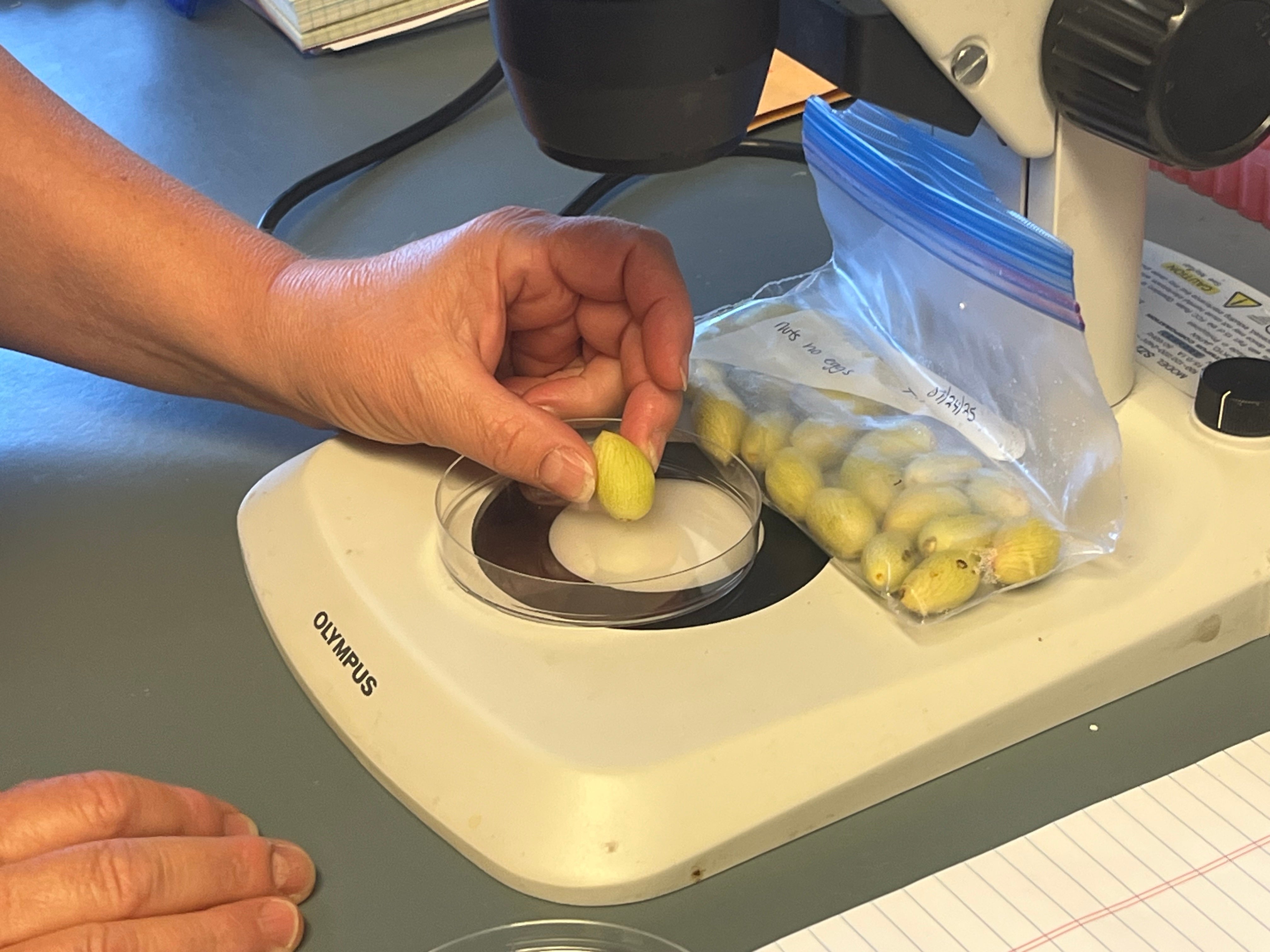
Pectin, a component of cell walls, makes fruit skin strong in part by keeping cells hitched to each other. In pistachio hulls, the composition of pectin changes as the hull ripens, causing the cells to come unhitched. This leads to cracks and tears in the hull.
In the Journal of Experimental Botany, recent Ph.D. graduate Shuxiao "Susan" Zhang, a student in the lab of Department of Plant Sciences Professor Georgia Drakakaki, identified genes that control how cell walls change as the fruit ripens, leading to the hull breaking down. The research will help breeders select for traits that will make the hulls less vulnerable to tearing and cracking.
"This is the first time anyone has studied the pistachio hull at the anatomical and cellular level while also looking at gene expression and physiological data," Drakakaki said. "Susan really got into the details of how the hull is built with different layers and how the cells in those layers are of different sizes. The layers respond differently to changes in pectin, and that causes the hull to split in different ways."
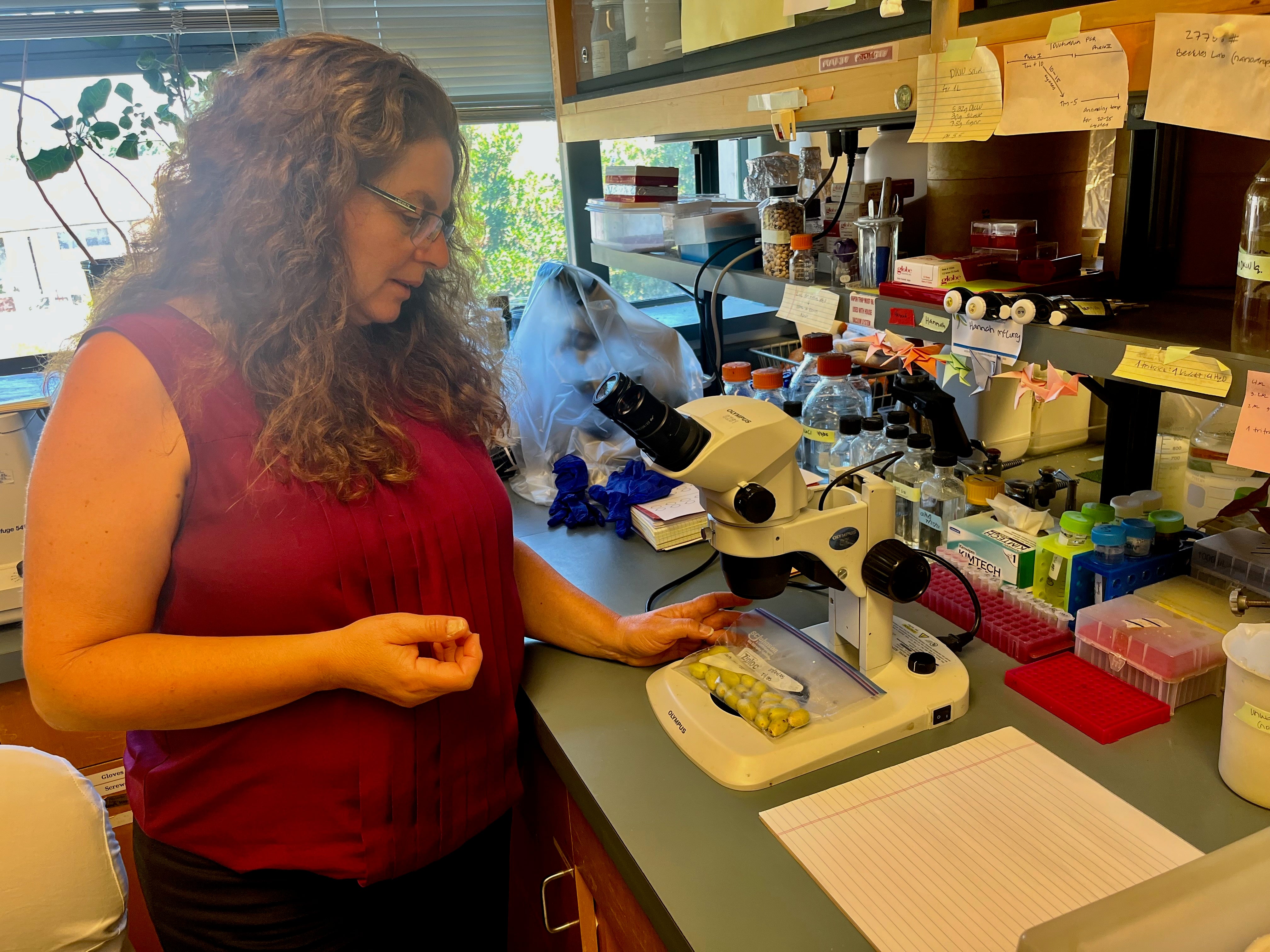
Zhang built on the work of two more scientists in the department and their teams. Grey Monroe, an assistant professor, and Barbara Blanco-Ulate, an associate professor, assembled a reference genome of Pistacia vera 'Kerman,' the leading female pistachio cultivar in California. They also defined the stages of the nut's growth and the characteristics at each stage. Their work was published last year.
A model for fruit split in a variety of crops
Over three years, the team took samples of pistachio hulls from trees in a commercial orchard near Fresno and at the Wolfskill Experimental Orchard, operated by UC Davis near Winters, Calif. They worked with the most common varieties grown in the state, including Kerman, Golden Hills and Lost Hills. They took samples from trees at different points late in the hulls' development, stretching over several months.
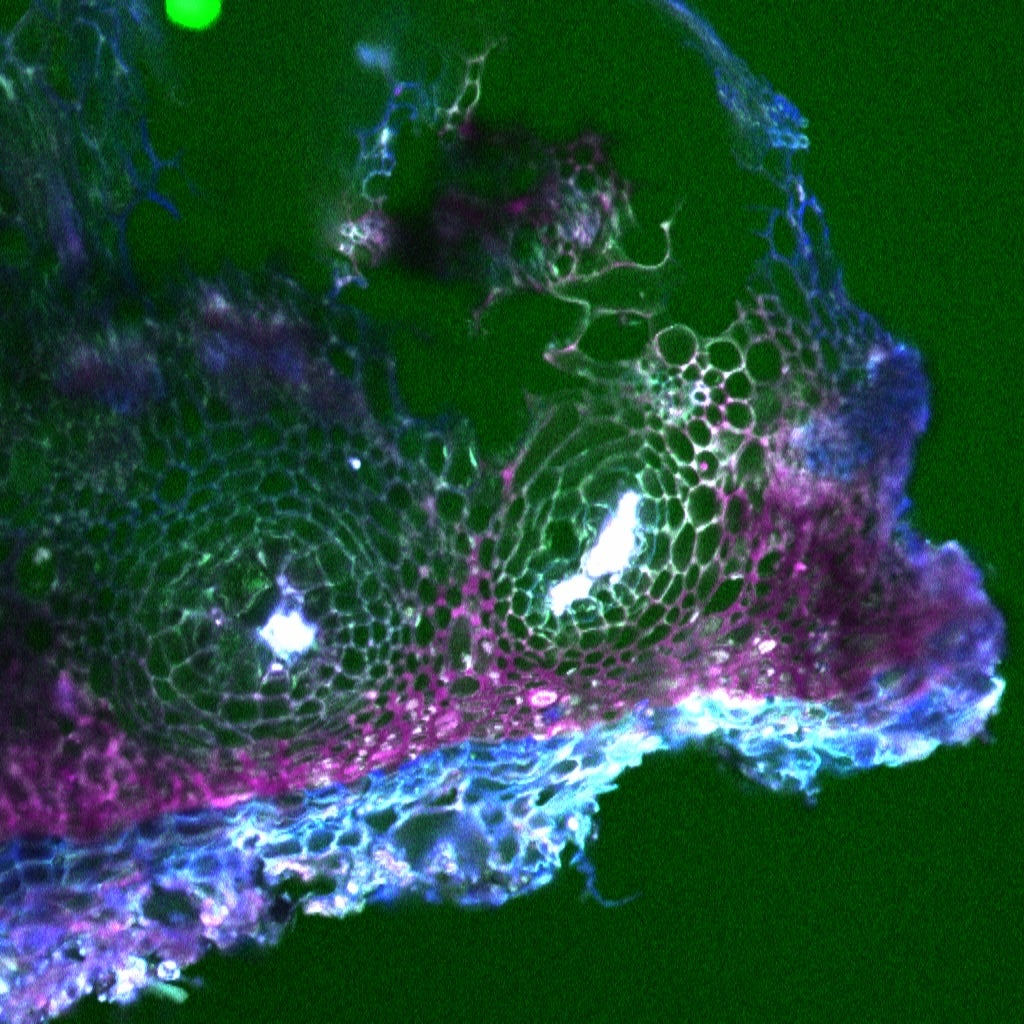
Using special imaging tools and techniques, Zhang and her team measured hull thickness and cell size, and they counted hulls that were intact, tattered, cracked or both. They also measured how well cells in the hull were sticking to each other, and in each sample counted the cells that had come unhitched.
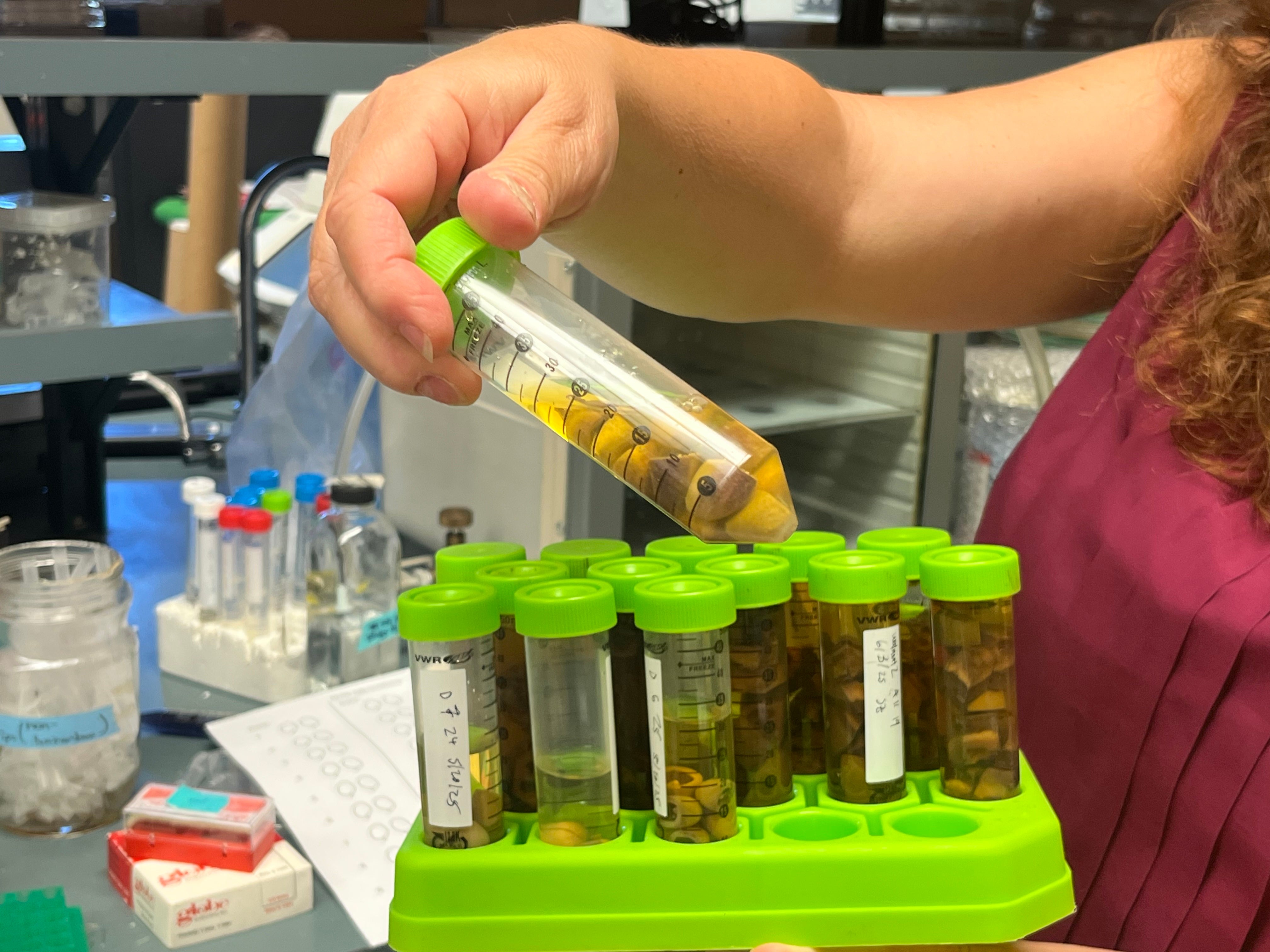
Then, the team pulled out RNA from the samples to learn which genes were being expressed at different stages as the hull develops and breaks down. They found that key genes express differently as that process unfolds.
Since all hulls were intact at 91 days after flowering, Zhang and team reasoned that fruit ripening may be linked with hull split. So, the team also examined the genes - including those involved in pectin modification - that change the cell wall as the fruit ripens. Researchers discovered that cells in the interior layer of the hull expand, while cells in the exterior layer tend to stay the same size. This, in combination with changes in the cell wall, led to different types of hull breakdown.
"This is one of the major novelty factors for our paper," Zhang said. "Loads of people have looked at pectin in all kinds of fruits, but not many people have observed that, depending on which cell layer you're in, the pectin, cell size and so on will change differently during ripening."
The physics of forces operating within the cell layers and humidity also influence degradation of the hull, Zhang found.
Because pistachio hulls are the fruit of the tree, even though we eat the seed, the research has applications for many non-berry fruit crops, Zhang concluded.
The California Pistachio Board funded most of this research, with additional support from the United States Department of Agriculture's National Institute of Food and Agriculture, the James Monroe McDonald Endowment and the University of California Agricultural and Natural Resources.


