
Conducted in specialized research units in Montreal and Halifax, the study aims to accelerate vaccine evaluation while building Canada's expertise to respond to future pandemic threats.
For the first time in Canada, researchers are intentionally exposing healthy volunteers to influenza under carefully controlled conditions to establish a research model that could accelerate the evaluation of future influenza vaccines and strengthen pandemic preparedness.
The study began in June at the Canadian Center for Vaccinology (CCfV), a collaboration of IWK Health, Nova Scotia Health and Dalhousie University in Halifax, and on September 11 at the Centre for Innovative Medicine (CIM) of the Research Institute of the McGill University Health Centre (The Institute) in Montreal. The first eight participants have completed the initial stage of the study in Halifax, and the first two participants have now begun the study in Montreal.
Unlike conventional vaccine trials, where researchers often rely on participants being naturally exposed to circulating viruses, this type of research, known as a Controlled Human Infection Model (CHIM), allows researchers to expose carefully screened healthy volunteers to a precisely measured dose of a well-characterized influenza virus in a controlled clinical setting. Participants are then closely monitored to determine who becomes infected, how much virus they shed and how their immune systems respond.
The current study is not testing a vaccine. Instead, researchers are establishing the influenza infection model itself using a well-characterized seasonal H3N2 influenza virus. Their goal is to identify a dose that reliably produces mild-to-moderate influenza illness and to collect the safety, virological and immune-response data needed to use the model in future vaccine studies.
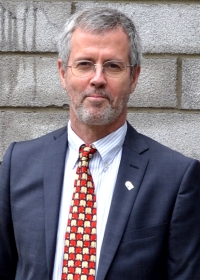
"Conventional vaccine development ultimately relies on large field efficacy trials in which researchers wait for participants to be naturally exposed to the virus. Those trials can be lengthy and expensive," explains co-principal investigator Dr. Brian Ward, Senior Scientist at The Institute, Professor of Medicine at McGill University and Director of the MUHC Vaccine Study Centre. "With this study, we will be able to learn in days what is difficult to observe in a field trial."
If successfully established, the model could provide researchers with a faster way to identify promising vaccine candidates before moving them into much larger Phase 3 trials. It could also help determine whether a vaccine not only protects people from illness but reduces the amount of virus they release, providing important information about its potential to limit transmission.
Building Canadian capacity for future pandemic research
Funded through a pandemic-preparedness grant from the Canadian Institutes of Health Research (CIHR), the project aims to build the infrastructure, expertise and standardized processes needed to conduct controlled human infection studies in Canada. It will also help develop Canada's capacity to manufacture GMP-grade challenge viruses domestically, reducing reliance on viruses produced outside the country. Good Manufacturing Practice (GMP) means the virus is produced according to rigorous quality standards and is thoroughly tested and characterized, including to confirm its susceptibility to antiviral medications.
"Developing this specialized expertise domestically using a seasonal influenza virus could eventually allow Canadian researchers to produce new challenge strains more rapidly-including strains relevant to an emerging seasonal or pandemic threat," says co-principal investigator Dr. Scott Halperin, Professor of Pediatrics, Microbiology and Immunology at Dalhousie University and Director of the CCfV.
"The goal is to have the expertise and infrastructure in place before the next threat emerges," adds Dr. Ward. "Building that capacity now could put Canada in a much stronger position to respond quickly when a new influenza threat appears."
Strict safety and control measures throughout the study
The study will involve 32 participants-16 at each site. It begins with a lower dose of the influenza challenge virus, with participants receiving either the virus or a saline placebo. An independent Data and Safety Monitoring Board (DSMB) reviews the safety and study results before researchers proceed to a higher dose. At the higher dose, researchers expect approximately 60 to 70 per cent of participants exposed to the virus to develop mild-to-moderate influenza illness.
Participants are carefully screened healthy adults ages 18-45 years old who are not considered at increased risk of severe influenza and who have provided informed consent. In each cohort of four, three participants receive the challenge virus through the nose and one receives a saline placebo. They remain in specially designed individual negative-pressure rooms for at least seven days.
The negative-pressure rooms use directional airflow and filtered exhaust to help prevent potentially infectious air from circulating outside the rooms. Participants are closely monitored by on-site healthcare professionals and can be treated with antiviral medication if needed. Before leaving the unit, they must test negative for influenza by nasal-swab PCR on two consecutive days.
The study uses a well-characterized, GMP-manufactured seasonal H3N2 influenza strain supplied through the U.S. National Institute of Allergy and Infectious Diseases (NIAID), part of the National Institutes of Health (NIH).
Like all studies involving human participants in Canada, the study underwent independent scientific and ethical review before participants were enrolled. The strain of influenza administered in the study was approved for use in humans by Health Canada's Biologic and Radiopharmaceutical Drugs Directorate (BRDD).


