
Picture this: You're sipping your third cup of coffee of the day, surrounded by the warm buzz of your favorite coffee shop. The barista just dumped another batch of spent grounds into the trash.
What if that waste could become the walls around you, the insulation keeping you comfortable, or even the roads you drive along?
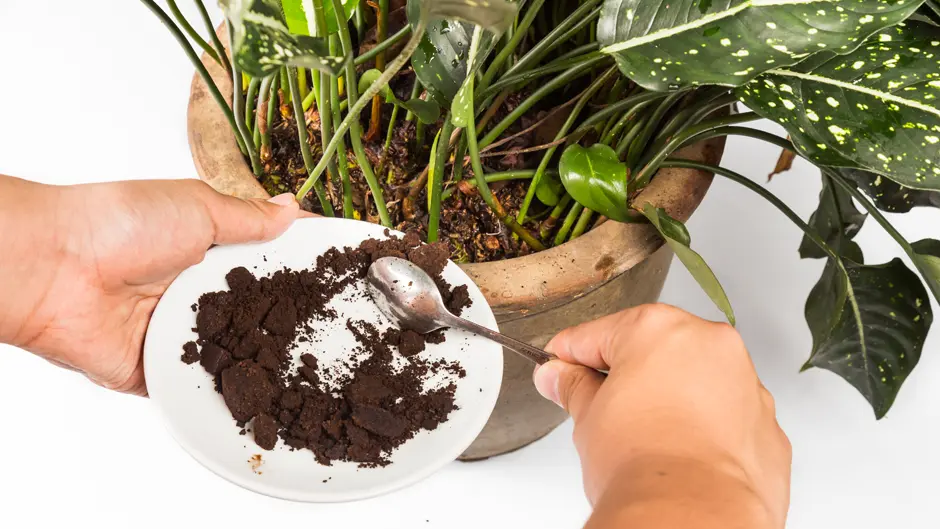
For decades, if not longer, coffee grounds have been used as plant food, keeping leaves greener and stems stronger. Is it possible coffee waste could play a role in architecture or the built environment?
 Every year, the world produces about 7.4 million tons of spent coffee grounds. That's roughly the weight of 740 Eiffel Towers or about 148 billion shots of espresso worth of waste.
When coffee grounds end up in landfills, which most do, they don't just sit there harmlessly composting. They produce methane, a greenhouse gas that's 34 times more potent than carbon dioxide over a century. Instead of being treated as trash, what if coffee grounds were treated as treasure?
Three ways coffee is brewing up better buildings and infrastructure
Already, researchers have discovered that when spent coffee grounds are combined with industrial by-products such as slag and fly ash, and activated with alkaline solutions, they form a strong material known as a geopolymer.
This coffee-enhanced material can reach road-worthy strength in just seven days, without needing high heat to cure. That means less energy use and lower production costs. Even better, it keeps two types of waste out of landfills at once: organic coffee waste and industrial leftovers.
In addition, coffee grounds have a naturally porous structure, which makes them excellent at absorbing sound. When mixed with resin, they can be turned into acoustic panels that reduce noise inside buildings.
Those noisy coffee shops could bring coffee full circle by brewing it and then using the waste for sound-absorbing panels to improve the shop's ambiance.
Also, when researchers mixed coffee grounds into plaster composites, they found the thermal conductivity dropped significantly. In simple terms, the material became much better at keeping heat in—or out, depending on the season.
In one simulation of a traditional home in Marrakech, Morocco, replacing standard plaster with a coffee-based version reduced heating and cooling demands by about 20 percent. That translated to roughly 1,500 kilograms less CO2 per year, for just one house. Multiply that across an entire neighborhood, and that could make a big difference.
Why this matters
The construction industry relies heavily on raw materials, energy-intensive manufacturing, and systems that have not changed much in decades. Meanwhile, cities are growing rapidly, and so is coffee consumption.
What makes coffee waste special is that it is urban and abundant. It's already generated in the very places where buildings are constructed—cafés, offices, homes, and schools. Unlike some sustainable materials that require complex supply chains or rural production systems, coffee waste is already embedded in city life.

Using it represents a bigger idea called urban metabolism—the concept that cities can recycle their own by-products into new resources instead of constantly importing raw materials.
And this is not just theoretical. These materials have been tested. Roads meet strength standards. Acoustic panels reduce noise. Insulation lowers energy use.
What's the catch?
Of course, it is not as simple as dumping coffee grounds into concrete and calling it a day.
First, collection is complicated. There is no standardized system to gather spent coffee grounds at a large scale. Every café and household disposes of them differently.
Second, quality varies. Espresso grounds are different from French press grounds, which differ from instant coffee residue. Construction materials require consistency, and coffee waste is not uniform.
Third, long-term durability remains a question. Buildings are expected to last 50 years or more. How will coffee-based materials handle moisture, temperature swings, or decades of wear?
And finally, there is cost. The raw material may be cheap or free, but processing, testing, and manufacturing add expense. It still needs to compete with traditional materials on price.
These challenges are not deal-breakers, just part of innovating.
Researchers are also exploring coffee-based biofuels, activated carbon filters, and even bioplastics. The natural oils in coffee beans may serve as energy sources. The fibrous structure could strengthen composite materials. Its carbon content might even help store carbon rather than release it.
And as global coffee consumption continues to grow, especially in rapidly urbanizing regions, that's a lot of potential design material currently sitting in trash bins. Could waste streams in your own community become building resources?
Sustainable architecture isn't just about solar panels or green roofs. It's about changing how we think about materials, waste, and the built environment itself.
Maria Adalgisa Cannavo Violante is an architecture designer and lecturer in the University of Miami School of Architecture.


