
Display of 1,000 cranes a new addition to UConn Health's Neag Comprehensive Cancer Center
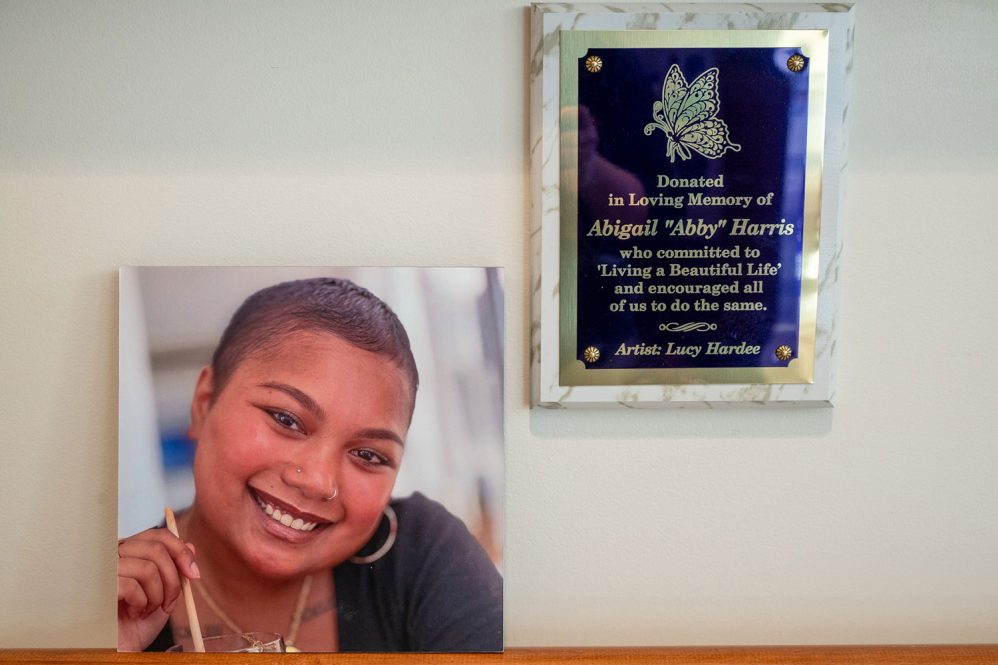
A plaque explains the significance of a new art display in UConn Health's Neag Comprehensive Cancer Center, alongside a photo of Abby Harris. (Tina Encarnacion/ UConn Health photo)
A thousand origami cranes in three frames now hang from the wall in UConn Health's Carole and Ray Neag Comprehensive Cancer Center waiting room, a lasting tribute to a beloved patient who died of brain cancer three years ago.
Her parents remember Abby Harris as a tough, funny, sometimes irreverent girl who made fast friends. She loved ice hockey and had played it since age 4, including four years of varsity at Simsbury High School, from where she graduated in 2020.
"She was absolutely extraordinary," says her father, George Harris. "And I think what her care team came to love about her was that, with Abby, what you see is what you get."
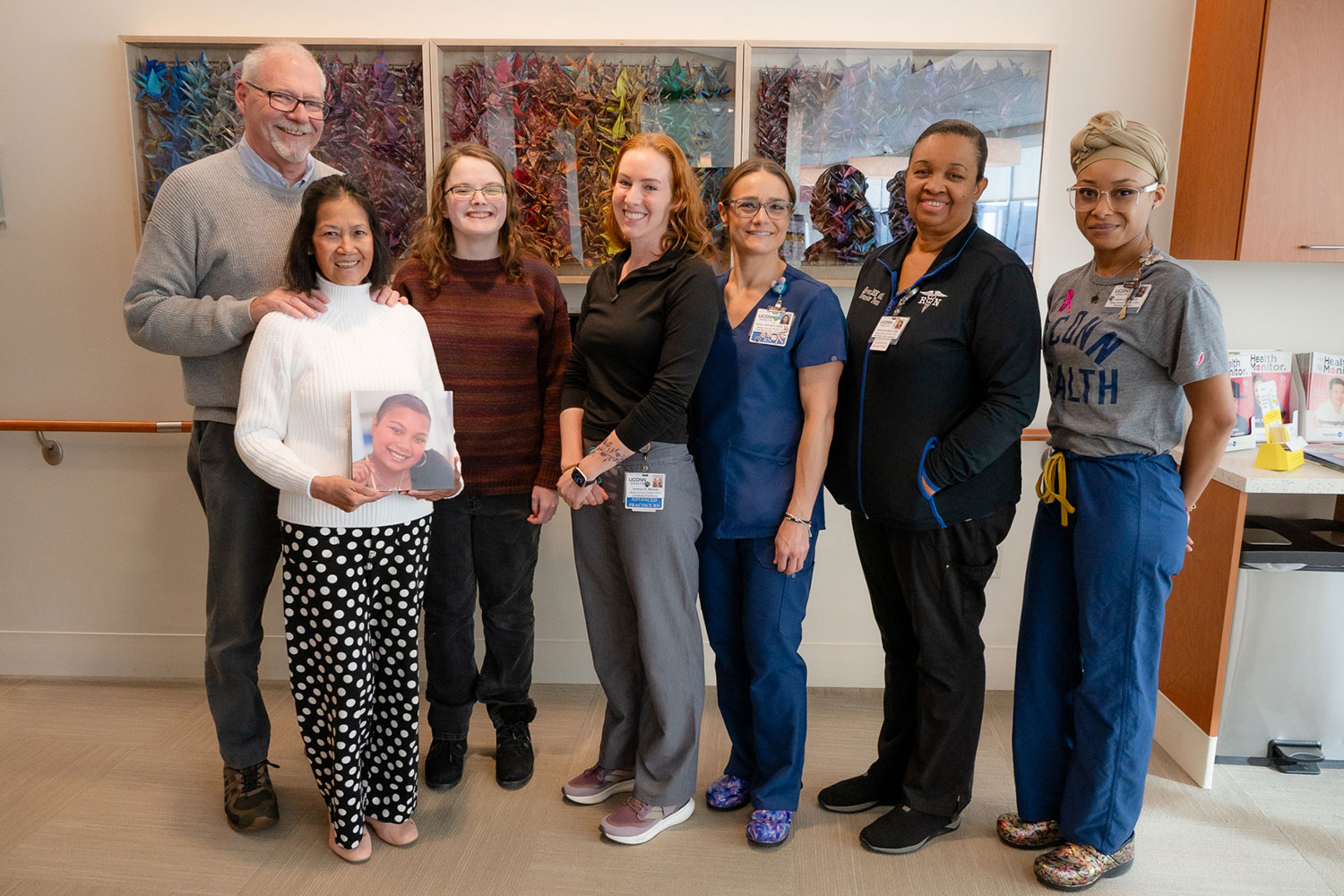
"She had that smile that was contagious and she would come in, even though it was so sad sometimes, but she always managed to have that smile," nurse Neveta Martin recalls. "She always came in with her nails painted a different color each time. So we'd always say, 'First things first, let's see what color the nails are today.'"
Less than three months before her 19th birthday, Abby had a seizure that would lead to discovery of a glioblastoma, an aggressive and often deadly brain tumor. That led to an inconceivable conversation with Dr. Kevin Becker, UConn Health neuro-oncologist.
"Dr. Becker was clear with us what the implications of that were, that they could prolong her life, but they could not save it," Harris says. "As you might imagine, that was a very emotional visit for all of us."
Within days of learning of her diagnosis, Abby shared the news on Instagram, telling her followers, "Now is the time to live a beautiful life, and to show love to everyone around you, and to just have no regrets about anything you do."
"My husband and I took some time off from work to be with her and take care of her," says Lourdes Harris, Abby's mother. "We traveled, we went to Europe for three weeks. She wanted to go to Paris because she understood a little bit of French."
"Live a beautiful life" had turned into Abby's mantra and would become her legacy. Her message and her journey inspired those around her, including Lucy Hardee, a high school classmate, who came up with the idea to fold 1,000 origami cranes.
"It was a story my mom used to tell me," Hardee says. "She lived in Japan for study abroad when she was younger. It's the story of a girl who lived through the atomic bomb drop, and so she got cancer. It created this tradition of creating a thousand cranes for good health or good luck. And so I immediately thought of that, what my mom used to tell me, and I decided to make them for her."
Having it here constantly reminds us of who she was, just her spirit, full of life. — Neveta Martin
Over the year Abby was in treatment, she formed a bond with her care team, led by Becker and nurse practitioner Kate Medow, who had just joined UConn Health, early in Abby's treatment.
"Immediately you know the situation is unique, not only due to her young age, but also given the aggressiveness of her tumor," Medow says. "It seemed like sadness was the only reasonable reaction. But somehow each visit with Abby was filled with laughter and just an incredible amount of insight for a 19-year-old. She was wickedly funny, but simultaneously had a maturity about her that never ceased to impress me."
In December 2022, a few weeks shy of her 20th birthday, Abby went into hospice care.
"On that same visit that she was put into hospice, she had brought Christmas presents for her care team, all picked out very personally," George Harris says. "All this was happening at the same time, the hospice diagnosis, her giving the gifts, and the extended care team crowding into the exam room to sing her 'Happy Birthday.'
Abby died the day before she would have turned 20.
"Abby's journey from surgery to her passing was one of the most impactful experiences I have ever been a part of," Becker says. "The maturity, humor, and grace in which she faced her treatment course and ultimate outcome was a gift to witness and continues to have a lasting impression. She was a true light in this world and her death further accentuates the brutally cruel nature of glioblastoma."
"If you know what the outcome's going to be, then what's left is giving her a quality of life and then loving her, and they just loved her," George Harris says of those who cared for his daughter.
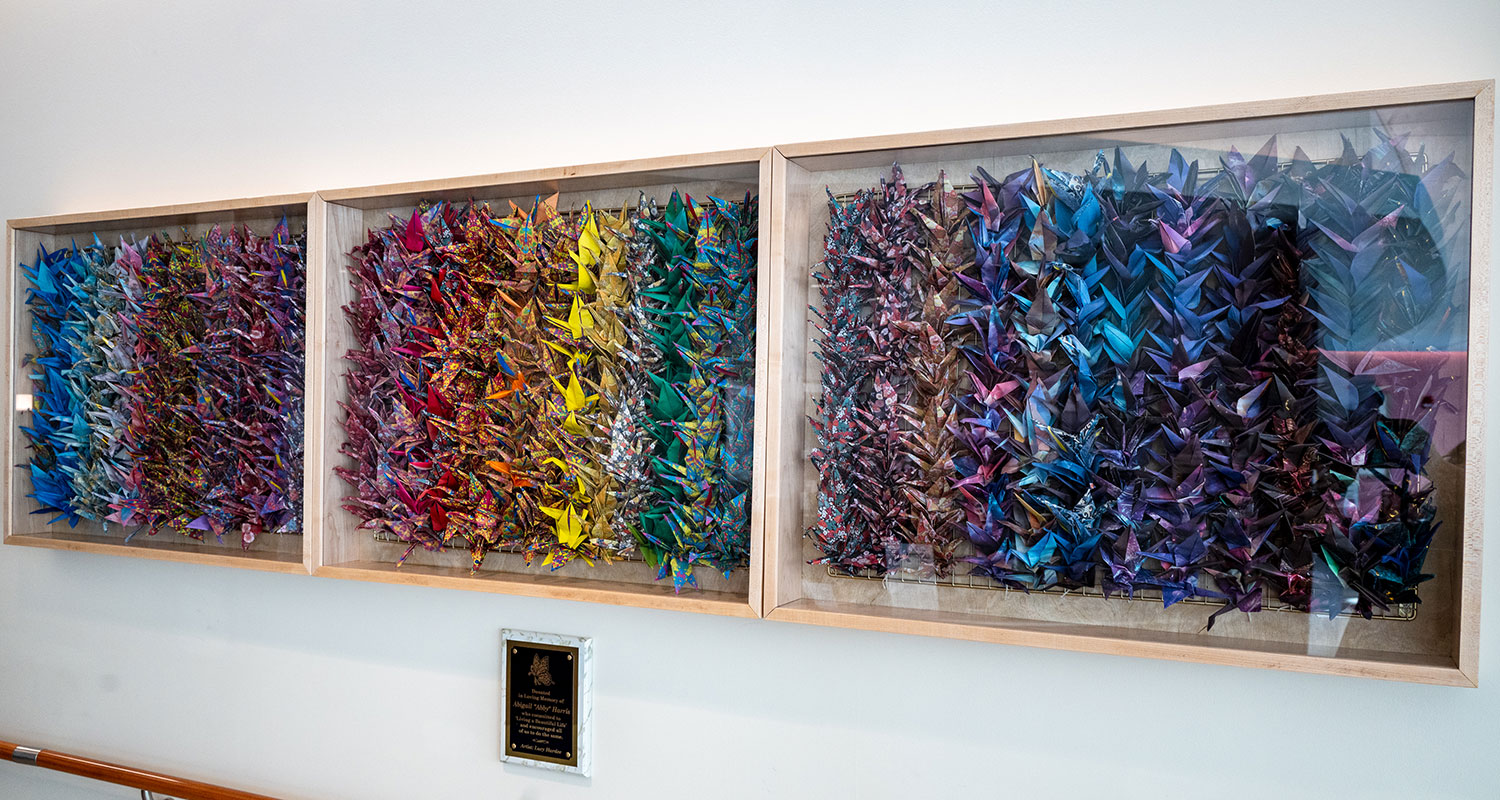
The display of origami cranes Hardee had made for Abby first went to the family home in Simsbury, where they hung in Abby's bedroom. When the Harrises moved out of that house, they asked Medow about donating them to UConn Health. Medow worked with the UConn Foundation and art curator Andre Rochester to add them to UConn Health's art collection, known as "The Connecticut Collection," and they were installed in prominent view in the Neag Comprehensive Cancer Center waiting room in time for the three-year anniversary of Abby's passing.
"When George and Lourdes messaged me that Lucy was hoping to donate her beautiful cranes, I knew that they needed to land here at UConn," Medow says. "Knowing that I can start each clinic day walking past her cranes, and to have the beautiful opportunity to remember those lessons and Abby's smile, feels incredibly special to me. And I know I'm not the only one."
Martin says seeing the colorful tribute in her workspace helps keep Abby's memory alive.
"Having it here constantly reminds us of who she was, just her spirit, full of life," Martin says. "Regardless of the odds that were against her, she always managed to come in with a laugh. That was Abby."
Hardee says Abby's passion for life is what inspired her to fold all those cranes.
"She said, 'Live a beautiful life,'" Hardee says. "And I think I just wanted something that could be an image of that, and an image for her to keep in her space while she was fighting cancer to show that, 'We're here for you. Everyone's here for you, and life is beautiful.' And I really wanted her to have that message for herself."


