
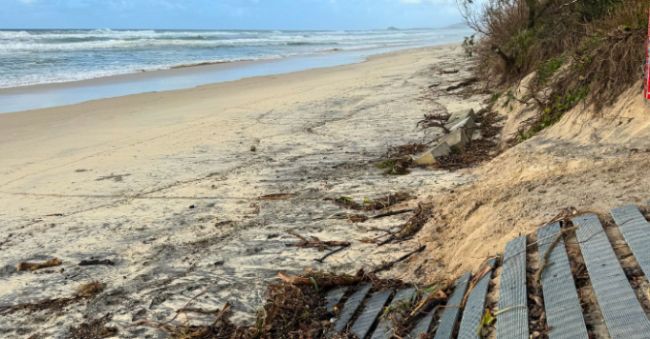
Erosion has cut into dunes along the Tweed coast, leaving pedestrian beach access points unsafe and unusable.
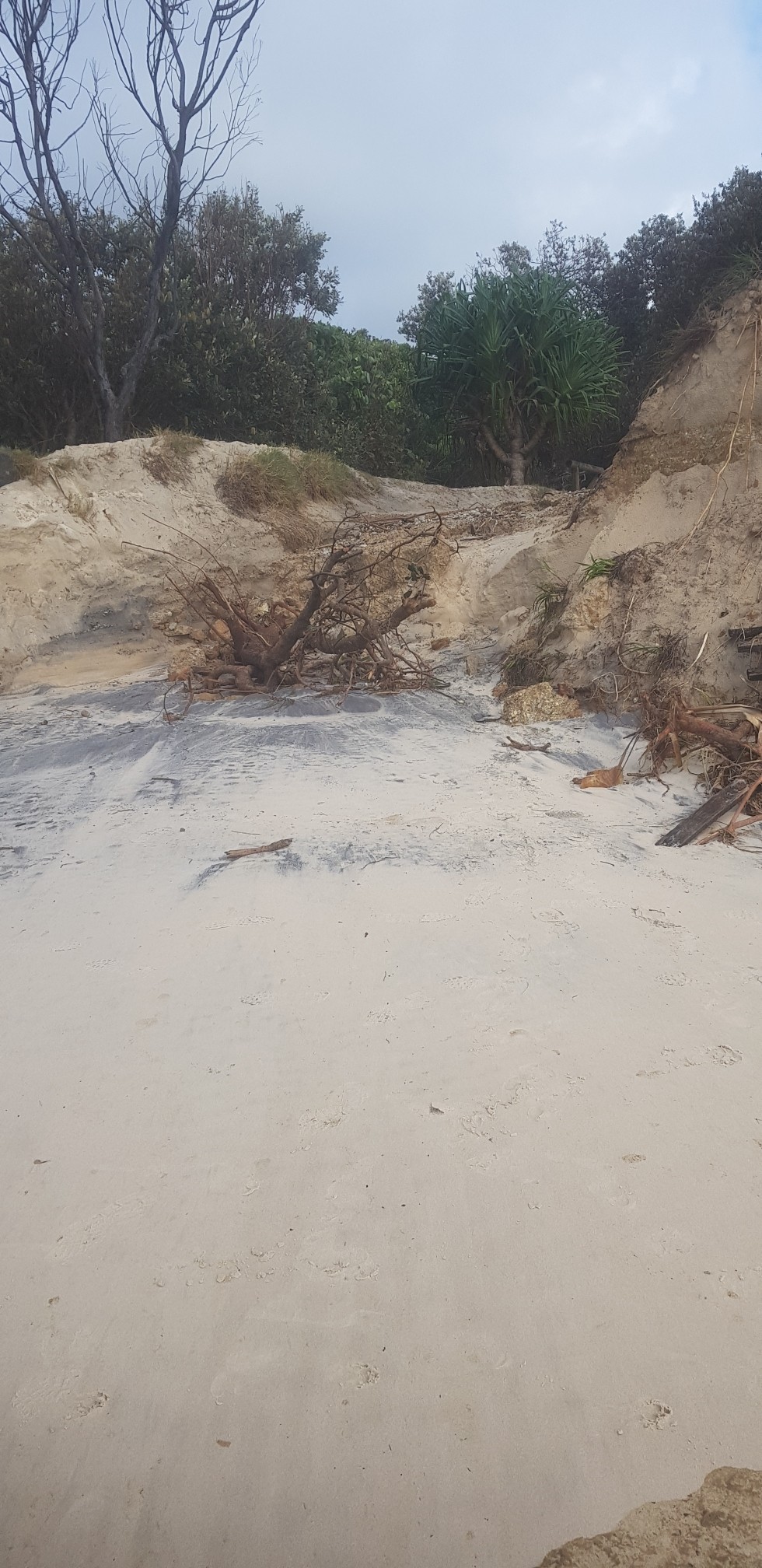
Tweed Shire Council is focused on maintaining emergency vehicle access along the Tweed's 36 kilometres of coastline, after powerful swells stripped sand from beaches and washed debris into access tracks.
Council's Manager of Sustainability and Environment, Jane Lofthouse, said conditions are varying significantly between beaches, but the immediate priority is keeping access open for lifesaving and emergency response vehicles.
"We know some pedestrian access tracks have been affected, and we're working through them, but our most important concern right now is maintaining emergency beach vehicle access," Ms Lofthouse said.
"With some pedestrian accesses, it might be safer to walk to the next one down. Ease of access can vary greatly between locations that are quite close together."
The damage has been most pronounced on the centres and northern ends of Tweed's long beaches, where easterly to southerly swells combined with large tides to scour sand and pushed debris inland. Conditions vary even within single stretches of coastline, at Hastings Point, sand has built up north of the creek while areas south of the headland have eroded further.
Swimming not advised
Walkers and dog exercisers are still using the beaches, but swimming is strongly discouraged. Dangerous swell conditions remain and water quality has been affected by weeks of rain. With another weather system forecast and peak tides approaching alongside a full moon, further erosion is possible.
A coastline still recovering from Alfred
Ms Lofthouse said the recent damage has built on an already vulnerable coastline.
"The beaches didn't recover from Cyclone Alfred," she said. "We had that event, then several rounds of big swells afterwards. Most of the damage actually happened in the months that followed."
Calmer winter conditions usually help beaches rebuild naturally, but that recovery didn't happen last year.
Large amounts of natural debris have washed up along the coast, including fallen trees, tangled spinifex from damaged dunes and significant amounts of pumice, likely from a Pacific volcanic eruption several years ago, buried in the sand until recent erosion exposed it.
"The spinifex does a really good job of holding the dune together, but once the dune goes, it all gets washed up and tangled," Ms Lofthouse said.
Ongoing repair work
Repairing access points is an ongoing challenge. Recent clean-up and sand reshaping work in some areas has already been undone by the latest swell.
"Council's limited resources are strained by the repetitiveness of the work," Ms Lofthouse said. "We've only just restored some access points at Salt Surf Club and the emergency vehicle access at Wooyung, and now these have eroded again."
In most cases, Council has to wait for sand to naturally rebuild before repairs can be made.
"Beaches are dynamic systems, they take a hit, and given time, they come back," Ms Lofthouse said.
In the meantime, beachgoers are urged to check conditions before heading out, use alternative access points where tracks are unsafe, and avoid swimming until conditions ease.


