
Groundbreaking new modelling has revealed that up to 220,000 Indigenous Australians may have died in a devastating smallpox epidemic that began in Sydney in 1789, shortly after the arrival of the First Fleet.
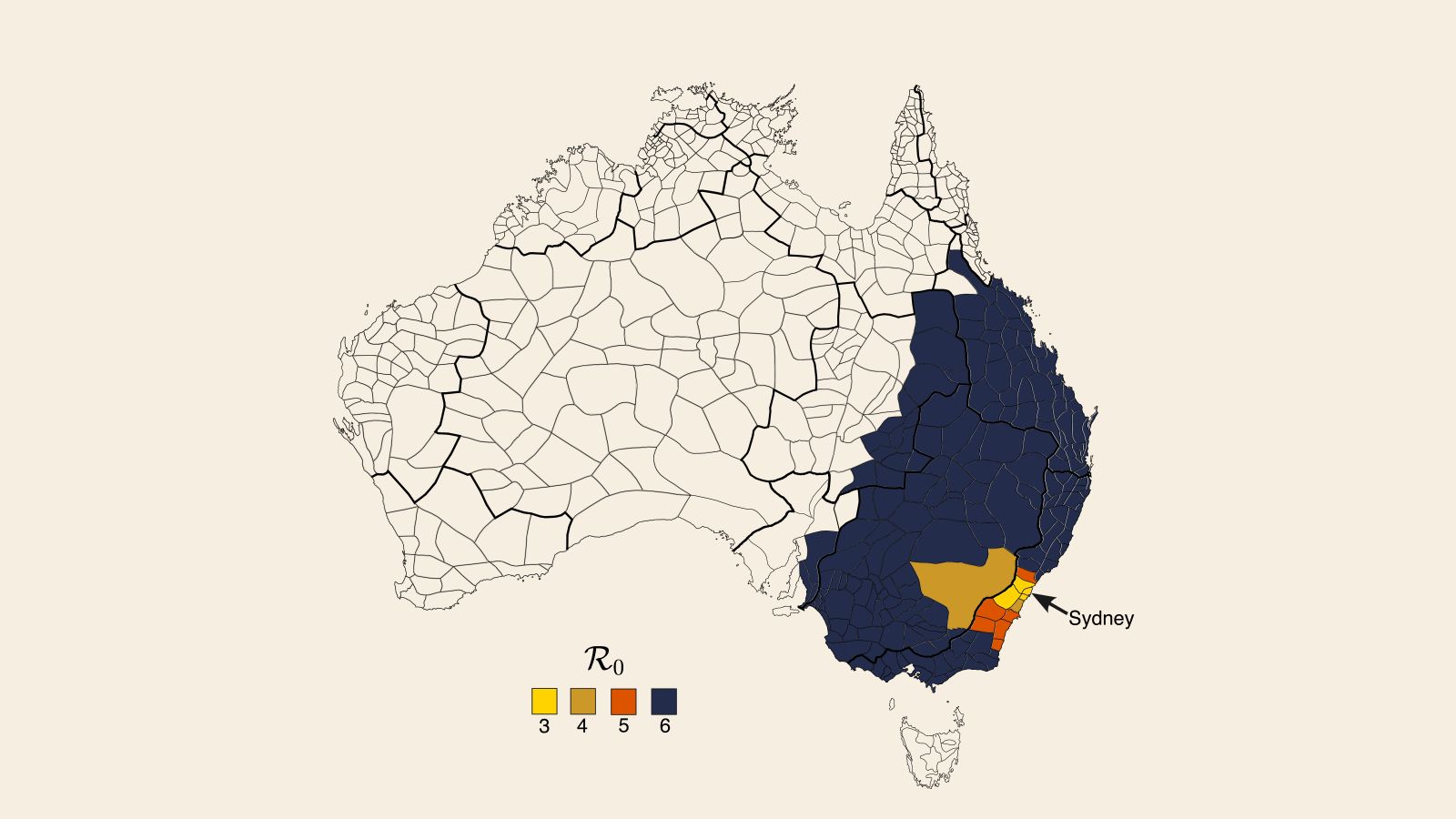
The research, led by the ARC Centre of Excellence for Indigenous and Environmental Histories and Futures (CIEHF), which is hosted by James Cook University Cairns, traces the origins of the outbreak to early colonial contact.
"For decades we've known that diseases introduced by Europeans had a devastating impact on Australian First Nations people. But until now we've not understood the scale of those impacts," says Centre Director and Distinguished Professor Sean Ulm.
"The scale is confronting and heartbreaking. This is difficult knowledge. The findings challenge what we thought we knew and open up entirely new research questions"
Soon after British ships arrived, smallpox swept through First Nations communities in the Sydney area and many died as a result. This is the first evidence showing how many people may have died and how quickly the disease spread.
The study found that the epidemic caused widespread population loss and had lasting effects on how First Nations people resisted colonisation and cared for Country, with impacts still being felt today.
"Our modelling shows a rapid smallpox spread and mass mortality following colonial exposure," says lead author Dr Cody Nitschke, a CIEHF Research Associate at Flinders University. "It's important for Australians to come to terms with this traumatic legacy to inform the national process of healing".
Published today in the journal Nature Human Behaviour, the study was conducted in collaboration with the Gujaga Foundation (Dharawal Nation), whose ancestors were the people at ground zero when the epidemic hit. The findings show the disease spread quickly through Aboriginal communities in south-eastern Australia.
"We always believed that it was the First Fleet that spread the smallpox, with many families within community suspecting it was spread deliberately too but this still needs to be looked at," says David Ingrey, a senior Elder in the La Perouse Community of the Dharawal Nation.
"This paper shows that it didn't come from up north. We know it didn't start with the French visitors. It was started in Sydney Harbour with the First Fleet."
Smallpox causes fever, severe illness, scarring, and high death rates, especially in Indigenous populations with no previous exposure. The research shows that this initial outbreak of the disease followed coastlines and major rivers, but did not reach all parts of Australia.
Researchers, including Indigenous scholars, tested whether the epidemic originated from Makassan traders visiting northern Australia, or the First Fleet, to resolve decades of debate.
"Even after adding generous movement rates and idealised contact between populations, the model showed that smallpox was extremely unlikely to have reached Sydney if introduced in the north".
"The epidemic was likely limited to the south-eastern coastal regions of Australia and along major intersecting rivers such as the Murray and Lachlan Rivers. Assuming a 60 per cent lethality, the loss of between 40,000 and 220,000 people would probably have occurred in these regions" says Dr Nitschke.
"Rather than relying on assumptions about where the epidemic started, we tested both origin theories directly. The data allowed us to identify which one was most consistent with how the disease spreads" says Dr Nitschke.
"Before colonial invasion, the movement of people followed known paths — for water, ceremony, food, trade, and family. The disease could only travel where people could realistically walk, rest, and recover."
Co-author Distinguished Professor Lynette Russell says the findings have also been welcomed internationally "I recently discussed this research in Makassar, and colleagues there have long rejected the idea that Makassan visitors were responsible for the smallpox epidemic in southern Australia."
Professor Corey Bradshaw, a Chief Investigator at CIEHF and co-author, says the findings highlight the scale of the epidemic and its long-term consequences.
"The smallpox epidemic is arguably one of the most devastating events resulting from colonial invasion, yet there remains widespread disagreement on its origin, scale, impact, and spread until this modelling gave us important new insights."
"Families, knowledge systems, and ways of caring for Country were impacted, and the effects are still felt today."
"This epidemic was concentrated and likely unfolded over many years. Elders, children, and pregnant women were especially vulnerable, meaning that knowledge, language, and culture suffered deep harm alongside population loss. Even survivors were severely compromised and could often not care for Country in the same way" says Professor Bradshaw.
While the modelling suggests the first outbreak did not spread across the entire continent, the researchers say further work is needed to understand the impacts of later epidemics and frontier violence.
"The modelling does not speak over Aboriginal knowledge, memory, or oral history." Professor Bradshaw says.
Co-author Dr Shane Ingrey of Gujaga Foundation adds that First Nations communities in Sydney persisted despite the devastation.
"It is always perceived by the wider community that everyone was wiped out and there were no Sydney Aboriginal people left after the initial outbreak, but we have First Fleet observations of our people back in the harbour within a month or so fishing and living", he says.
"We quickly regrouped and over the next century continued living in and around the Harbour, continuing our cultural ways, continuing talking our language, continuing to apply our knowledge systems right up until the 1880s where the remaining descendants were forcefully relocated on Country out to the old camp turned government reserve at La Perouse.Here we continued to practice and pass on our Dharawal culture and language and still do today. Our connections were disrupted, but they were never broken."
The research – "Stochastic models indicate rapid smallpox spread and mass mortality of Indigenous Australians after colonial exposure", by Matthew C. Nitschke, Alan N. Williams, Shane D. Ingrey, Billy Griffiths, Nicholas Pitt, Lynette Russell, Sean Ulm, Kirsty Beller, Michael I. Bird, Syeda H. Fatima, Ian J. McNiven, Frederik Saltre, Alison Bashford, Christopher Wilson, and Corey J. A. Bradshaw –
has been published in Nature Human Behaviour doi: https://doi.org/10.1038/s41562-026-02504-6
If you, or someone you know, are feeling worried or no good, we encourage you to connect with 13YARN on 13 92 76 (24 hours / 7 days) and talk with an Aboriginal or Torres Strait Islander Crisis Supporter.


