
4 min read
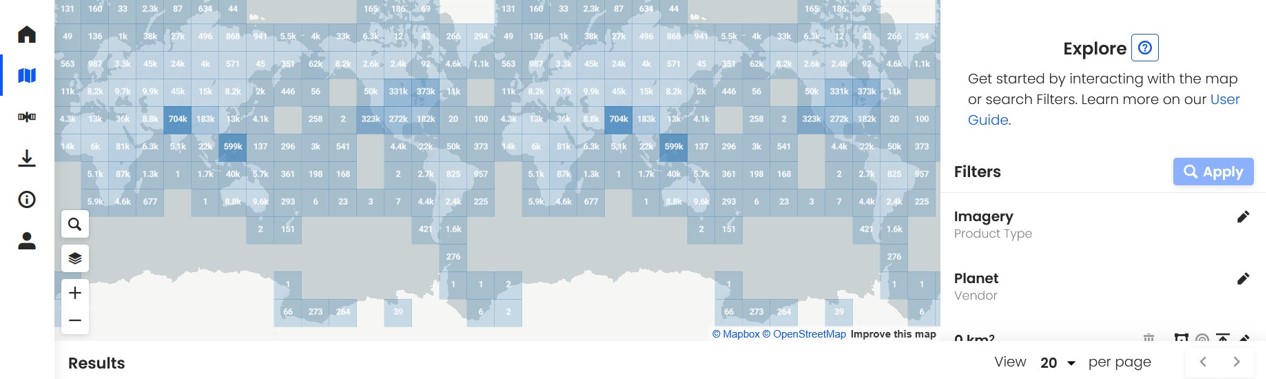
NASA's Commercial Satellite Data Acquisition (CSDA) Program released a new Data Acquisition Request System, which lets authorized users submit proposals for yet-to-be-collected data from CSDA's commercial partners and track their requests through an easy-to-use dashboard.
"With the Data Acquisition Request System, approved users will be able to 'task,' meaning to request future data, from a CSDA commercial partner's satellite," said Aaron Kaulfus, CSDA Data Management Team Lead. "The process begins with a user submitting a proposal that is subject to an approval process. If approved, the proposal will be processed by a CSDA commercial partner in accordance with the user's other parameters."
The Data Acquisition Request System has been incorporated into the CSDA Program's Satellite Data Explorer (SDX), an online tool for searching, discovering, and accessing the commercial satellite data acquired by NASA. (Note: Although anyone can browse the CSDA's data holdings, only authorized data users can log into the SDX and request data. Information on the user authentication and authorization process is provided below.)
"The dashboard shows users the proposals they've submitted and informs them of each proposal's status and whether it's been approved. In the case a proposal is partially approved, the dashboard will also include information supporting that decision," said Kaulfus. "After approval, the proposal will be processed by the vendor, and the requested data will be collected and delivered to the system for download. This means that users can now request data from a vendor, track the status of their proposal, and download the data all in one place."
By providing these services in a single, centralized system, the CSDA aims to make the process of requesting future data from CSDA vendors more efficient and user-friendly.
"Currently, the proposal process relies on users filling in a PDF-type form about their data needs followed by a series of email exchanges among users, CSDA Program staff, and vendors," Kaulfus said. "The Data Acquisition Request System confines all of these interactions in a single, streamlined system, which allows users' proposals to move through the [proposal review] process as quickly and efficiently as possible."
That process includes in-depth proposal reviews by CSDA staff to ensure the requested data fall within the program's budget and the vendor's capabilities. Therefore, the program's response to users' proposals won't be immediate. Still, Kaulfus says the Data Acquisition Request System's dashboard will help CSDA staff stay abreast of each proposal's status and any actions required to keep it moving through the evaluation process.
In addition to expediting users' proposals, the Data Acquisition Request System will help the program address CSDA data users' needs over the long term by providing the program with information it can use to expand its catalog of commercial satellite data.
"We've realized that, through the Data Acquisition Request System, we can collect and catalog our users' requests to inform future CSDA initiatives and add to our current capabilities," said Kaulfus. "For example, in regard to fire applications, we really don't have vendors that will support hotspot detection right now. But if a large number of users' submit proposals requesting hotspot detection data, then that points to a need that we've not addressed."
This ability to zero-in on unmet user needs supports the program's goal of expanding the use of commercial data within NASA's data-user community.
"Expanding the use of commercial data is a big part of this effort," said Kaulfus. "We want to grow the audience of people who use our data and we want to do it efficiently, but for that to happen, we need information about the data that users need. Along with direct feedback from users themselves, the Data Acquisition Request System will help us get it."


