

• Researchers examined the first seven weeks of Israel's "Israel's Basket" initiative.
• Carrefour reduced prices on the 100 designated products by approximately 35% in participating stores and 37% online.
• At the same time, prices increased across dozens of product categories not included in the program.
• Competing supermarket chains showed only modest price reductions.
• The researchers conclude that the program's overall effect on the cost of living may have been far more limited than intended.
Researchers from the Coller School of Management at Tel Aviv University examined the Ministry of Economy's flagship "Israel's Basket" initiative and found that although it substantially reduced the prices of the 100 products included in the program, these reductions were accompanied by price increases across many other product categories. According to the researchers, the overall impact on consumers' grocery bills may therefore have been considerably smaller than expected.
Looking Beyond the 100 Products
The study was conducted by Prof. Itai Ater and Adi Omer of the Coller School of Management at Tel Aviv University, together with Dr. Or Avishay-Rizhi of Pompeu Fabra University in Barcelona. Based on daily price data collected by the Pricez platform from approximately 70 supermarket chains and more than 2,000 stores across Israel, the researchers examined the program's effects during its first seven weeks.
As part of the initiative, Carrefour committed to selling a basket of 100 products for a total price of NIS 1,098, compared with an average price of approximately NIS 1,700 before the program was launched. In return, the Israeli government allocated NIS 50 million to support a nationwide advertising campaign. The initiative operates in 50 Carrefour branches and on the company's online shopping platform for a period of six months.
Analysis of more than 2,000 stores and Pricez data showed that prices of the designated basket products fell by approximately 35% in participating Carrefour branches. Prices also declined by approximately 6% in Carrefour branches that were not participating in the initiative, suggesting that some of the price reductions spilled over to other parts of the chain. On Carrefour's online platform, basket products recorded an average price reduction of approximately 37%.

Carrefour in Israel
Lower Prices on Basket Products, Higher Prices Elsewhere
The researchers also examined price changes across product categories that were not included in the government's basket.
Among participating Carrefour stores, prices increased in 46 of the 76 product categories examined, with 23 categories showing statistically significant increases. Notable examples included:
- Laundry detergent and laundry gel - approximately 9%
- Pudding, jelly, and whipped cream products - approximately 7%
- Adult shampoo and conditioner - approximately 7%
- Pasta, spaghetti, and lasagna - approximately 6%
- Butter and flavored cookies - approximately 6%
The pattern was even more pronounced online, where prices increased in 55 product categories. Among the largest increases were:
- Adult shampoo and conditioner - approximately 14%
- Tea biscuits and crackers - approximately 9%
- Laundry detergent and laundry gel - approximately 8%
- Pasta, spaghetti, and lasagna - approximately 8%
- Savory snacks - approximately 7%
The researchers also found price increases of approximately 1.5% to 2% for a range of other popular products that were not included in the government basket.
How Did Competing Supermarkets Respond?
Outside Carrefour, the program's impact was considerably more limited. When the researchers examined physical stores across Israel's supermarket chains, they found no statistically significant reduction in the prices of the designated basket products. Focusing specifically on the country's major discount chains, they identified an average price reduction of approximately 3%.
Among the retailers:
- Mahsanei HaShuk recorded the largest average reduction, at approximately 10%.
- Half Hinam reduced basket prices by approximately 5%.
- Yohananof lowered prices by approximately 4%.
- Victory reduced prices by approximately 3%.
- Rami Levy also lowered prices by approximately 3%.
By contrast, the researchers found no statistically significant price reductions at Shufersal Deal, Osher Ad, or Universe.
The online market showed a similar pattern. Competing retailers reduced the prices of basket products by an average of only 2.3%, with substantial differences between chains:
- Rami Levy Online reduced basket prices by approximately 9%.
- Half Hinam Online lowered prices by approximately 4%.
No significant price reductions were observed at Shufersal Online, the largest online grocery retailer in Israel, or at Mahsanei HaShuk Online.
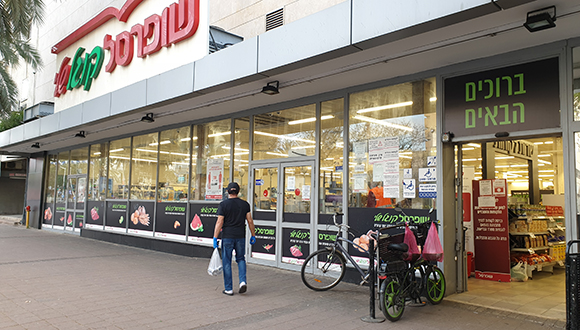
Does Shopping Near a Carrefour Store Make a Difference?
National Pricing Rather Than Local Competition
The researchers also examined whether competing supermarket chains responded differently in areas where Carrefour stores participating in the initiative were located.
Their findings showed no meaningful differences between cities with participating Carrefour branches and those without them. According to the researchers, this suggests that Israel's major supermarket chains set prices primarily at the national level, rather than competing store by store.
In other words, the presence of a nearby Carrefour branch offering discounted basket products did not lead competing supermarkets in the same city to lower their prices.
"There Are No Free Gifts in Economics"
Prof. Itai Ater concludes:
"There is no doubt that the program succeeded in lowering the prices of the designated basket products in the relevant Carrefour branches and also led to some price reductions among certain competitors. But in economics, there are no miracles and there are no free gifts.
"When you look beyond the 100 products at the center of the campaign, you see that these price reductions were accompanied by increases across dozens of other product categories. As a result, consumers who saved money on the basket products paid more for other items.
"The real test is not the price of a single product, but the total amount consumers pay at the checkout. From that perspective, it is possible that the effort to reduce the cost of the shopping basket ultimately produced the opposite result."

Prof. Itai Ater (Photo: Oded Antman)
Prof. Itai Ater of the Coller School of Management is a leading researcher in the fields of competition policy, industrial organization, and public policy. His research examines the economic mechanisms that shape markets and influence consumers' everyday spending.


