
Few people can say they knew exactly what they wanted to do for a career at age 13. For Reef Manager Sarah Salmon, the decision was easy. She wanted to become a marine biologist.
"I was a very nature-focused kid. Marine science was something that met all of my values and I could love work if I had to go to work every day," Sarah Salmon said.
Her decision came from an early connection to the ocean. Growing up, she spent countless summer holidays on the Sunshine Coast, where blissful afternoons were spent bodysurfing and exploring rockpools.
Those experiences sparked a deeper curiosity about marine environments, and while in high school, Sarah had the opportunity to experience life as a marine biologist first hand.
"At school in Year 10, I did work experience with a post-doctoral student studying dolphin health, and I got to go with her and take samples from animals in rehabilitation centres.
"I loved it. And from that point onwards, I knew that's what I was going to do."
Sarah went on to study a Bachelor of Marine Science at Flinders University in Adelaide and described her undergraduate experience as "heaps of fun", especially when her studies introduced her to eccentric marine animals.
"I can remember doing a Blue-ringed octopus study where we would catch them and bring them back to the lab. We had cameras on their tanks at night, and we'd watch the octopuses escape from their tanks, wander around the room and then climb back into their tanks, ready for their feed in the morning.
"They're very smart creatures," she laughed.
After completing her undergraduate degree, Sarah moved to Townsville to begin her Honours at James Cook University. She admits she did not plan on staying in Townsville after her studies ended, but soon took up an opportunity at the Great Barrier Reef Aquarium (formerly Reef HQ), which would go on to shape the direction of her career.
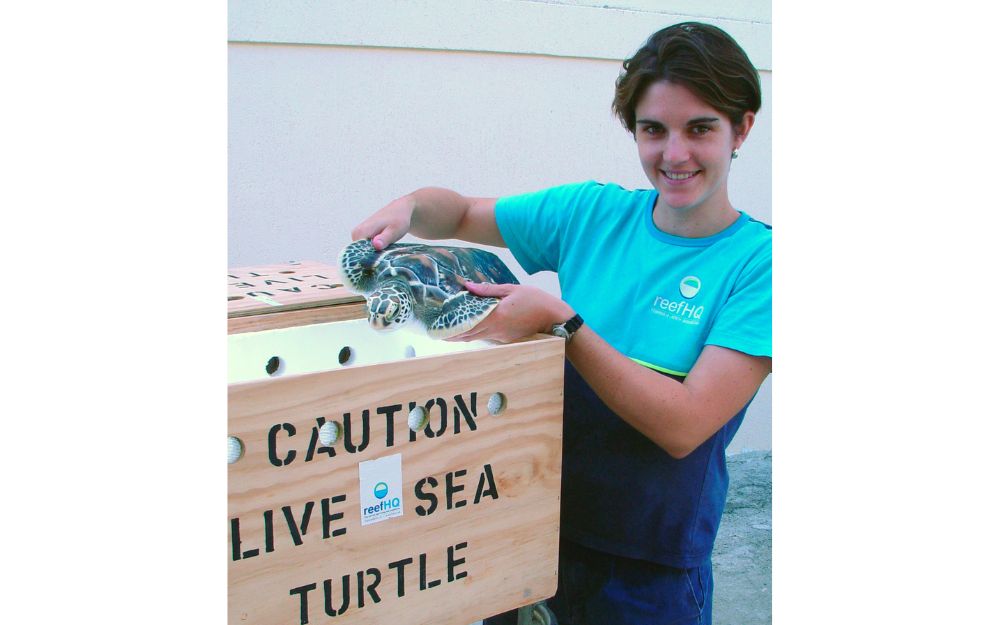
What began as a job as an aquarist became the start of an almost three-decade career with the Great Barrier Reef Marine Park Authority.
"It's been my first and only professional career.
"I've not needed to change employer because I've had all these different careers within the one organisation."
Sarah's first role as an aquarist involved a wide range of work, from aquarium maintenance and animal husbandry to presenting dive shows and working at the Turtle Hospital.
"We were diving four days out of five, and it's pretty exhausting on your body.
"So, when a job came up in the Reef Authority's Species Conservation Unit, I thought this is a chance to progress my career, so I went for it."
The move marked a shift from hands-on animal care into conservation policy and management - work that would help shape how vulnerable species are protected in the Marine Park today.
One major project helped establish the framework for swimming with dwarf minke whales on the Great Barrier Reef, making the Reef one of the few jurisdictions in Australia at the time to allow for the activity under strict management arrangements.
"There's an aggregation of dwarf minke whales in the northern Great Barrier Reef that turns up every winter at some key dive sites.
"We couldn't stop the interaction between people and minke whales, so we had to come up with a way of managing it."
Based on consultation with researchers, regulators and tourism operators, the program allowed selected operators with special permits to offer controlled, low-impact interactions with the whales.
Sarah said the project was an exercise in adaptive management and highlighted the impact of collaboration in wildlife conservation.
After five years in the Species Conservation Unit, Sarah moved into the Reef Joint Field Management Program , a partnership with the Queensland Parks and Wildlife Service responsible for planning and delivering field operations across the Reef.
While much of her work became strategic, Sarah remained closely connected to the Reef through fieldwork.
"I've been lucky enough to be involved in a range of fieldwork including marine turtle monitoring, whale disentanglement response work, maintenance work on moorings, and installing no anchoring areas around fragile reef systems near islands. I've also conducted aerial dugong surveys, coastal seabird surveys, coral bleaching surveys, and Reef Health and Impact Surveys across the region."
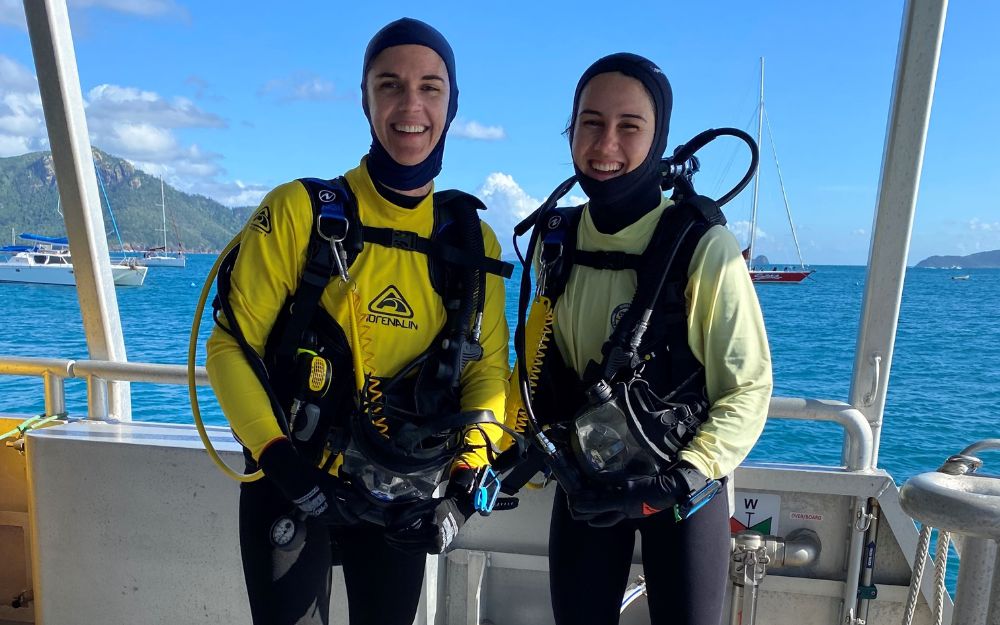
Over time, Sarah's work also contributed to conservation efforts beyond the Great Barrier Reef.
Working with government agencies across Australia, she helped to develop procedures for safely disentangling whales caught in fishing gear - work that improved how agencies respond to incidents involving marine megafauna.
"We would get reports of humpback whales getting entangled in fishing gear, so we worked with all the states around Australia to develop large whale disentanglement operating procedures.
"I was part of the team delivering the training for marine animal release teams to disentangle the whales. It involved attaching satellite trackers to the entanglement when the whales were initially found.
"Because the whales travel so fast, you can't necessarily mount a response straight away.
"Once the trackers were on, a team could be formed with the right number of boats, people and equipment, so that they could find the whales and attempt to safely disentangle them.
"It involved figuring out the lowest number of cuts to the entangled ropes to release the animal, because it's very dangerous to put a boat with people up close to a very large animal."
Today, Sarah continues to work on projects that protect vulnerable marine species.
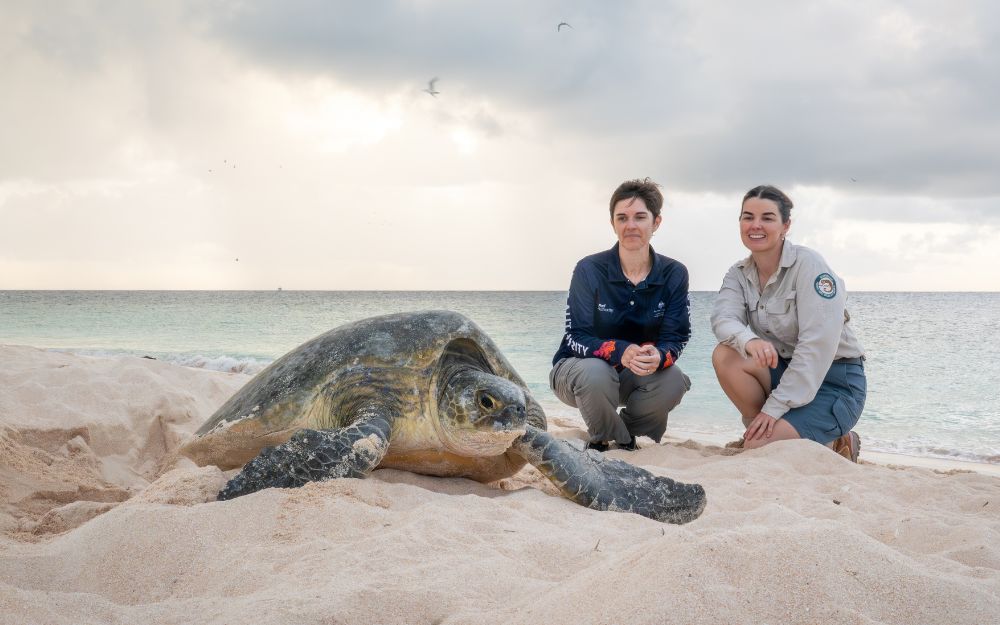
She now works as Assistant Director in the Reef Conservation Actions team, helping deliver high-priority marine and island conservation projects in partnership with the Queensland Parks and Wildlife Service.
Looking back on her career, Sarah says one thing has remained constant - the desire to do meaningful work that contributes to protecting the natural world.
"It's always been important to me that I'm doing something that makes a difference.
"So, whether it's volunteering at beach clean-ups, helping in rehabilitation centres, or working in government and writing policy and designing regulations, a big driver for my work is knowing that what I'm doing every day makes a difference."
More than 30 years after deciding she wanted to become a marine biologist, Sarah says her motivation remains the same.
"Humans can't be happy without access to nature. Being a part of helping to preserve that, that's why I come to work."


