
A new dry simulator revolutionizes training for complex endoscopic cancer resection.
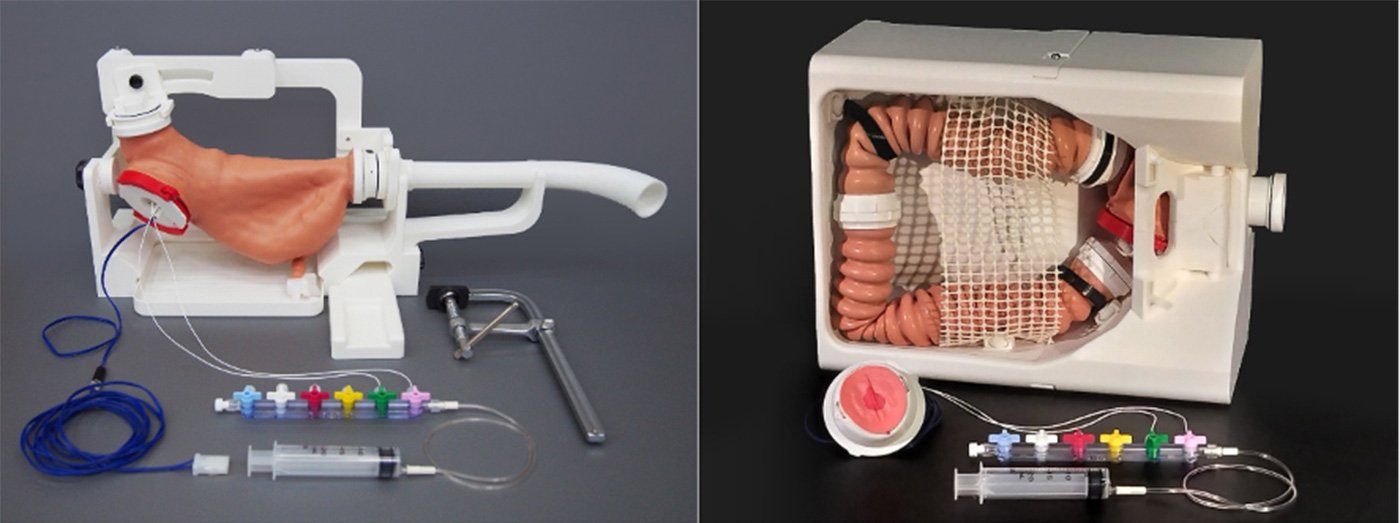
A research team at Tohoku University, in collaboration with Denka Company Limited and U-A Corporation, has developed a high-fidelity "dry" simulator for Endoscopic Submucosal Dissection (ESD). ESD is a minimally invasive procedure developed in Japan to treat early gastrointestinal cancers, but its high complexity carries risks of bleeding and perforation, requiring advanced technical skills.
Traditional training often relies on animal models, which pose ethical and hygienic challenges, or on-the-job training, which carries risks for patients. To address this, Associate Professor Takeshi Kanno and his team developed a multilayered "ESD sheet" using proprietary soft materials that mimic human mucosa, submucosa, and muscle layers.
The simulator accurately reproduces the tactile sensation of tissue dissection and includes artificial blood vessels to simulate realistic bleeding. It also allows trainees to experience complications: if the muscle layer is damaged, the "fat layer" outside the wall becomes visible, simulating a perforation. Validation by five expert physicians confirmed that the model provides a procedural experience nearly identical to actual clinical practice.
This innovation provides a safe, repeatable environment for both beginners to learn core workflows and experts to practice challenging cases. By eliminating the need for animal tissues and reducing patient risk, this simulator is expected to standardize high-level endoscopic training globally and contribute to safer medical care.
- Publication Details:
Title: High-Fidelity Endoscopic Submucosal Dissection Simulator Reproducing Full-Procedure Training, Bleeding, and Perforation.
Authors: Takeshi Kanno, Yutaka Hatayama, Suguo Suzuki, Waku Hatta, Kaname Uno, Tomoyuki Koike, Atsushi Masamune
Journal: Endoscopy
DOI: 10.1055/a-2761-0309


