
A new scientific statement warns of health risks for children and young people from digital media. Scientific organisations are calling for clear age limits and stronger child protection.
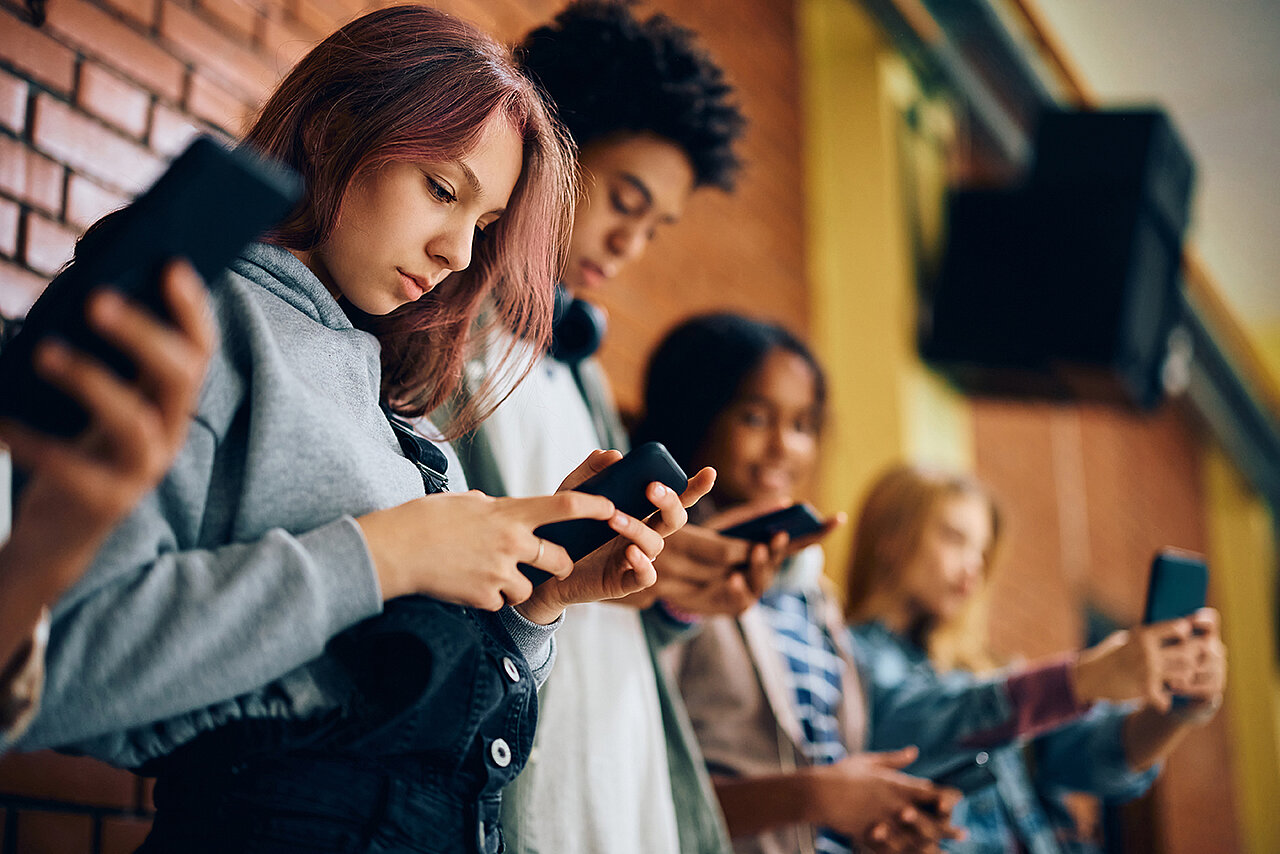
A ban on social media for children and young people is currently being widely discussed in Germany. There is now a current scientific statement on the subject, which Professor Andrea Reiter has been working on since summer 2025 as part of an ad hoc expert working group. Andrea Reiter heads the Professorship of Psychotherapy and Intervention Psychology at the University of Würzburg.
The working group of the German Society for Child and Adolescent Psychiatry (DGKJP) drafted the statement. Other leading professional societies and associations from the fields of child and adolescent psychiatry, psychosomatics and psychotherapy have also signed the statement. The statement is based on current studies, international recommendations and neurobiological and developmental psychological findings.
Researchers see opportunities, but also considerable risks
The paper shows that despite the great opportunities offered by digitalisation, many digital services pose considerable risks for the mental, social and physical development of young people. Infants, pre-school children and schoolchildren up to the age of 14 are particularly affected.
The professional associations are therefore calling for clear age limits for smartphones, social media and AI chatbots, a ban on manipulative design mechanisms, binding media concepts in daycare centres and schools and significantly greater responsibility on the part of digital service providers.
They are also calling for further research to be funded: "The study situation is still limited, especially when it comes to children," says Professor Andrea Reiter. "So far, we can describe possible correlations, but not make any causal statements."
Early childhood (0-5 years): "Screen-free is healthy"
For infants and young children, the professional associations recommend extensive screen abstinence - with the exception of video calls with relatives or digital picture frames, for example.
This recommendation is based on studies which show that early screen use can be linked to
- Sleep disturbances,
- delayed speech development,
- impaired attention development,
- and a weakening of parent-child interaction.
In future, all screen devices should be labelled:
"Not suitable for children aged 0-3 years - the Federal Minister of Health recommends: This screen is harmful to the development of your infant and toddler."
Daycare centres should be given uniform nationwide standards: no screens for 0-3-year-olds, and only supervised, considered media use for 4-5-year-olds.
Smartphone and social media only from 14
Children in Germany are getting their own smartphones earlier and earlier. However, recent studies, which are addressed in the current statement, show that early smartphone ownership is associated with higher risks of depression, sleep problems and obesity in adolescence.
The professional societies are therefore calling for
- No smartphones before the age of 14
- No use of algorithmic social media before the age of 14 (TikTok, Instagram, Snapchat, etc.)
- Limited, supervised messenger use
- No access to AI chatbots before the age of 14
Digital games should only be permitted with effective age verification and no contact with strangers.
At the same time, a return to analogue leisure activities is called for - also because many children now spend less time outdoors and read less often.
14-18 years: Stronger protection against addiction, manipulation and abuse
The statement also documents links between problematic media use and
- anxiety disorders
- depressive symptoms
- sleep disorders
- eating disorders
- reduced school performance
- Increased cyberbullying
- Increased risk of behavioural addictions (gaming, social media, online shopping)
The researchers are particularly critical of manipulative design mechanisms ("dark patterns") such as loot boxes (digital surprise packages in video games), endless scrolling or personalised advertising. These should be banned for minors.
According to the recommendation, the following applies to schools: no private smartphones in everyday school life. Instead, educationally managed devices should be used.
Demands on politicians and platform operators
Among other things, the scientific societies are calling for
- Binding age limits for device ownership, social media, AI chatbots and online games
- Strict age verification in accordance with the EU DSA
- Ban on personalised advertising to minors
- Ban on manipulative design mechanisms
- Standardised media literacy in schools from grade 1 - across all federal states
- Research funding and regular national monitoring
- Promotion of media literacy among parents, who often feel they have received little support to date
Download
Scientific statement (in German) "Use of digital media and the mental health of children and young people " (pdf)


