
Five years of collaboration with remote First Nations communities has helped locals secure better digital services and greater control over how they connect.
Since 2021, the Mapping the Digital Gap project has been addressing the lack of data around online access and digital inclusion in remote First Nations communities, while supporting Telstra, industry and government to address the gaps.
Established as a supplementary project to the Australian Digital Inclusion Index through the ARC Centre of Excellence for Automated Decision‑Making and Society and funded by Telstra, the research showed three in four First Nations people in remote and very remote communities are digitally excluded.
This means they face significant barriers to accessing and using online services needed for daily social, economic and cultural life.
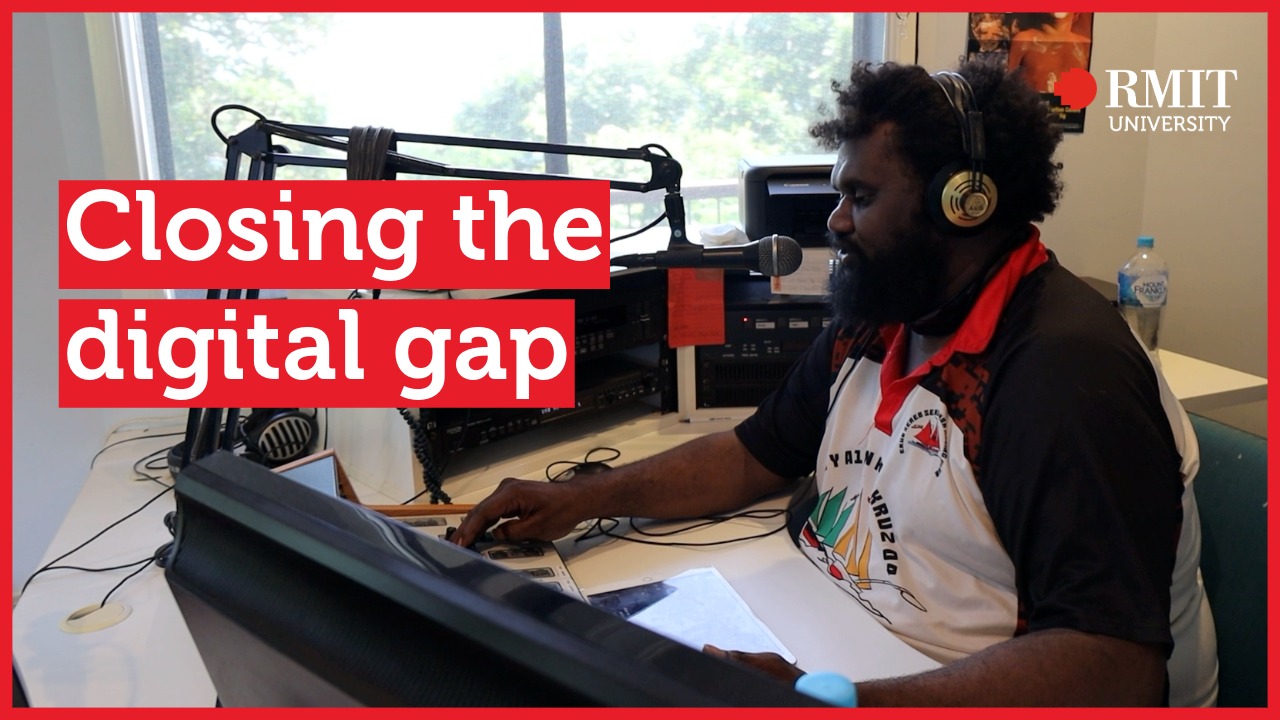
First Nations co-investigator, RMIT's Professor Lyndon Ormond-Parker, said as the world moves online, access to basic services like education, banking, welfare and healthcare now tend to require a device and reliable connectivity.
"You have to look at the communities that are getting left behind," he said.
"For Aboriginal and Torres Strait Islander communities living very remotely in Australia, access to infrastructure, basic services and communication is often very limited. This creates a significant digital divide."
Digital exclusion can mean unreliable or unaffordable connections, limited access to suitable devices and few opportunities to build digital skills to safely engage online.
The consequences are far‑reaching, from difficulties accessing telehealth and online learning to challenges dealing with government services and emergency information.
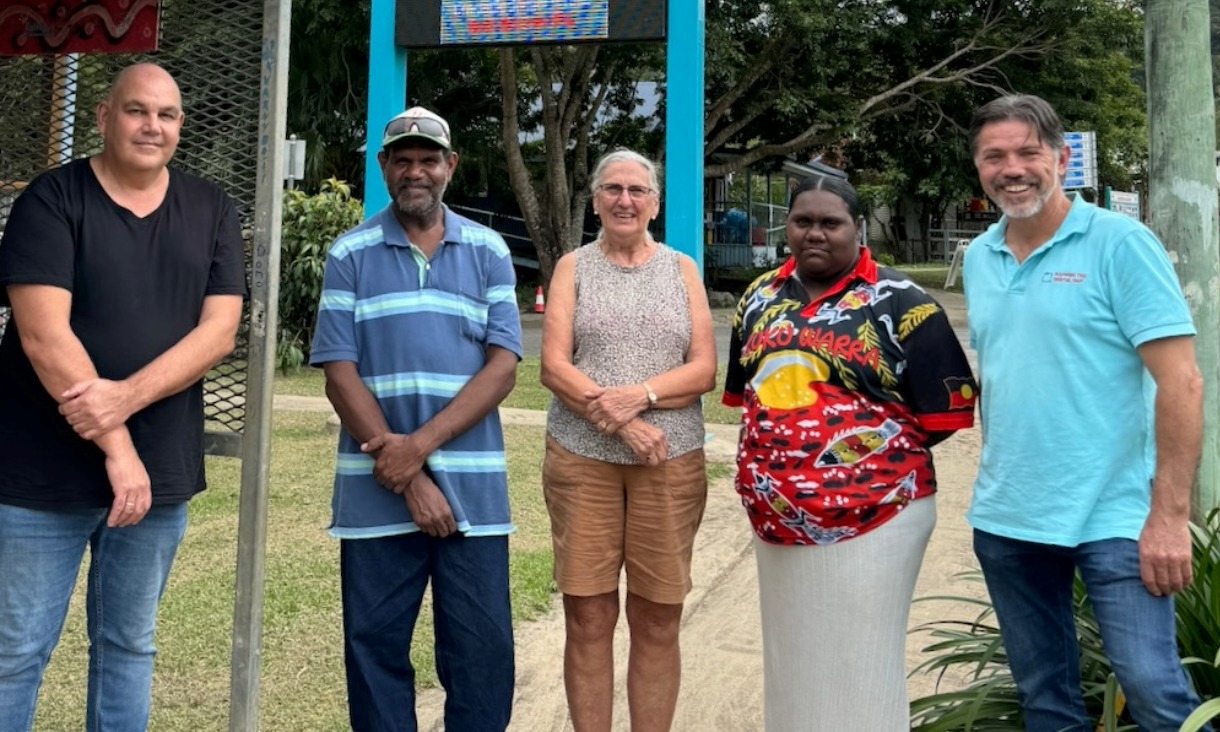
The research team in Wujal Wujal (L-R) Lyndon Ormond-Parker, Vincent Tayley, Helen Teece, Dallas Walker, Daniel Featherstone. Image: supplied.
Mapping the Digital Gap was created to fill a critical gap in national data on communications and media use in remote First Nations communities.
The project is building a detailed account of digital inclusion in these regions, tracking changes over time, informing local strategies and guiding government and industry investment.
All the ways community members access and share information are considered - from internet to phones, TV, radio and face-to-face communication.
Lead investigator Associate Professor Daniel Featherstone said the project gives communities better tools to access essential services and make informed decisions in an increasingly digital society.
"By mapping all ways people communicate, we're seeing how place-based solutions can best address local context and needs rather than relying on one-size-fits-all models," he said.
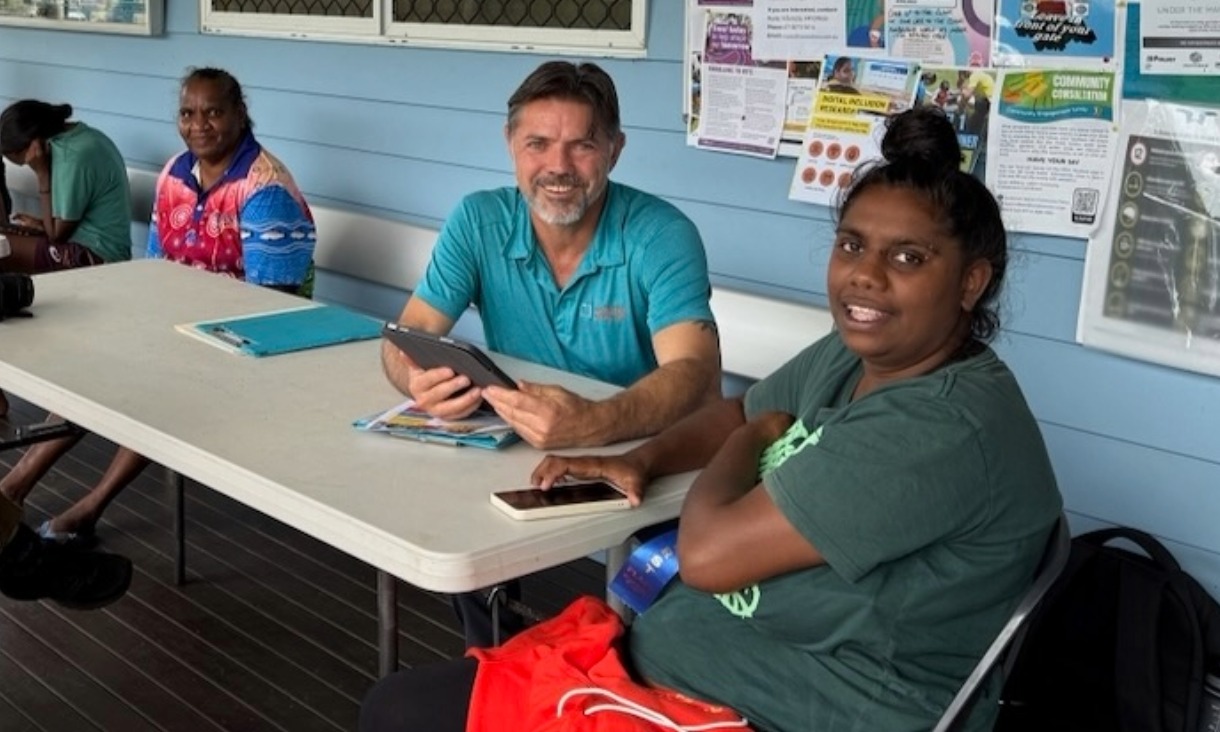
Daniel Featherstone surveying Wujal Wujal resident Alexandra Darkan. Image: supplied
Partnership with local organisations is central
Working with First Nations organisations across remote communities, the team employs community‑based co‑researchers to collect and interpret data.
Indigenous leadership is embedded at every stage, from shaping research questions to deciding how findings are used.
The Mapping the Digital Gap reports have been a powerful advocacy tool for the Wujal Wujal community in Far North Queensland.
Former Wujal Wujal Aboriginal Shire Council CEO Kylie Hanslow said the research reports helped them advocate for improved services.
"They were one of the main resources we relied on for the increase in the speeds and the requirements for improvements to digital connectivity," she said.
Ormond-Parker said the work has highlighted the need for coordinated action.
"We've seen it's really important to ensure industry, governments and communities are on board, and that these initiatives are run and led by the communities themselves," he said.
Five years in, Mapping the Digital Gap is reshaping how digital inclusion in remote Australia is understood.
By generating detailed, community‑driven evidence, it is helping remote First Nations communities secure better services, strengthen local decision making and influence national policy on digital inclusion.
The next Mapping the Digital Gap report is expected towards the end of 2026.


