
I acknowledge the Ngunnawal people, on whose lands we meet, and pay my respects to all First Nations people present. I recognise the Aboriginal and Torres Strait Islander business owners working in franchising, such as Noonuccal woman Karen Seage, the owner of Snap Underwood, a successful Queensland printing and design business.
Thank you to Jay Westbury and the Franchise Council of Australia for inviting me to open this inaugural CEO Roundtable. I appreciate the Council's engagement with the government's reform work, including on retail leasing.
Let me start with a story.
In 1888, a former domestic servant opened a hair salon in Rochester, New York. Her name was Martha Matilda Harper. She had been sent into service at 7, and had spent much of her life looking after other people's households. Now she was putting her savings, all $360 of them, into a business of her own.
Harper had an unusually persuasive advertisement for her services. Her own hair reached the floor. Customers considering her haircare methods could inspect the evidence before making an appointment.
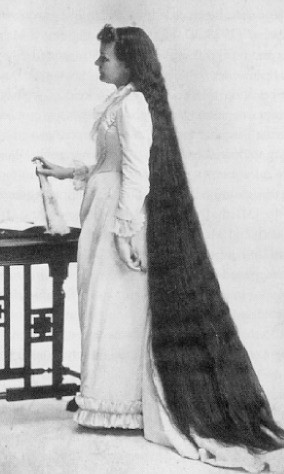
Most founders have to grow their brand. Harper could brush hers.
Getting customers through the door was harder. Wealthy women were accustomed to having their hair attended to at home. Harper had to persuade them to visit a salon.
As the story goes, Harper found an opening through the music teacher next door. He had no waiting room. She offered her salon to mothers waiting while their children took lessons. While they waited, the mothers could have their hair done (Crockett 2024).
Business grew. Women from other cities wanted access to the same treatment. Harper had to work out how to expand while preserving the quality of the service.
In 1891, she began franchising. The women who ran the salons owned their businesses, while following the Harper Method. Training and inspections helped maintain quality.
Harper deliberately opened opportunities to women from backgrounds resembling her own, including former domestic servants. She offered financing that helped women without capital become owners. Eventually, the network exceeded 500 salons worldwide.
Harper had spent her childhood working in someone else's home. Now she was helping former domestic servants buy businesses of their own.
As a pioneer of modern business‑format franchising, Harper had to solve a problem you will recognise: how to give owners a business of their own while maintaining standards across the network.
Recruiting a franchisee means choosing someone with whom you may work for years. Both sides have good reasons to get the decision right. Even a promising start can unravel over a disagreement about who pays for a new fit‑out.
Franchising supports over half a million Australian jobs (Collins 2025). For some employees, a job in a franchise is their first experience of paid work. For some owners, buying the business is the biggest financial commitment of their lives.
Before committing their savings, a prospective owner needs to know what they are buying and what the franchisor will expect of them.
Today I want to discuss the conditions in which those investments can succeed. I will begin with the franchise relationship, including the remade code and our work on unfair contracts. Then I will turn to productivity: how good ideas spread, and how governments can make it easier for a successful business to expand.
Making the franchise relationship work
Franchisors know what has worked elsewhere, and what hasn't. Franchisors have grown the brand, and raised its profile.
On the other side, the franchisee knows the local market and has a direct stake in making the business succeed.
Head office can compare statistical data across a network, but a local owner hears the customer stories. The network needs ways to collect those suggestions and act on the useful ones.
Customers also carry their experience from one outlet to the next. Someone who receives poor service may blame the brand, even if every other franchisee is doing an excellent job. Owners have good reason to expect their fellow franchisees to maintain standards.
The interests of franchisor and franchisee will not always coincide. A slick proposal that looks good from the top may look extravagant to an outlet that's struggling to meet payroll. A refurbishment may strengthen the brand while leaving an owner with too little time to recover the expense.
A franchisee may commit savings and years of work to premises and equipment. Once that investment is made, walking away can be expensive.
Economists call this the problem of relationship‑specific investment. Franchisees are more likely to describe it in terms of the local reputation and the fit‑out.
Clear rules help both parties invest with greater confidence. They also help a responsible franchisor compete for capable people, because prospective owners can assess the opportunity with a better understanding of their rights.
The remade Franchising Code of Conduct commenced on 1 April 2025, with further provisions applying from 1 November 2025. It strengthens protections while simplifying some requirements, including aspects of disclosure and renewal processes (Australian Competition and Consumer Commission 2026a).
One central requirement is that agreements covered by the new provisions give franchisees a reasonable opportunity to make a return, during the agreement's term, on investment required by the franchisor. The competition regulator is clear that this does not guarantee profitability. Commercial risk remains. The requirement concerns whether the agreement provides a reasonable chance to recover the required investment and earn a return (Australian Competition and Consumer Commission 2026b).
Customer demand will always be uncertain. The duration of an agreement is something the parties can settle in advance, with the required investment in mind.
Before approving an agreement, the franchisor's chief executive should be satisfied that its commercial assumptions make sense for the individual outlet. If the franchisee is expected to invest substantially, how does that investment relate to the remaining agreement term? What would have to happen for the expenditure to pay off?
The code also requires provision for compensation in specified circumstances of early termination, including certain changes to a franchisor's Australian network or distribution model (Australian Competition and Consumer Commission 2026b).
These provisions recognise that business decisions taken at head office can affect capital committed elsewhere in the network. Those consequences should be considered when the relationship is established.
The Australian Government has provided $7.1 million over 2 years from 2025-26 to strengthen the competition regulator's enforcement of the code and enhance its education and engagement work (Collins 2025).
The regulator's guidance helps prospective franchisees examine an agreement before they sign. The Franchise Disclosure Register and free pre‑entry education can also help people approach that decision with more information and better questions.
The Franchise Disclosure Register allows franchisors to publish their standard form franchise agreements, yet hardly any have done so. In several US states, including California, Wisconsin and Minnesota, prospective franchisees can search public filings online and read the proposed franchise agreements. I would encourage every Australian franchisor to publish theirs. Prospective franchisees should be able to compare contracts while they are still comparing businesses, before they have spent months pursuing one opportunity.

Publishing these agreements would let prospective franchisees compare the obligations they would assume and the protections they would receive. It would also allow advisers to identify unusually one‑sided terms, giving franchisors a reason to compete on the fairness of their contracts. For franchisors offering balanced agreements, publication is a chance to demonstrate that advantage. Resolving differences over contract terms before someone invests is better for both parties than arguing about them afterwards.
Using information in the register, a prospective owner should have time to study the provisions, question the fees and seek independent advice. Those discussions are easier before either side has committed. They may expose a misunderstanding that would be much more expensive to resolve later. You've put a lot of work into those contracts. It seems a shame for the franchisee's lawyer to be the only person who gets to admire them.
The same applies after signing. A franchisee who reports a problem early gives the network a chance to fix it. If people learn that raising a concern will damage their standing, senior management loses information it needs. For franchisors, it's always worth checking when a franchisee's objection last changed a head‑office decision, and what happened to the person who raised it. Accepting criticism doesn't come naturally to most of us, but it's a good way to live - and a great way to improve.
Fair contracts as businesses grow
Standard form contracts save time. A franchise network would struggle if every agreement had to be written from scratch. But the arrangement also gives the party drafting the contract considerable power.
Under the Australian Consumer Law, unfair contract terms protections generally apply to standard form contracts where at least one party has fewer than 100 employees or annual turnover below $10 million. Most franchisees fall within those thresholds. Some large franchise businesses fall outside them (Australian Competition and Consumer Commission 2026c).
A business can employ a considerable workforce and still have limited bargaining power when dealing with a much larger national or multinational company. Growing beyond a statutory threshold does not automatically give it the ability to negotiate every clause.
The Australian Government is therefore progressing work to extend unfair contract terms protections to all franchisees covered by the Franchising Code. The consultation for the review of unfair contract terms earlier this year examined that extension alongside the operation of the existing protections (Aly, Mulino and Leigh 2026).
A franchisee that grows beyond the small business thresholds may still be offered the same take‑it‑or‑leave‑it contract. It should retain protection against unfair terms.
The existing law recognises legitimate business interests. It asks whether a term creates a significant imbalance and goes beyond what is reasonably necessary to protect those interests. It also considers whether the term would cause detriment if applied. Transparency and the contract as a whole are relevant (Australian Competition and Consumer Commission 2026c).
Protecting a network's reputation can justify contractual restrictions. The scope of those restrictions still needs to be justified.
Consider a clause allowing one side to change important obligations unilaterally. There may be circumstances in which a system needs to adapt. But the breadth of that power, and the consequences for the other party, deserve a careful look.
Franchisors offering fair terms have an interest in these protections too. They compete for prospective owners with businesses whose contracts may be much less attractive.
Our government is also considering feedback on extending unfair trading practices protections to small businesses and franchisees. Treasury's consultation examined small businesses and franchisees buying goods and services as consumers, as well as unfair practices in business‑to‑business dealings (Treasury 2026).
This work goes beyond the wording of a contract to encompass the way businesses deal with each other. We are considering the feedback before announcing the next steps.
I thank those who contributed. Specific accounts of how a practice works, and what it costs, help us design reforms that address the source of a problem.
How a good idea travels
Good ideas travel. Australians take it for granted that every other McDonald's will include a McCafé. Yet few realise that the concept is as Australian as meat pies, Hills Hoists, eskies and fairy bread.
In 1993, the world's first McCafé opened in Swanston Street, Melbourne. Of course it was Melbourne. Someone had looked at a global fast‑food empire and decided the coffee needed work (McDonald's Australia 2025). By McCafé's thirtieth anniversary in 2023, the company reported more than 4,000 locations across 60 countries (Franchise Executives 2023).

McCafé shows how an innovation can spread across a franchise network. An improvement at one outlet benefits the customers who use it. Breaking it down, writing it down, and teaching it to others multiplies that benefit.
A franchise network can spread the development cost across many outlets. Its training gives a new owner access to experience accumulated elsewhere. And comparing results across the network can help identify which changes are worth adopting.
Suppose a network finds a better way to predict demand, so less food ends up in the bin. A small saving on each shift adds up over a year, especially when hundreds of outlets use the same method.
Before rolling out a new process, a network can test it in a selection of outlets. Where it is feasible, randomly choosing which outlets try it first can help separate the effect of the change from differences between locations.
That's important because just looking at the innovative outlets might give an overly rosy picture of the gains from innovation. If your busiest and best‑managed outlets are also trying new approaches, their results may exaggerate what the change would achieve elsewhere. A well‑designed comparison can give franchisors and franchisees alike greater confidence about whether an investment is good value for money.
A Central American food franchise, Casas de Pollo Rey, did precisely this. Nearly 500 franchise owners were randomly allocated to a business‑training program or a control group. The training combined short videos on a mobile app with individual video consultations. Six months later, owners offered the training reported higher monthly profits than those in the control group (Estefan et al. 2024).
Naturally, franchisees should have a voice in that process, understanding the value of producing rigorous evidence about what works and what does not. Franchisors should make clear that they want to find out the truth. Otherwise, a franchisee who thinks head office will dismiss an unwelcome result may keep it to themselves. That leaves the network at risk of repeating an expensive mistake.
Even when a new approach works, expansion can run into regulatory obstacles. Some of those are ours to fix.
Making expansion easier
Australia's federal, state and territory governments signed a renewed National Competition Policy agreement in November 2024. The Commonwealth has backed the reform effort with a $900 million National Productivity Fund, supporting reforms across the states and territories (federal Financial Relations 2024).
One of the goals of National Competition Policy is to build a seamless national economy - getting rid of unnecessary discrepancies between states and territories.
Some differences are justified. State and territory governments should respond to local conditions and have room to test better approaches. But differences that serve no useful purpose can consume resources that a business would otherwise put into serving customers.
Retail leasing is a good example. Signing a lease is one of the largest commitments many franchisees make. Rules governing disclosure and lease transfers can affect both the initial decision and the ability to sell the business later.
Together with Small Business Minister Anne Aly, I launched consultation on opportunities for greater consistency in retail leasing across Australia. The work examines where differences create unnecessary costs or confusion, while preserving protections and useful flexibility (Leigh and Aly 2026).
A business expanding across a border already has enough to learn about its new customers. If they have to pay legal fees to understand avoidable differences in retail leasing laws, that adds a further impediment to interstate expansion. Crossing a state border should mean changing your opinion about the coffee, rather than commissioning another legal opinion.
Those costs can be especially discouraging for smaller networks. A large business can spread specialist advice across many locations. A business considering its first interstate outlet has fewer places to spread the bill.
We're also looking at commercial planning and zoning. Governments have agreed to reduce unnecessary regulatory barriers to business entry and expansion, including reducing opportunities for planning processes to be used for anti‑competitive purposes. The agreed guidelines also seek to streamline development assessment and rezoning processes and expand how commercial land can be used (federal Financial Relations 2025).
Unnecessary planning restrictions can limit the long‑term commercial viability of new businesses, preventing new business investment, slowing the pace of innovation and restricting competition, which puts a handbrake on economic growth. Planning rules should not protect an existing business from a new competitor. Incumbents might not like competition, but competitive markets are a consumer's best friend.
The same attention to consistency applies to packaging. In September, environment ministers agreed to work with industry on strengthening packaging regulation under National Competition Policy, including exploring harmonisation of bans on problematic plastic items (Watt 2026).
For a network buying packaging across several jurisdictions, clearer and more consistent requirements can help it choose alternatives and plan purchasing. A network should be able to order suitable replacement packaging with confidence that it can use it across its outlets.
Giving workers room to move
Opening another outlet usually means hiring more people. Employment restraints can make that harder.
Last month, our government released draft legislation to ban non‑compete clauses for workers earning below the Fair Work Act high‑income threshold, currently $190,100 a year. The reform agenda also addresses no‑poach and wage‑fixing arrangements, with consultation on appropriate safeguards for legitimate business interests (Leigh and Rishworth 2026).
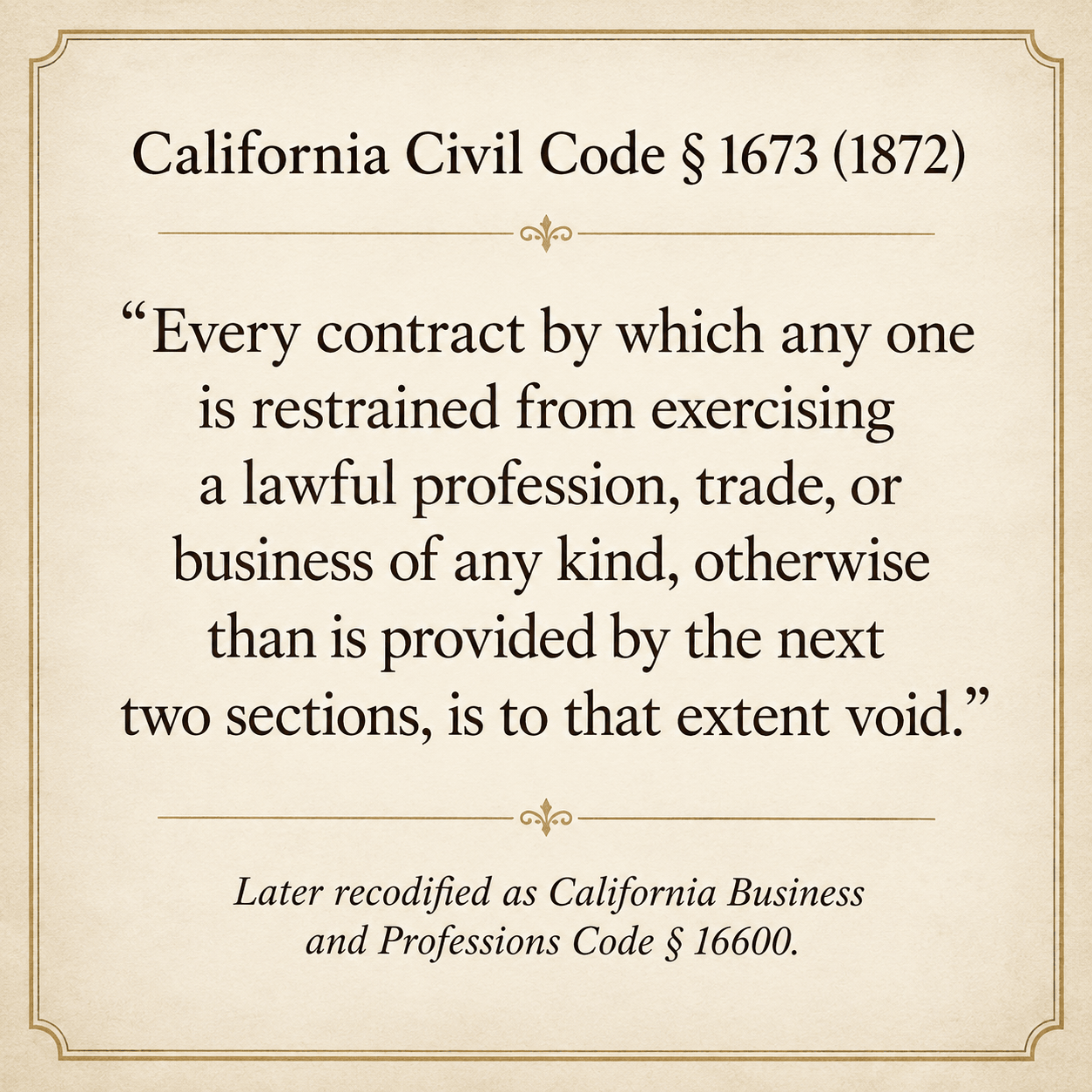
A worker's ability to move to a better job is part of a competitive economy. It gives employers a reason to offer attractive conditions and helps growing firms recruit the skills they need. Research finds that scrapping non‑compete clauses boosts wages, productivity and innovation. California, home to Silicon Valley, has generally prohibited employee non‑compete clauses since 1872. They gave workers the freedom to leave well before anyone thought to put a ping‑pong table in the office to persuade them to stay.
Few bosses like to lose a talented worker, but shifting jobs is one of the main ways people grow their careers and firms expand. Non‑compete clauses restrict the freedom of workers to move and growing businesses to hire.
Similarly, no‑poach arrangements restrict recruitment between businesses. Wage‑fixing arrangements interfere with competition over what workers are paid. A shared brand should not become a reason to unnecessarily suppress that competition.
An experienced employee may eventually want to buy a franchise. Their knowledge of the work can give them a useful start as an owner. Employment restrictions can get in the way of that progression too.
Conclusion
Franchising asks someone to put their savings behind another person's business idea. The franchisee brings local knowledge and years of work. The franchisor owes them clear information on the risks and a fair opportunity to earn a return.
Government can help make that bargain stronger, while removing unnecessary obstacles to expansion. At the same time, the leaders in this room shape how the system operates in practice. Publishing your standard agreement would give prospective owners a better basis for choosing your network. Listening when an existing franchisee questions a decision might save everyone from a costly mistake.
No head office has a monopoly on good ideas. McCafé began in Melbourne and travelled around the world. Giving local owners the chance to try new things, then designing randomised experiments to test what works across the franchise network, can help boost productivity.
The former domestic servants who joined Martha Matilda Harper's hairdressing network 135 years ago needed training and finance to become business owners. She helped provide both - making it possible for others to build a business they could not have built alone.
For someone opening their first outlet today, the ambition is much the same: to build a business that repays their investment and gives them more say over their working life.
Note: My thanks to officials at the Australian Treasury for valuable research assistance.
References
Aly, A., Mulino, D. and Leigh, A. (2026), 'Albanese Labor government moves to extend Unfair Contract Terms ban to protect all franchisees', joint media release, 24 February, Treasury Ministers.
Australian Competition and Consumer Commission (2026a), 'Guidance on changes to the franchising code', Australian Competition and Consumer Commission.
Australian Competition and Consumer Commission (2026b), 'The franchise agreement', Australian Competition and Consumer Commission.
Australian Competition and Consumer Commission (2026c), 'Contracts', Australian Competition and Consumer Commission.
Collins, J. (2025), 'Albanese Labor government taking further action to support the franchising sector', media release, 18 March, Treasury Ministers.
Crockett, Z. (2024), 'The house servant who pioneered the franchising business model', The Hustle, 1 October.
Estefan, A., Improta, M., Ordoñez, R. and Winters, P. (2024) 'Digital training for micro‑entrepreneurs: Experimental evidence from Guatemala', The World Bank Economic Review, 38(2), pp. 394-421.
Federal Financial Relations (2024), National Competition Policy, agreement and Federation Funding Agreement schedule, 29 November, Australian Government.
Federal Financial Relations (2025), Competition Reform Guidelines: Liberalise and standardise commercial zoning rules and review planning requirements to ensure they do not distort competition, approved 27 February, Australian Government.
Franchise Executives (2023), 'McDonald's celebrates 30 years of McCafe', Franchise Executives.
Leigh, A. and Aly, A. (2026), 'Making it easier to lease and expand across Australia', joint media release, 31 August, Treasury Ministers.
Leigh, A. and Rishworth, A. (2026), 'Opening the door to better and higher paying jobs: banning unfair non‑competes', joint media release, 7 September, Treasury Ministers.
McDonald's Australia (2025), 'The story of McDonald's', McDonald's Australia.
National Women's Hall of Fame (n.d.), 'Martha Matilda Harper', National Women's Hall of Fame.
PBS (2004), 'Martha Matilda Harper', Who Made America?, PBS.
Rosenberg International Franchise Center (n.d.), 'Martha Matilda Harper', Peter T. Paul College of Business and Economics, University of New Hampshire.
Treasury (2026), Unfair trading practices protections for small businesses, consultation paper, 3 June, Australian Government.
Watt, M. (2026), 'Next steps agreed to reform waste and recycling regulations', media release, 18 September, Department of Climate Change, Energy, the Environment and Water.


